HomeMCPWorkbenchSkills
HomeWorkbenchNotificationsMe
llms.txt · MCP GuidePrivacy Policy · Terms of Service · Supportv1.8.3
  1. Home
  2. /Reaction

Hydrochloric Acid → HCID 178477708, compound

HRID 874468
Print

Reaction equation

HRID 874468 reaction equation
[NH2:1][C:2]1[CH:3]=[CH:4][N:5]([CH3:26])[C:6]2[C:7]=1[CH:8]=[CH:9][C:10]1[N:19]([C:20]3[CH:25]=[CH:24][CH:23]=[CH:22][N:21]=3)[CH2:18][CH:17]=[C:12]3[NH:13][C:14](=[O:16])[C:15]=2[C:11]=13.[CH2:27]([S:29](Cl)(=[O:31])=[O:30])[CH3:28].C(N(CC)CC)C.[OH-].[Na+].Cl>ClC(Cl)C.O1CCOCC1>[CH3:26][N:5]1[C:6]2[C:7]([CH:8]=[CH:9][C:10]3[N:19]([C:20]4[CH:25]=[CH:24][CH:23]=[CH:22][N:21]=4)[CH2:18][CH:17]=[C:12]4[NH:13][C:14](=[O:16])[C:15]=2[C:11]=34)=[C:2]([NH:1][S:29]([CH2:27][CH3:28])(=[O:31])=[O:30])[CH:3]=[CH:4]1
ParticipantsProcedureWorkupSources & evidenceReaction notes

Participants

8

Reactant 5

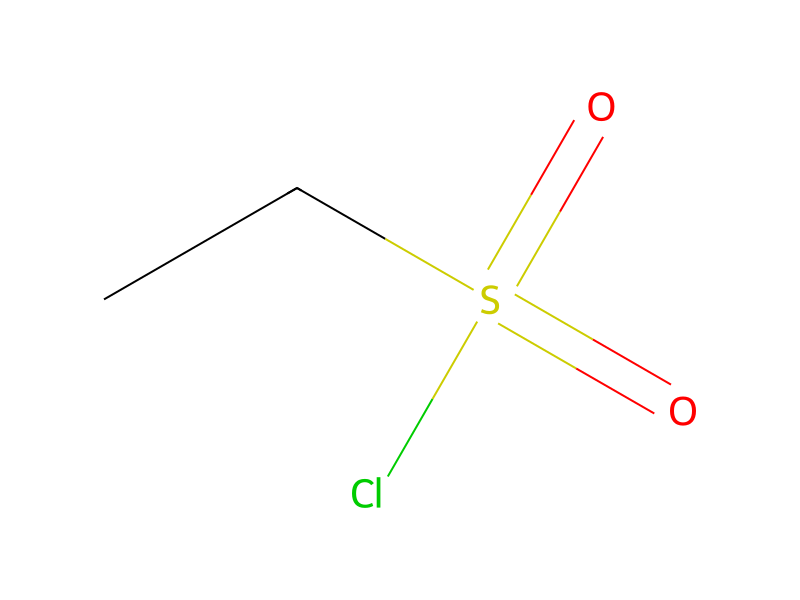
HCID 313Hydrochloric AcidHCID 8471TriethylamineHCID 11667Ethanesulfonyl chlorideHCID 14798Sodium HydroxideHCID 178480426HCID 178480426, compound

Product 1

HCID 178477708HCID 178477708, compoundYield 41.8%

Reagents, catalysts & solvents 2

HCID 63651,1-DichloroethaneSolventHCID 312751,4-DioxaneSolvent

Procedure

A mixture of Example 82d (0.09 g, 0.262 mmol) in dichloroethane (2 mL) and 1,4-dioxane (4 mL) was treated with ethanesulfonyl chloride (0.075 mL, 0.786 mmol) and triethylamine (0.183 mL, 1.31 mmol). The mixture was stirred at ambient temperature overnight and then concentrated. The mixture was redissolved in 1,4-dioxane (4 mL), treated with sodium hydroxide solution (4 M aqueous) (0.655 ml, 2.62 mmol) and heated at 50° C. for 1.75 hours. The mixture was then cooled to ambient temperature and neutralized with hydrochloric acid solution (2 M aqueous). The mixture was partitioned between ethyl acetate and water. The aqueous layer was extracted with ethyl acetate (2×60 mL). The organic layers were combined, dried over anhydrous magnesium sulfate, filtered and concentrated. The residue was purified by reverse phase HPLC(C18, acetonitrile/water (0.1% TFA), 10-60%) to provide 0.0477 g (33%) of the title compound as the TFA salt. 1H NMR (400 MHz, DMSO-d6) δ 10.48 (s, 1H), 9.56 (s, 1H), 7.98 (dd, J=5.19, 1.22 Hz, 1H), 7.64 (d, J=2.44 Hz, 1H), 7.58 (s, 1H), 7.41 (m, 1H), 7.27 (d, J=8.54 Hz, 1H), 7.13 (dd, J=8.54, 2.44 Hz, 1H), 6.90 (s, 1H), 6.60 (dd, J=6.56, 5.65 Hz, 1H), 6.42 (d, J=8.85 Hz, 1H), 5.53 (s, 1H), 4.08 (s, 3H), 3.97 (s, 1H), 3.19 (q, J=7.32 Hz, 2H), 1.29 (t, J=7.32 Hz, 3H). MS (ESI+) m/z 436.2 (M+H)+.


Workup

  1. concentrationconcentrated
  2. dissolutionThe mixture was redissolved in 1,4-dioxane (4 mL)
  3. temperatureheated at 50° C. for 1.75 hours
  4. customThe mixture was partitioned between ethyl acetate and water
  5. extractionThe aqueous layer was extracted with ethyl acetate (2×60 mL)
  6. dry with materialdried over anhydrous magnesium sulfate
  7. filtrationfiltered
  8. concentrationconcentrated
  9. customThe residue was purified by reverse phase HPLC(C18, acetonitrile/water (0.1% TFA), 10-60%)

Sources & evidence

ORD record
ord-b522fdf174ea48f3a871bed30cac54cf
Source dataset
uspto-grants-2015_03
DOI
10.6084/m9.figshare.5104873.v1
Patent number
US08980879B2

Reaction notes

On this pageParticipantsProcedureWorkupSources & evidenceReaction notes