HomeMCPWorkbenchSkills
HomeWorkbenchNotificationsMe
llms.txt · MCP GuidePrivacy Policy · Terms of Service · Supportv1.8.3
  1. Home
  2. /Reaction

Hydrochloric Acid → 1-{4-[4-(Chloromethyl)phenyl]piperidin-1-yl}propan-1-one

HRID 875311
Print

Reaction equation

HRID 875311 reaction equation
[C:1]1([CH:7]2[CH2:12][CH2:11][N:10]([C:13](=[O:16])[CH2:14][CH3:15])[CH2:9][CH2:8]2)[CH:6]=[CH:5][CH:4]=[CH:3][CH:2]=1.C=O.Cl.S(Cl)(Cl)=O.[Cl:24][CH2:25]Cl>C1COCC1.[Cl-].[Zn+2].[Cl-].C(OCC)(=O)C.O>[Cl:24][CH2:25][C:4]1[CH:3]=[CH:2][C:1]([CH:7]2[CH2:8][CH2:9][N:10]([C:13](=[O:16])[CH2:14][CH3:15])[CH2:11][CH2:12]2)=[CH:6][CH:5]=1
ParticipantsProcedureWorkupSources & evidenceReaction notes

Participants

10

Reactant 5

HCID 313Hydrochloric AcidHCID 712FormaldehydeHCID 6344DichloromethaneHCID 24386Thionyl ChlorideHCID 45806702HCID 45806702, compound

Product 1

HCID 867098021-{4-[4-(Chloromethyl)phenyl]piperidin-1-yl}propan-1-one

Reagents, catalysts & solvents 4

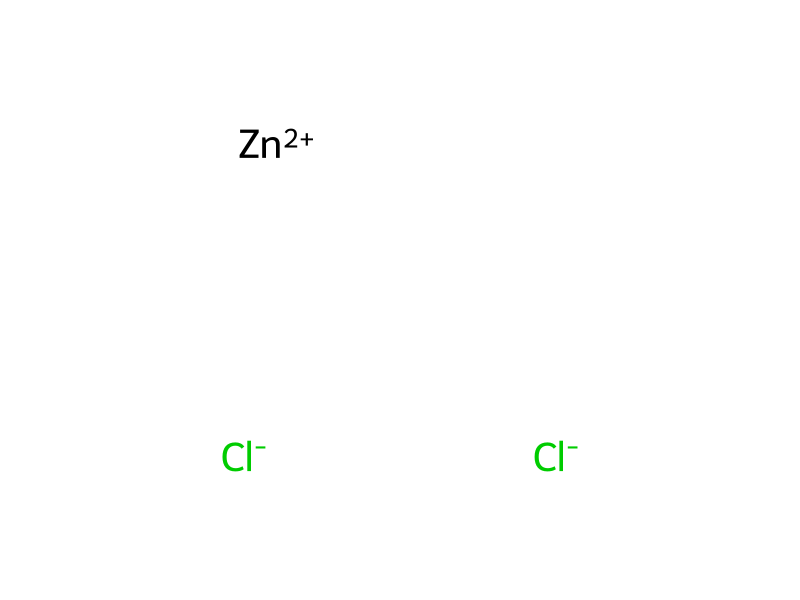
HCID 3007855SinkkikloridiCatalyst2×HCID 962WaterSolvent2×HCID 8028TetrahydrofuranSolventHCID 8857Ethyl AcetateSolvent

Procedure

5 g (23 mmol) of 1-(4-phenylpiperidin-1-yl)propan-1-one, 4.84 g (161 mmol) of paraformaldehyde and 4.7 g (34.5 mmol) of zinc chloride were initially charged in 200 ml of dichloromethane. With vigorous stirring, hydrogen chloride gas was then passed through the reaction mixture for 30 min After the introduction had ended, the reaction mixture was stirred at room temperature overnight. Water was then added to the reaction solution, the organic phase was separated off and the aqueous phase was extracted with ethyl acetate. The combined organic phases were dried over sodium sulphate, filtered and concentrated to dryness on a rotary evaporator. The residue obtained was purified by preparative HPLC. During concentration, some of the product hydrolyzed to the analogous 4-(hydroxymethyl) compound. The product mixture obtained (3.68 g) was then taken up with stirring in 100 ml of THF, and 500 mg of zinc chloride and then 2 ml of thionyl chloride were added. This mixture was then stirred at room temperature for 1 hour. After addition of water and ethyl acetate to the reaction solution, the organic phase was separated off, dried over sodium sulphate, filtered and concentrated to dryness. This gave 3.4 g (12.79 mmol, 56% of theory) of the target compound.


Workup

  1. customthe organic phase was separated off
  2. extractionthe aqueous phase was extracted with ethyl acetate
  3. dry with materialThe combined organic phases were dried over sodium sulphate
  4. filtrationfiltered
  5. concentrationconcentrated to dryness on a rotary evaporator
  6. customThe residue obtained
  7. customwas purified by preparative HPLC
  8. concentrationDuring concentration
  9. customThe product mixture obtained (3.68 g)
  10. stirringThis mixture was then stirred at room temperature for 1 hour
  11. customthe organic phase was separated off
  12. dry with materialdried over sodium sulphate
  13. filtrationfiltered
  14. concentrationconcentrated to dryness

Sources & evidence

ORD record
ord-5ed91caf2f5d49d8a1cc025a93e9ebea
Source dataset
uspto-grants-2015_03
DOI
10.6084/m9.figshare.5104873.v1
Patent number
US08981104B2

Reaction notes

On this pageParticipantsProcedureWorkupSources & evidenceReaction notes