HomeMCPWorkbenchSkills
HomeWorkbenchNotificationsMe
llms.txt · MCP GuidePrivacy Policy · Terms of Service · Supportv1.8.1
  1. Home
  2. /Reaction

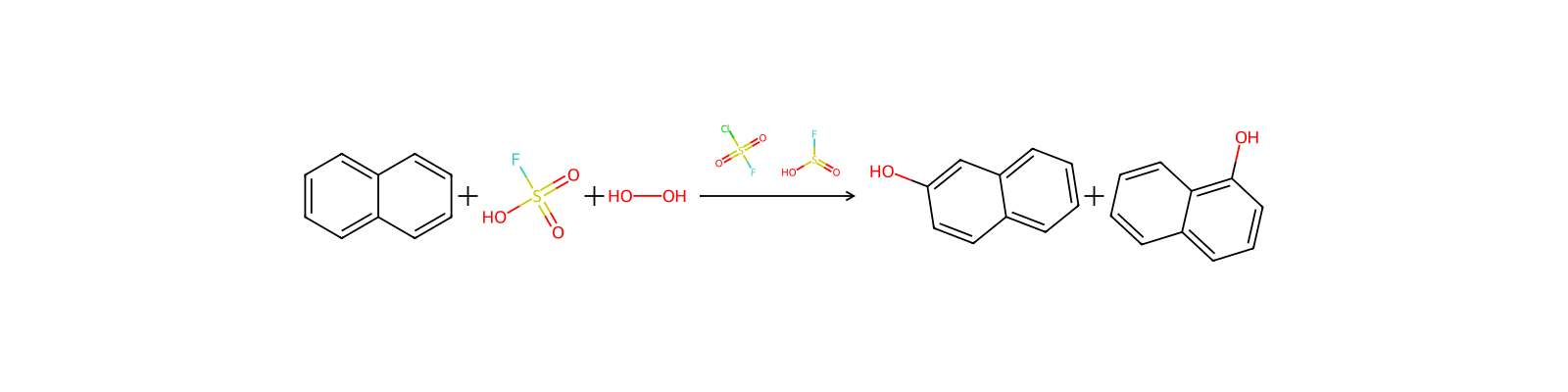
Hydrogen Peroxide → 2-Naphthol

HRID 904755
Print

Reaction equation

HRID 904755 reaction equation
[CH:1]1[C:10]2[C:5](=[CH:6][CH:7]=[CH:8][CH:9]=2)[CH:4]=[CH:3][CH:2]=1.FS(O)(=O)=[O:13].[OH:16]O>S(F)(Cl)(=O)=O.FS(O)=O>[CH:9]1[C:10]2[C:5](=[CH:4][CH:3]=[CH:2][CH:1]=2)[CH:6]=[CH:7][C:8]=1[OH:13].[CH:2]1[CH:3]=[CH:4][C:5]2[C:10](=[CH:9][CH:8]=[CH:7][C:6]=2[OH:16])[CH:1]=1
ParticipantsProcedureWorkupSources & evidenceReaction notes

Participants

7

Reactant 3

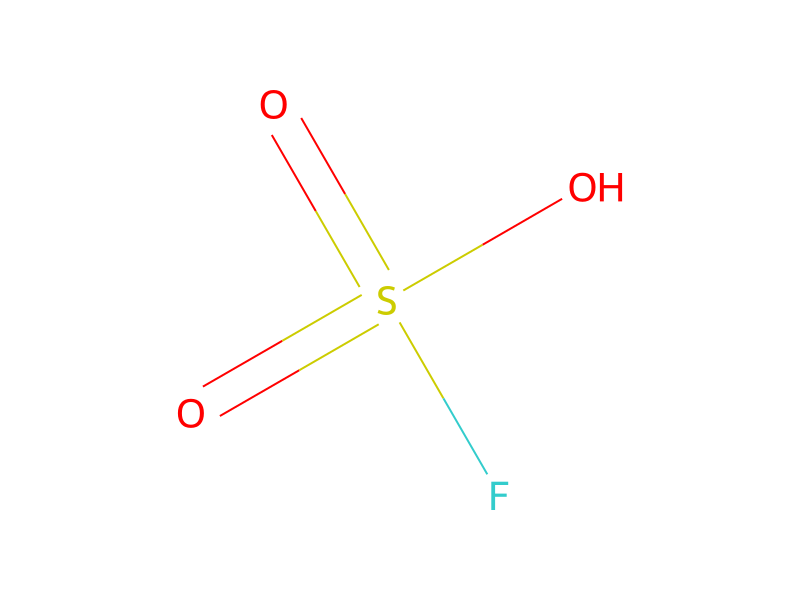
HCID 784Hydrogen Peroxide2×HCID 931Naphthalene2×HCID 24603Fluorosulfuric acid

Product 2

HCID 70051-NaphtholYield 4.4%HCID 86632-NaphtholYield 54.2%

Reagents, catalysts & solvents 2

HCID 26159
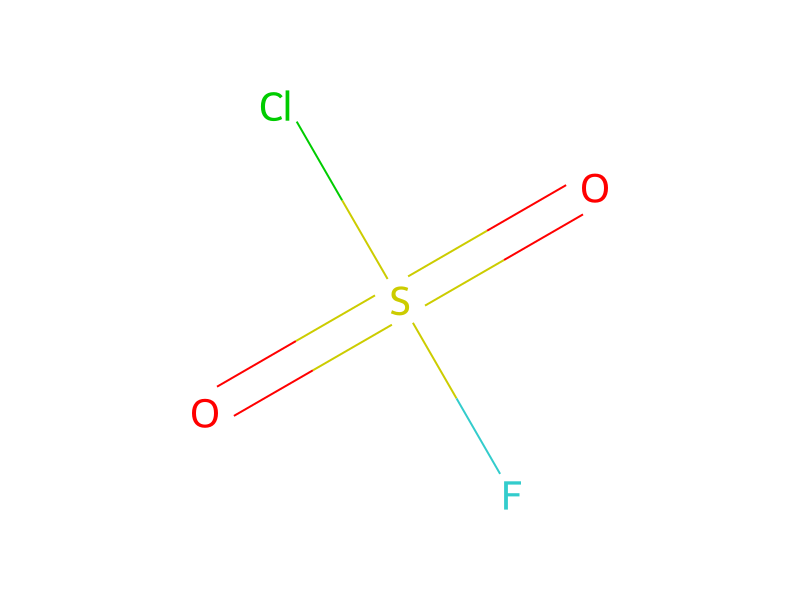
Sulfuryl chloride fluoride
Solvent
2×
HCID 13152770Sulfurofluoridous acidSolvent

Procedure

0.1 mol of naphthalene was dissolved at -78° C. in a solution of 50 ml of 1:1 mol/mol FSO3H--SbF5 in 100 ml of sulfuryl chloride fluoride. 0.12 mol of H2O2 (90% solution) was separately dissolved in a solution of 50 ml of 1:1 (m/m) FSO2H--SbF5 and 100 ml of sulfuryl chloride fluoride at the same temperature. The H2O2 superacid solution was carefully added with good stirring at -78° to -70° C. to the superacid solution of naphthalene and the reaction mixture subsequently was stirred for an additional 30 minutes, then quenched with ice water, worked up, and analyzed as in Example 1. 22% naphthalene was recovered unchanged. 54.2% of β-naphthol and 4.4% of naphthol were obtained, together with 6% dihydroxynaphthalenes and only traces of polymeric material.

Workup

  1. customquenched with ice water
  2. custom22% naphthalene was recovered unchanged

Sources & evidence

ORD record
ord-dff3d725184e41a7bb12920898b2f55c
Source dataset
uspto-grants-1983_12
DOI
10.6084/m9.figshare.5104873.v1
Patent number
US04419528

Reaction notes

On this pageParticipantsProcedureWorkupSources & evidenceReaction notes