HomeMCPWorkbenchSkills
HomeWorkbenchNotificationsMe
llms.txt · MCP GuidePrivacy Policy · Terms of Service · Supportv1.8.3
  1. Home
  2. /Reaction

Aniline → N-(3-(1H-imidazol-1-yl)-5-(trifluoromethyl)phenyl)-3-(imidazo[1,2-a]pyrazin-3-ylethynyl)-4-methylbenzamide

HRID 923190
Print

Reaction equation

HRID 923190 reaction equation
[N:1]1[CH:2]=[C:3]([C:10]#[C:11][C:12]2[CH:13]=[C:14]([CH:18]=[CH:19][C:20]=2[CH3:21])[C:15]([OH:17])=O)[N:4]2[CH:9]=[CH:8][N:7]=[CH:6][C:5]=12.CN1CCOCC1.C(Cl)(=O)C(Cl)=O.[N:35]1([C:40]2[CH:41]=[C:42]([CH:44]=[C:45]([C:47]([F:50])([F:49])[F:48])[CH:46]=2)[NH2:43])[CH:39]=[CH:38][N:37]=[CH:36]1.NC1C=CC=CC=1>C(Cl)Cl.CN(C1C=CN=CC=1)C>[N:35]1([C:40]2[CH:41]=[C:42]([NH:43][C:15](=[O:17])[C:14]3[CH:18]=[CH:19][C:20]([CH3:21])=[C:12]([C:11]#[C:10][C:3]4[N:4]5[CH:9]=[CH:8][N:7]=[CH:6][C:5]5=[N:1][CH:2]=4)[CH:13]=3)[CH:44]=[C:45]([C:47]([F:49])([F:50])[F:48])[CH:46]=2)[CH:39]=[CH:38][N:37]=[CH:36]1

ParticipantsProcedureWorkupSources & evidenceReaction notes

Participants

8

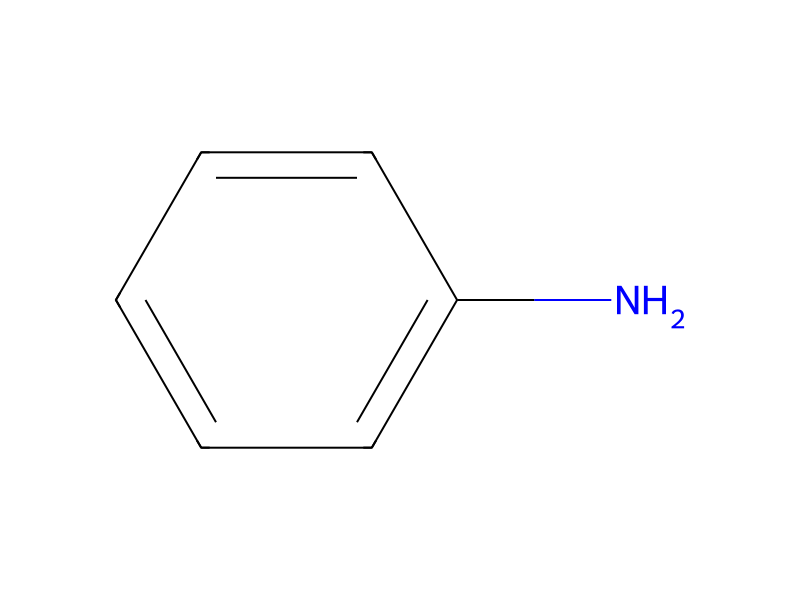
Reactant 5

HCID 6115AnilineHCID 79724-MethylmorpholineHCID 65578Oxalyl chlorideHCID 442226373-(1H-Imidazol-1-YL)-5-(trifluoromethyl)anilineHCID 667360783-(Imidazo[1,2-a]pyrazin-3-ylethynyl)-4-methylbenzoic acid

Product 1

HCID 16214860
N-(3-(1H-imidazol-1-yl)-5-(trifluoromethyl)phenyl)-3-(imidazo[1,2-a]pyrazin-3-ylethynyl)-4-methylbenzamide

Reagents, catalysts & solvents 2

HCID 142844-(Dimethylamino)pyridineCatalystHCID 6344DichloromethaneSolvent

Procedure

3-(imidazo[1,2-a]pyrazin-3-ylethynyl)-4-methylbenzoic acid (18 mmol) is dissolved in methylene chloride (100 mL). To this solution is added 3 equivalents of 4-methylmorpholine (NMM) followed by 1.05 equivalents of oxalyl chloride. After stirring at ambient temperature for 30 minutes, 0.8 equivalents of 3-(1H-imidazol-1-yl)-5-(trifluoromethyl)aniline (prepared as above) is added along with 5 mole % of DMAP. After initially stirring at ambient temperature, the mixture is brought to reflux and stirred overnight. After 16 h an additional 0.2 equivalents of the aniline is added, bringing the total charge to 1 equivalent. The mixture can then be stirred for an additional 2 h, quenched with water, and the layers separated. The aqueous layer can be extracted with methylene chloride (2×50 mL) and the combined extracts can be washed with water. The combined methylene chloride layers can then be evaporated and the residue dissolved in 100 mL of ethyl acetate (20 mL). After standing for 1 h, the product is allowed to crystallize. The mixture is cooled, e.g. to 0° C., filtered, and the solid product is washed with cold ethyl acetate.

Workup

  1. stirringAfter initially stirring at ambient temperature
  2. temperatureto reflux
  3. stirringstirred overnight
  4. additiontotal charge to 1 equivalent
  5. stirringThe mixture can then be stirred for an additional 2 h
  6. customquenched with water
  7. customthe layers separated
  8. extractionThe aqueous layer can be extracted with methylene chloride (2×50 mL)
  9. washthe combined extracts can be washed with water
  10. customThe combined methylene chloride layers can then be evaporated
  11. dissolutionthe residue dissolved in 100 mL of ethyl acetate (20 mL)
  12. waitAfter standing for 1 h
  13. customto crystallize
  14. temperatureThe mixture is cooled
  15. filtratione.g. to 0° C., filtered
  16. washthe solid product is washed with cold ethyl acetate

Sources & evidence

ORD record
ord-5fca7c176bee4abfac42150d7397f079
Source dataset
uspto-grants-2016_03
DOI
10.6084/m9.figshare.5104873.v1
Patent number
US09278971B2

Reaction notes

On this pageParticipantsProcedureWorkupSources & evidenceReaction notes


