HomeMCPWorkbenchSkills
HomeWorkbenchNotificationsMe
llms.txt · MCP GuidePrivacy Policy · Terms of Service · Supportv1.8.3
  1. Home
  2. /Reaction

Dicyclohexylamine → 3-Ethynylimidazo[1,2-a]pyridine

HRID 923201
Print

Reaction equation

HRID 923201 reaction equation
Br[C:2]1[N:6]2[CH:7]=[CH:8][CH:9]=[CH:10][C:5]2=[N:4][CH:3]=1.[CH:11]1(NC2CCCCC2)CCCC[CH2:12]1.C([Si](C)(C)C)#C.O.[F-].C([N+](CCCC)(CCCC)CCCC)CCC>C(#N)C.O.[Pd](Cl)Cl.C1(P(C2C=CC=CC=2)C2C=CC=CC=2)C=CC=CC=1.C1(P(C2C=CC=CC=2)C2C=CC=CC=2)C=CC=CC=1.[Cu]I>[C:11]([C:2]1[N:6]2[CH:7]=[CH:8][CH:9]=[CH:10][C:5]2=[N:4][CH:3]=1)#[CH:12]
ParticipantsConditionsProcedureWorkupSources & evidenceReaction notes

Participants

9

Reactant 4

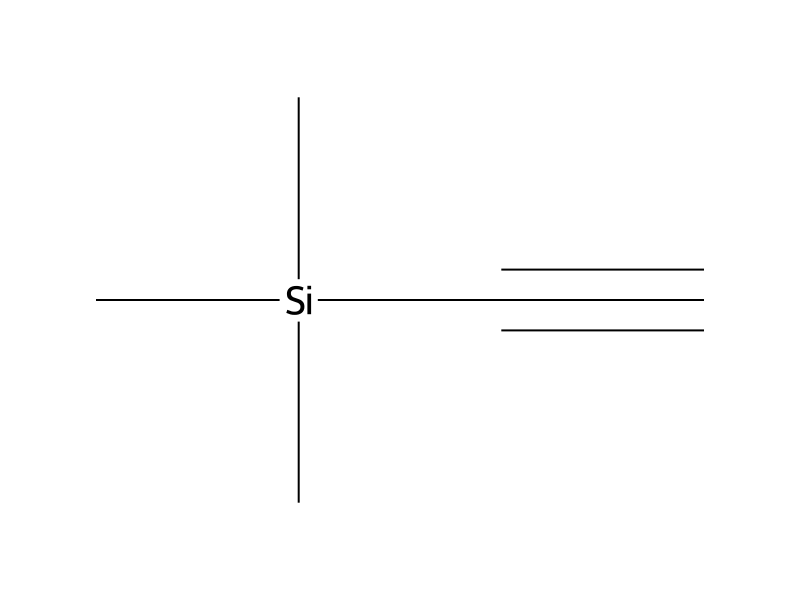
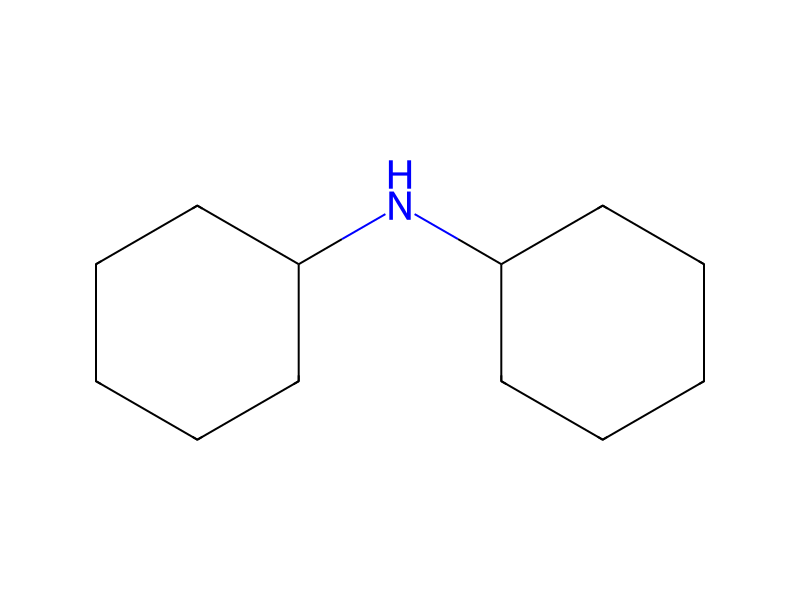
HCID 7582DicyclohexylamineHCID 66111TrimethylsilylacetyleneHCID 3279513-Bromoimidazo[1,2-a]pyridineHCID 162116731-Butanaminium, N,N,N-tributyl-, fluoride, hydrate

Product 1

HCID 468387593-Ethynylimidazo[1,2-a]pyridine

Reagents, catalysts & solvents 4

HCID 24350
Copper(1+) iodide; Copper(I) iodide; Cuprous iodide; Cuprous iodide (CuI)
Catalyst
HCID 6102075Dichlorobis(triphenylphosphine)palladiumCatalyst
HCID 962WaterSolvent
HCID 6342AcetonitrileSolvent

Conditions

Temperature
80 °C

Procedure

To 3-bromoimidazo[1,2-a]pyridine (5 g, 0.0254 mol) in acetonitrile (50 mL) in a sealed tube was added bis(triphenylphosphine) palladium(II) dichloride (0.445 g, 0.634 mmol), CuI (0.17 g, 0.89 mmol), dicyclohexylamine (5.6 mL, 0.028 mol) and ethynyltrimethylsilane (7.2 mL, 0.051 mol). The solution was purged with argon for 15 minutes, sealed and heated at 80° C. for 3 h. At this point the HPLC did not show any starting bromide. The solvents were concentrated and to the residue was added water and dichloromethane (25 mL each). The organic layer was separated and the aqueous layer was repeatedly extracted with dichloromethane (3×20 mL). The combined extracts were dried (Na2SO4), and concentrated (Rf, 0.47 in 1/1 hexanes/ethyl acetate). The resulting residue was dissolved in THF (100 mL) and treated with tetrabutyl ammonium fluoride monohydrate (8.3 g, 0.032 mol) in water (5 mL) and the mixture was stirred at rt for 2 h. The solvents were concentrated and the resulting residue was partitioned between water (25 mL) and dichloromethane (150 mL). The aqueous layer was extracted with dichloromethane (2×30 mL). The combined extracts were dried (Na2SO4), and concentrated. The resulting residue was purified by combiflash on silica gel using hexanes/ethyl acetate. The desired product was eluted with 50/50 hexane/ethyl acetate and isolated as an off-white solid: MS (M+H)+ 200.

Workup

  1. customThe solution was purged with argon for 15 minutes
  2. customsealed
  3. concentrationThe solvents were concentrated and to the residue
  4. additionwas added water and dichloromethane (25 mL each)
  5. customThe organic layer was separated
  6. extractionthe aqueous layer was repeatedly extracted with dichloromethane (3×20 mL)
  7. dry with materialThe combined extracts were dried (Na2SO4)
  8. concentrationconcentrated (Rf, 0.47 in 1/1 hexanes/ethyl acetate)
  9. dissolutionThe resulting residue was dissolved in THF (100 mL)
  10. concentrationThe solvents were concentrated
  11. customthe resulting residue was partitioned between water (25 mL) and dichloromethane (150 mL)
  12. extractionThe aqueous layer was extracted with dichloromethane (2×30 mL)
  13. dry with materialThe combined extracts were dried (Na2SO4)
  14. concentrationconcentrated
  15. customThe resulting residue was purified by combiflash on silica gel
  16. washThe desired product was eluted with 50/50 hexane/ethyl acetate
  17. customisolated as an off-white solid

Sources & evidence

ORD record
ord-9fc9681fa6994dac9a9125f367584cf4
Source dataset
uspto-grants-2016_03
DOI
10.6084/m9.figshare.5104873.v1
Patent number
US09278971B2

Reaction notes

On this pageParticipantsConditionsProcedureWorkupSources & evidenceReaction notes