Reaction equation

[CH:1]1[C:13]2[NH:12][C:11]3[C:6](=[CH:7][CH:8]=[CH:9][CH:10]=3)[C:5]=2[CH:4]=[CH:3][CH:2]=1.[Br:14][C:15]1[CH:20]=[CH:19][CH:18]=[CH:17][C:16]=1I.C(=O)([O-])[O-].[K+].[K+]>[Cu](I)I.C1(C)C(C)=CC=CC=1>[Br:14][C:15]1[CH:20]=[CH:19][CH:18]=[CH:17][C:16]=1[N:12]1[C:11]2[CH:10]=[CH:9][CH:8]=[CH:7][C:6]=2[C:5]2[C:13]1=[CH:1][CH:2]=[CH:3][CH:4]=2Participants
6
Reactant 3



Product 1

Reagents, catalysts & solvents 2

Procedure
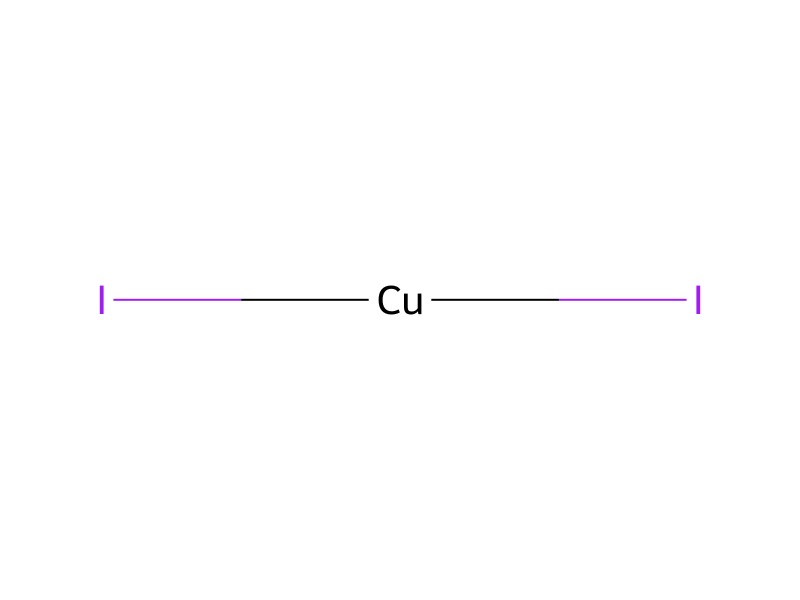
1.672 g of carbazole, 1.6 mL of 1-bromo-2-iodobenzene, 2.7646 g of potassium carbonate, 95 mg of copper iodide and 25 mL of xylene were refluxed in a nitrogen atmosphere. The mixture was cooled to room temperature, extracted with ethyl acetate, and dried with anhydrous magnesium sulfate to remove moisture, and the solvent was removed under reduced pressure. Silica gel column separation using a hexane solvent was conducted, thus obtaining a compound from which the solvent was then removed under reduced pressure, followed by vacuum drying, yielding 9-(2-bromophenyl)-9H-carbazole as a desired white solid intermediate.
Workup
- extractionextracted with ethyl acetate
- dry with materialdried with anhydrous magnesium sulfate
- customto remove moisture
- customthe solvent was removed under reduced pressure
- customSilica gel column separation
- customthus obtaining a compound from which the solvent
- customwas then removed under reduced pressure
- customdrying
Sources & evidence
- ORD record
- ord-93dd3badfbed48a3b8590f7df6e018d2
- Source dataset
- uspto-grants-2016_03
- Patent number
- US09278986B2
Linked notes
Loading…