HomeMCPWorkbenchSkills
HomeWorkbenchNotificationsMe
llms.txt · MCP GuidePrivacy Policy · Terms of Service · Supportv1.8.3
  1. Home
  2. /Reaction

2,2'-Bipyridine → tert-butyl 2-cyclopropyl-2,4,6,7-tetrahydro-5H-pyrazolo[4,3-c]pyridine-5-carboxylate

HRID 931348
Print

Reaction equation

HRID 931348 reaction equation
[NH:1]1[C:9]2[CH2:8][CH2:7][N:6]([C:10]([O:12][C:13]([CH3:16])([CH3:15])[CH3:14])=[O:11])[CH2:5][C:4]=2[CH:3]=[N:2]1.[CH:17]1(B(O)O)[CH2:19][CH2:18]1.C(=O)([O-])[O-].[Na+].[Na+].N1C=CC=CC=1C1C=CC=CN=1>ClC(Cl)C.C(OCC)(=O)C.C([O-])(=O)C.[Cu+2].C([O-])(=O)C>[CH:17]1([N:2]2[CH:3]=[C:4]3[CH2:5][N:6]([C:10]([O:12][C:13]([CH3:16])([CH3:15])[CH3:14])=[O:11])[CH2:7][CH2:8][C:9]3=[N:1]2)[CH2:19][CH2:18]1
ParticipantsConditionsProcedureWorkupSources & evidenceReaction notes

Participants

8

Reactant 4

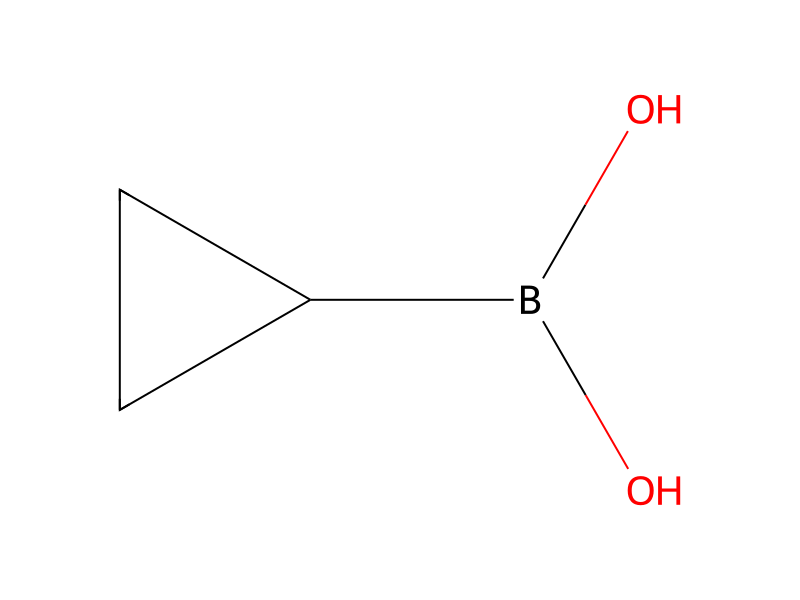
HCID 14742,2'-BipyridineHCID 10340Sodium CarbonateHCID 2760897Cyclopropylboronic acidHCID 103986805-Boc-1,4,6,7-tetrahydropyrazolo[4,3-C]pyridine

Product 1

HCID 117678346tert-butyl 2-cyclopropyl-2,4,6,7-tetrahydro-5H-pyrazolo[4,3-c]pyridine-5-carboxylate

Reagents, catalysts & solvents 3

HCID 8895
Cupric acetate
Catalyst
HCID 63651,1-DichloroethaneSolvent
HCID 8857Ethyl AcetateSolvent

Conditions

Temperature
60 °C

Procedure

tert-Butyl 1,4,6,7-tetrahydro-5H-pyrazolo[4,3-c]pyridine-5-carboxylate (4.0 g, 18 mmol) and cyclopropylboronic acid (3.08 g, 35.8 mmol) were combined in dichloroethane (200 mL). After sequential addition of sodium carbonate (3.80 g, 35.8 mmol), copper(II) acetate (3.58 g, 17.9 mmol) and 2,2′-bipyridine (2.80 g, 17.9 mmol), the reaction mixture was stirred at 60° C. for 18 hours while open to the atmosphere. The reaction mixture was then diluted with ethyl acetate (500 mL) and filtered through diatomaceous earth; the filtrate was washed with saturated ammonium chloride solution and concentrated in vacuo. Purification via silica gel chromatography (Gradient: 0% to 100% ethyl acetate in heptane) was followed by supercritical fluid chromatography (Column: Chiral Technologies, Chiralpak AD-H, 5 μm; Eluent: 85:15 carbon dioxide/methanol) to obtain the major regioisomer, which was the first-eluting peak. The indicated regiochemistry was assigned on the basis of NOE studies carried out on C46. Yield: 1.7 g, 6.5 mmol, 36%. LCMS m/z 264.5 [M+H]+. 1H NMR (400 MHz, CD3OD) δ 7.43 (br s, 1H), 4.42 (br s, 2H), 3.65-3.70 (m, 2H), 3.52-3.58 (m, 1H), 2.64-2.69 (m, 2H), 1.47 (s, 9H), 0.98-1.03 (m, 4H).

Workup

  1. filtrationfiltered through diatomaceous earth
  2. washthe filtrate was washed with saturated ammonium chloride solution
  3. concentrationconcentrated in vacuo
  4. customPurification via silica gel chromatography (Gradient: 0% to 100% ethyl acetate in heptane)
  5. customto obtain the major regioisomer, which

Sources & evidence

ORD record
ord-5f172fac5f14431886feadebc3c4d648
Source dataset
uspto-grants-2016_03
DOI
10.6084/m9.figshare.5104873.v1
Patent number
US09296761B2

Reaction notes

On this pageParticipantsConditionsProcedureWorkupSources & evidenceReaction notes