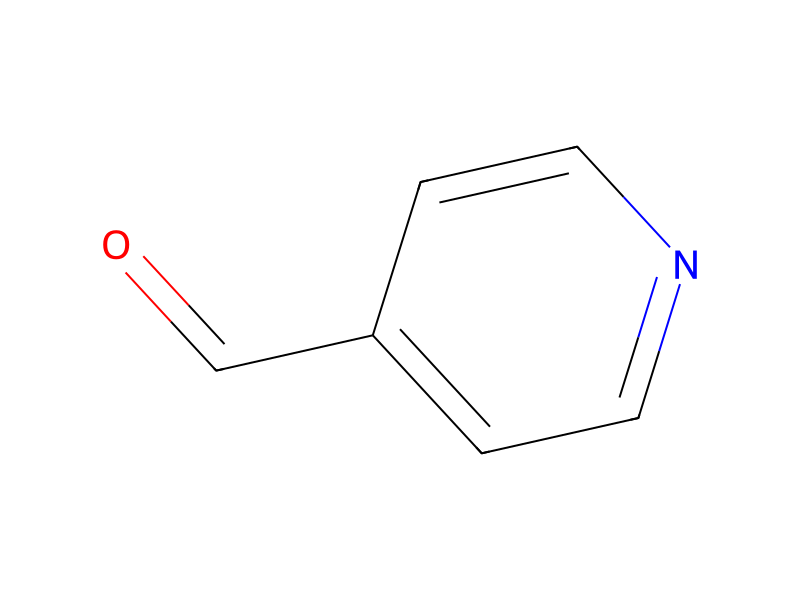
C1C=CC=CC=1.[NH2:7][C:8]1[CH:13]=[N:12][N:11]([C:14]([CH3:17])([CH3:16])[CH3:15])[C:10](=[O:18])[C:9]=1[OH:19].C(=O)[C:21]1[CH:26]=[CH:25][N:24]=[CH:23][CH:22]=1>C1(C)C=CC(S(O)(=O)=O)=CC=1.C(OCC)(=O)C>[C:14]([N:11]1[C:10](=[O:18])[CH:9]([OH:19])[C:8](=[N:7][C:21]2[CH:26]=[CH:25][N:24]=[CH:23][CH:22]=2)[CH:13]=[N:12]1)([CH3:16])([CH3:15])[CH3:17]50 ml of a dry benzene solution of 3.1 g of 5-amino-2-tert-butyl-4-hydroxypyridazin-3-(2H)-one, 1.9 g of isonicotinaldehyde and 0.17 g of p-toluene sulfonic acid, was reacted for 1.5 hours under heating and refluxing by means of a Dean Stark trap. After cooling, 100 ml of ethyl acetate was added to the reaction mixture, and the mixture was washed with water and then with a saturated sodium chloride aqueous solution, and then dried over anhydrous sodium sulfate. The solvent was distilled off under reduced pressure to obtain 3.3 g of 2-tert-butyl-4-hydroxy-5-(4-pyridylimino)pyridazin-3-(2H)-one as a powder.