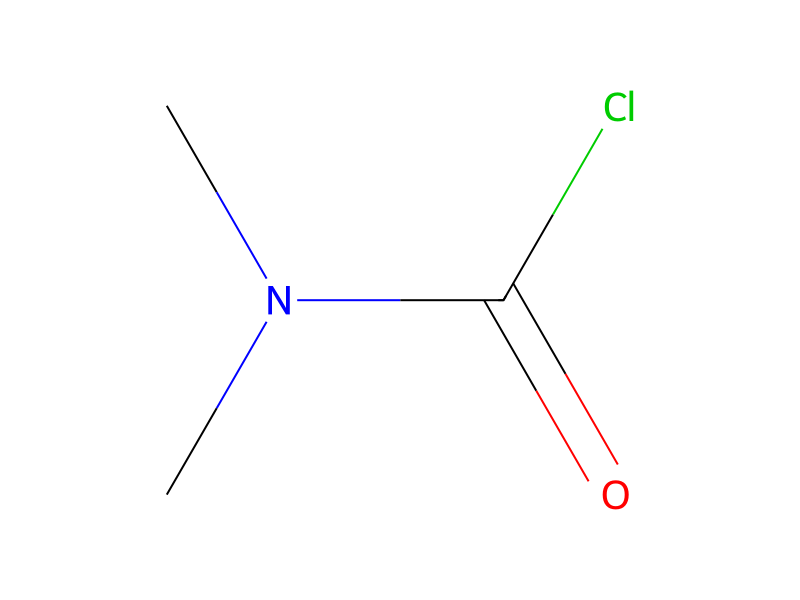
[CH3:1][O:2][CH:3]([O:14][CH3:15])[CH2:4][O:5][C:6]1[CH:7]=[C:8]([OH:13])[CH:9]=[C:10]([CH3:12])[CH:11]=1.[CH3:16][N:17]([CH3:21])[C:18](Cl)=[O:19].C(N(CC)CC)C>C1(C)C(C)=CC=CC=1>[CH3:16][N:17]([CH3:21])[C:18](=[O:19])[O:13][C:8]1[CH:9]=[C:10]([CH3:12])[CH:11]=[C:6]([O:5][CH2:4][CH:3]([O:2][CH3:1])[O:14][CH3:15])[CH:7]=13-(2,2-Dimethoxyethoxy)-5-methylphenol (0.05 mole), N,N-dimethylcarbamoyl chloride (0.08 mole), triethylamine (0.05 mole) and xylene (50 ml) are charged into a glass reaction flask equipped with a mechanical stirrer, thermometer and reflux condenser. The mixture is stirred and heated at 80° C. for a period of about 12 hours. After this time the reaction mixture is cooled to room temperature and is filtered. The filtrate is then washed with water and dried over anhydrous magnesium sulfate. The dried solution is then filtered and stripped of solvent and unreacted starting materials to yield the desired product O-[3-(2,2-dimethoxyethoxy)-5-methylphenyl] N,N-dimethylcarbamate as the residue.