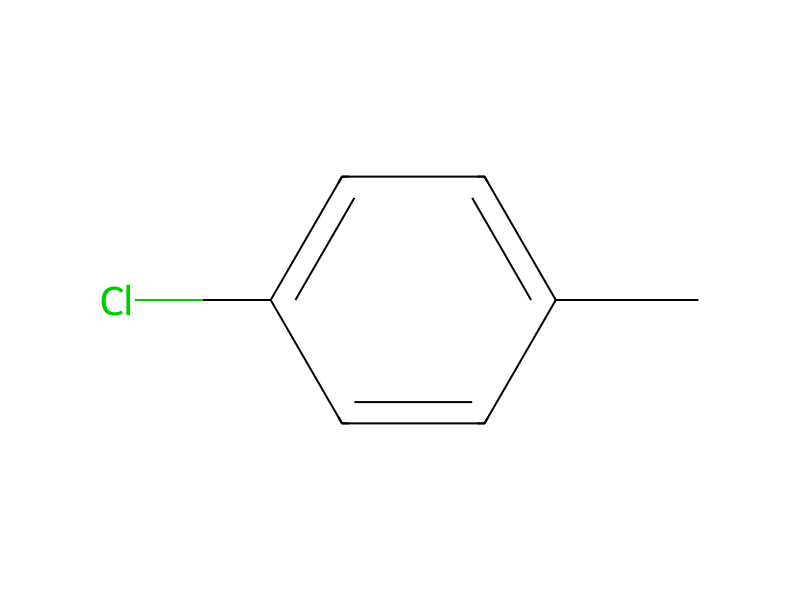
C1(P(C2C=CC=CC=2)C2C=CC=CC=2)C=CC=CC=1.[I-].[Na+].Cl[C:23]1[CH:28]=[CH:27][C:26]([CH3:29])=[CH:25][CH:24]=1.Cl[CH2:31][C:32]([O:34][C:35]1[CH:40]=[CH:39][CH:38]=[CH:37][CH:36]=1)=[O:33]>CN(C)C=O.[Zn].[Ni](Cl)Cl>[C:32]([O:34][C:35]1[CH:40]=[CH:39][C:38]([C:23]2[CH:28]=[CH:27][C:26]([CH3:29])=[CH:25][CH:24]=2)=[CH:37][CH:36]=1)(=[O:33])[CH3:31]20 g of zinc dust, 20 go of triphenylphosphine, 3 g of sodium iodide and 1.3 of nickel(II) chloride in 150 ml of dimethylformamide were initially introduced into the reaction vessel under a nitrogen atmosphere. The mixture was kept at 60° C. for half an hour. A solution containing 12.3 g (0.1 mol) of 4-chlorotoluene, 17.1 g (0.1 mol) of 4-chloroacetoxybenzene and 50 ml of dimethylformamide was then added dropwise. After 6 hours at 80° C., the reaction mixture was filtered, the filtrate was concentrated, the residue was dissolved in 500 ml of chloroform and the mixture was extracted by shaking with water. After drying the organic phase over sodium sulphate and stripping off the solvent, the oily residue was analyzed by gas chromatography. The yield of 4-acetoxy-4'-methylbiphenyl was 40% of theory.