ホームMCPワークベンチSkills
ホームワークベンチ通知マイページ
llms.txt · MCPガイドプライバシーポリシー · 利用規約 · サポートv1.8.0
  1. ホーム
  2. /化合物

rac-(R*)-2-ヒドロキシプロパン酸メチル

Methyl Lactate

HCID 11040
ノートを作成反応を作成見積依頼を出す
印刷プレビュー

データを補完しています。しばらくしてからページを更新すると最新の内容を表示できます
基本情報概要名称と識別子物性安全と法規制化学と産業関連反応化合物ノート
部分構造検索類似構造を探す

基本情報

CAS
2155-30-8
標準SMILES
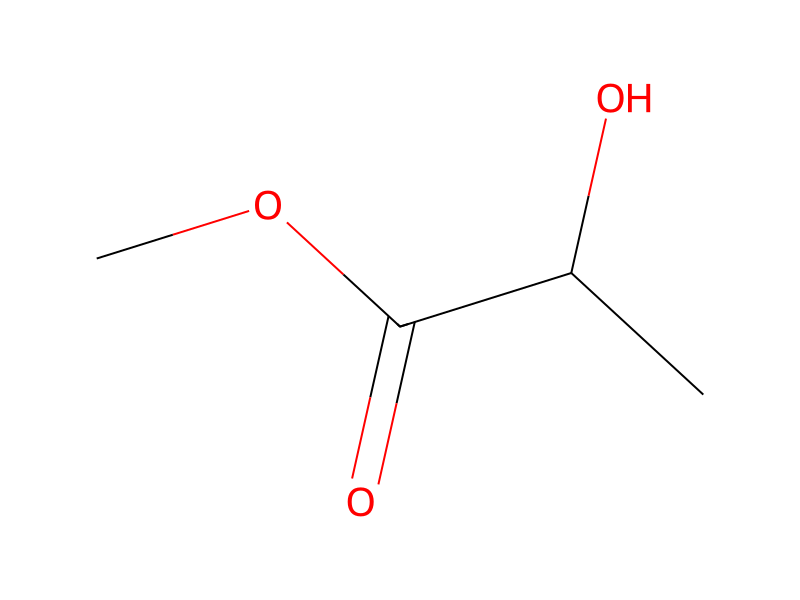
COC(=O)C(C)O
InChIKey
LPEKGGXMPWTOCB-UHFFFAOYSA-N
分子式
C4H8O3
平均分子量
104.1 g/mol
単同位体質量
104.04734412

概要

Methyl 2-hydroxypropionate is a lactate ester resulting from the formal condensation of the carboxy group of 2-hydroxypropanoic acid with methanol. It has a role as a metabolite. It is a methyl ester and a lactate ester.

名称と識別子

優先名称
Methyl Lactate
IUPAC
methyl 2-hydroxypropanoate
現地名
rac-(R*)-2-ヒドロキシプロパン酸メチル
英語名
methyl (±)-lactate
分子式
C4H8O3
分子量
104.10452

名称と別名

METHYL LACTATE547-64-8Methyl 2-hydroxypropanoateDL-Methyl lactateLactic acid, methyl esterMethyl 2-hydroxypropionatePropanoic acid, 2-hydroxy-, methyl ester(+-)-Methyl lactateMethyl alpha-hydroxypropionate2-Hydroxypropanoic acid methyl ester(+-)-Methyl 2-hydroxypropanoate(+-)-Methyl 2-hydroxypropionate
名称をさらに表示
rac-(R*)-2-ヒドロキシプロピオン酸メチルDL-乳酸メチル(±)-乳酸メチルrac-(R*)-2-ヒドロキシプロパン酸メチルrac-(R*)-2-Hydroxypropionic acid methyl estermethyl (±)-lactate
DTXSID0027197NSC 406248AI3-00584H10S91526XNSC-406248METHYL LACTATE, DL-DTXCID407197CHEBI:83221

データベース識別子

CAS
2155-30-8、547-64-8
PubChem CID
11040
DTXSID
DTXSID0027197
ChEMBL
CHEMBL3183351
ChEBI
CHEBI:83221
UNII
H10S91526X
EC Number
208-930-0、218-449-8
Nikkaji
J2.650F

物性

構造計算による物性補完中

XLogP
-0.1
極性表面積
46.5 Ų
水素結合供与体数
1
水素結合受容体数
3
回転可能結合数
2
重原子数
7
形式電荷
0
複雑度
69.3

実験および物理化学的性質

SolventsSolvents -> Esters (<C12)
CosmeticsCosmetic ingredients (Methyl Lactate) -> CIR (Cosmetic Ingredient Review)
Density · 2 件

1.09 at 19 °C

/Bulk density/ (wt/gal)= 9 LB @ 68 °F

Viscosity2.94 cP at 20 °C
Color/FormColorless, transparent liquid
Solubility · 3 件

Miscible in water with decomposition

Soluble in alcohol, ether

Miscible with most organic solvents

Flash Point · 2 件

51 °C (124 °F) - closed cup

121 °F (49 °C) (closed cup)

Boiling Point144-145 °C
DecompositionWhen heated to decomposition it emits acrid smoke and irritating vapors.
Melting PointFreezing Point: approximately -66 °C
Vapor Density3.6 (Air = 1)

安全と法規制

安全情報は参考情報です。供給元の安全データシート(SDS)、適用法令、専門家による評価に代わるものではありません。

GHS分類

GHS Classification · 6 件

Warning

H226: Flammable liquid and vapor [Warning Flammable liquids]

P210, P233, P240, P241, P242, P243, P261, P264+P265, P271, P280, P303+P361+P353, P304+P340, P305+P351+P338, P319, P337+P317, P370+P378, P403+P233, P403+P235, P405, and P501 (click each P-code to see the statement)

Warning

H226: Flammable liquid and vapor [Warning Flammable liquids]

P210, P233, P240, P241, P242, P243, P261, P264+P265, P271, P280, P303+P361+P353, P304+P340, P305+P351+P338, P319, P337+P317, P370+P378, P403+P233, P403+P235, P405, and P501 (click each P-code to see the statement)

危険有害性情報

Regulatory InformationMethyl lactate: Does not have an individual approval but may be used under an appropriate group standard
Fire PotentialModerate fire risk.
Hazards SummaryDecomposed by water; [Hawley] Mildly irritating; [HSDB] An eye and respiratory tract irritant; [eChemPortal: ESIS]; See ORGANIC SOLVENTS.
Flammable LimitsLower flammable limit: : 2.2% by vol @ 212 °F (100 °C)
NFPA Hazard Classification · 3 件

1 - Materials that, under emergency conditions, can cause significant irritation.

2 - Materials that must be moderately heated or exposed to relatively high ambient temperatures before ignition can occur. Materials would not under normal conditions form hazardous atmospheres with air, but under high ambient temperatures or under moderate heating could release vapor in sufficient quantities to produce hazardous atmospheres with air.

0 - Materials that in themselves are normally stable, even under fire conditions.

Toxic Combustion ProductsSpecial hazards arising from the substance or mixture: Carbon oxides

化学と産業

薬理情報

Metabolism/Metabolites · 1 件

Hydrolysis of lactate esters to lactic acid and alcohol has been reported to occur after both skin application and oral administration. Lactic acid is a naturally occurring metabolite, and its toxicity is mostly a result of its acidity. /Lactate esters/

Absorption, Distribution and ExcretionSince hydrolysis of lactate esters is fairly rapid, elimination pathways are probably the same as those for lactic acid and alcohol. /Lactic esters/

用途と製造

Uses · 6 件

CIR ingredient: Methyl Lactate

Used as solvent for cellulose acetate, nitrocellulose, cellulose acetobutyrate, cellulose acetopropionate, lacquers, and stains; Also used to make acetyl, amide, and higher ester derivatives and carbetamide (herbicide); [HSDB]

Painting (Solvents) [Category: Paint]

Cellulose acetate solvent.

Solvent for cellulose acetate, nitrocellulose, cellulose acetobutyrate, cellulose acetopropionate, lacquers, stains.

CHEM INT, EG, FOR ACETYL, AMIDE & HIGHER ESTER DERIVS

U.S. Production · 2 件

(1977) AT LEAST 4.54X10+9 G (CAPTIVE PRODN)

(1981) NO EVIDENCE OF PRODN FOR SALE IN USA

Methods of ManufacturingPrepared by heating 1 mole lactic acid condensation polymer with 2.5 to 5 moles of methanol and a small quantity of H2SO4 at 100 °C for 1-4 hours in a heavy walled bottle.
General Manufacturing InformationPropanoic acid, 2-hydroxy-, methyl ester: ACTIVE

関連反応

73 件
反応記録を作成
HRID 4458 の反応式
HRID 4458反応物としてuspto-grants-1988_02
HRID 186959 の反応式
HRID 186959反応物としてTraining data from https://doi.org/10.1039/C8SC04228D (6/10)
HRID 191173 の反応式
HRID 191173反応物としてTraining data from https://doi.org/10.1039/C8SC04228D (6/10)
HRID 235981 の反応式
HRID 235981反応物としてuspto-grants-1987_02
HRID 242017 の反応式
HRID 242017反応物としてuspto-grants-2014_02
HRID 256794 の反応式
HRID 256794反応物としてuspto-grants-1993_11
HRID 275640 の反応式
HRID 275640反応物としてuspto-grants-2002_03
HRID 290620 の反応式
HRID 290620反応物としてTraining data from https://doi.org/10.1039/C8SC04228D (8/10)
1 / 10 ページ

化合物ノート

読み込み中…

このページの内容基本情報概要名称と識別子物性安全と法規制化学と産業関連反応化合物ノート
その他の操作
ノートを作成反応を作成見積依頼を出す
Vapor Pressure · 2 件

1.85 [mmHg]

3.5 mm Hg at 25 °C

物理化学的性質

沸点
144.8 °C · 144.8°C (estimate)
比重(密度)
1.0928 · 1.0928
屈折率
1.4141 · 1.4141
Hazard Classes and Categories · 6 件

Flam. Liq. 3 (100%)

Flam. Liq. 3 (100%)

Flammable liquid - category 3

Flammable liquid - category 3

Flammable liquids - Category 3

Flam. Liq. 3

Skin, Eye, and Respiratory Irritations · 2 件

Methyl Lactate was not irritating to guinea pig eyes.

/Methyl lactate/ dropped into the eyes of rabbits ... was classified as non-irritating.

Hazardous Reactivities and IncompatibilitiesIncompatible materials: Oxidizing agents, acids, Bases

安全と保護具

Firefighting Hazards · 1 件

Vapors may form an explosive mixture with air. Vapors can travel to a source of ignition and flash back. During a fire, irritating and highly toxic gases may be generated by thermal decomposition or combustion. Will burn if involved in a fire. ... Containers may explode in the heat of a fire. Flammable liquid and vapor. Vapors may be heavier than air. They can spread along the ground and collect in low or confined areas.

Fire Fighting Procedures · 4 件

Suitable extinguishing media: Use water spray, alcohol-resistant foam, dry chemical or carbon dioxide.

Advice for firefighters: Wear self contained breathing apparatus for fire fighting if necessary.

Use water spray to cool unopened containers.

For small fires, use dry chemical, carbon dioxide, water spray or alcohol-resistant foam. For large fires, use water spray, fog, or alcohol-resistant foam. Use water spray to cool fire-exposed containers. Water may be ineffective. Do NOT get water inside containers. Do NOT use straight streams of water.

Storage ConditionsKeep container tightly closed in a dry and well-ventilated place. Containers which are opened must be carefully resealed and kept upright to prevent leakage. Moisture sensitive.
Cleanup Methods · 1 件

ACCIDENTAL RELEASE MEASURES: Personal precautions, protective equipment and emergency procedures: Use personal protective equipment. Avoid breathing vapors, mist or gas. Ensure adequate ventilation. Remove all sources of ignition. Evacuate personnel to safe areas. Beware of vapors accumulating to form explosive concentrations. Vapors can accumulate in low areas; Environmental precautions: Prevent further leakage or spillage if safe to do so. Do not let product enter drains; Methods and materials for containment and cleaning up: Contain spillage, and then collect with an electrically protected vacuum cleaner or by wet-brushing and place in container for disposal according to local regulations.

Disposal Methods · 2 件

SRP: Recycle any unused portion of the material for its approved use or return it to the manufacturer or supplier. Ultimate disposal of the chemical must consider: the material's impact on air quality; potential migration in air, soil or water; effects on animal, aquatic and plant life; and conformance with environmental and public health regulations. If it is possible or reasonable use an alternative chemical product with less inherent propensity for occupational harm/injury/toxicity or environmental contamination.

Product: Burn in a chemical incinerator equipped with an afterburner and scrubber but exert extra care in igniting as this material is highly flammable. Offer surplus and non-recyclable solutions to a licensed disposal company. Contact a licensed professional waste disposal service to dispose of this material; Contaminated packaging: Dispose of as unused product.

Preventive Measures · 3 件

Precautions for safe handling: Avoid contact with skin and eyes. Avoid inhalation of vapor or mist. Keep away from sources of ignition - No smoking. Take measures to prevent the build up of electrostatic charge.

Appropriate engineering controls: Handle in accordance with good industrial hygiene and safety practice. Wash hands before breaks and at the end of workday.

Gloves must be inspected prior to use. Use proper glove removal technique (without touching glove's outer surface) to avoid skin contact with this product. Dispose of contaminated gloves after use in accordance with applicable laws and good laboratory practices. Wash and dry hands.

Personal Protective Equipment (PPE) · 4 件

Eye/face protection: Face shield and safety glasses Use equipment for eye protection tested and approved under appropriate government standards such as NIOSH (US) or EN 166(EU).

Skin protection: Handle with gloves.

Body Protection: Impervious clothing. Flame retardant antistatic protective clothing. The type of protective equipment must be selected according to the concentration and amount of the dangerous substance at the specific workplace.

Respiratory protection: Where risk assessment shows air-purifying respirators are appropriate use a full-face respirator with multipurpose combination (US) or type ABEK (EN 14387) respirator cartridges as a backup to engineering controls. If the respirator is the sole means of protection, use a full-face supplied air respirator. Use respirators and components tested and approved under appropriate government standards such as NIOSH (US) or CEN (EU).

毒性情報

Ecotoxicity ValuesEC50; Species: Daphnia magna (Water flea); Conditions: freshwater, static; Concentration: 780000 ug/L for 48 hr (95% confidence interval: 689000-882000 ug/L); Effect: intoxication, decreased mobility /97% purity/
Environmental Fate · 3 件

TERRESTRIAL FATE: Based on a classification scheme(1), an estimated Koc value of 1(SRC), determined from a structure estimation method(2), indicates that methyl lactate is expected to have very high mobility in soil(SRC). Volatilization of methyl lactate from moist soil surfaces is not expected to be an important fate process(SRC) given an estimated Henry's Law constant of 4.8X10⁻⁷ atm-cu m/mole(SRC), derived from its vapor pressure, 3.5 mm Hg(3), and an assigned value for water solubility of 1.0X10+6 mg/L (miscible)(4). Methyl lactate is expected to volatilize from dry soil surfaces(SRC) based upon its vapor pressure(3). A 76% of theoretical BOD using activated sludge in a 28-day OECD 301D closed-bottle test indicates methyl lactate is readily biodegradable(5) and suggests that biodegradation is an important environmental fate process in soil(SRC). The lactate ester group of compounds are generally considered to be readily biodegradable(5,6). Hydrolysis may be an important fate process in moist alkaline soils(SRC). A base-catalyzed second-order hydrolysis rate constant of 1.18 L/mole-sec(SRC) was estimated using a structure estimation method for 25 °C(2); this corresponds to half-lives of 68, 6.8 and 0.68 days at pH values of 7, 8 and 9, respectively(SRC).

AQUATIC FATE: Based on a classification scheme(1), an estimated Koc value of 1(SRC), determined from a structure estimation method(2), indicates that methyl lactate is not expected to adsorb to suspended solids and sediment(SRC). Volatilization from water surfaces is not expected(3) based upon an estimated Henry's Law constant of 4.8X10⁻⁷ atm-cu m/mole(SRC), derived from its vapor pressure, 3.5 mm Hg(4), and an assigned value for water solubility of 1.0X10+6 mg/L (miscible)(5). According to a classification scheme(6), an estimated BCF of 3(SRC), from an estimated log Kow of -0.67(2) and a regression-derived equation(2), suggests the potential for bioconcentration in aquatic organisms is low(SRC). A 76% of theoretical BOD using activated sludge in a 28-day OECD 301D closed-bottle test indicates methyl lactate acid is readily biodegradable(7) and suggests that biodegradation is an important environmental fate process in water(SRC). The lactate ester group of compounds are generally considered to be readily biodegradable(7,8). Hydrolysis may be an important fate process in alkaline waters(SRC). A base-catalyzed second-order hydrolysis rate constant of 1.18 L/mole-sec(SRC) was estimated using a structure estimation method for 25 °C(2); this corresponds to half-lives of 68, 6.8 and 0.68 days at pH values of 7, 8 and 9, respectively(SRC).

ATMOSPHERIC FATE: According to a model of gas/particle partitioning of semivolatile organic compounds in the atmosphere(1), methyl lactate, which has a vapor pressure of 3.5 mm Hg at 25 °C(2), is expected to exist solely as a vapor in the ambient atmosphere. Vapor-phase methyl lactate is degraded in the atmosphere by reaction with photochemically-produced hydroxyl radicals(SRC); the half-life for this reaction in air is estimated to be 6 days(SRC), calculated from its rate constant of 2.8X10⁻¹² cu cm/molecule-sec at 25 °C(3). Methyl lactate does not contain chromophores that absorb at wavelengths >290 nm(4) and, therefore, is not expected to be susceptible to direct photolysis by sunlight(SRC).

Adverse EffectsNeurotoxin - Acute solvent syndrome
Toxicity Summary · 3 件

Based on the available information included in this report, the CIR Expert Panel concludes that Glycolic and Lactic Acid, their common salts and their simple esters, are safe for use in cosmetic products at concentrations less than or equal to 10%, at final formulation pH greater than or equal to 3.5, when formulated to avoid increasing sun sensitivity or when directions for use include the daily use of sun protection. These ingredients are safe for use in salon products at concentrations less than or equal to 30%, at final formulation pH greater than or equal to 3.0, in products designed for brief, discontinuous use followed by thorough rinsing from the skin, when applied by trained professionals, and when application is accompanied by directions for the daily use of sun protection...Methyl Lactate...

Safe for use in cosmetics, with qualifications

IDENTIFICATION AND USE: Methyl lactate is a colorless, transparent liquid. It is used as a solvent. HUMAN EXPOSURE AND TOXICITY: There is no data. ANIMAL STUDIES: Methyl Lactate was not irritating to guinea pig and rabbit eyes. The estimated average lethal dose for the female rat following ip injection of laboratory grade methyl lactate was >2000 mg/kg. Observations included narcosis, respiratory distress, and peritoneal adhesions. Hydrolysis of lactate esters to lactic acid and alcohol has been reported to occur after both skin application and oral administration. Lactic acid is a naturally occurring metabolite, and its toxicity is mostly a result of its acidity.

Ongoing Test Status · 1 件

EPA has released the Interactive Chemical Safety for Sustainability (iCSS) Dashboard. The iCSS Dashboard provides an interactive tool to explore rapid, automated (or in vitro high-throughput) chemical screening data generated by the Toxicity Forecaster (ToxCast) project and the federal Toxicity Testing in the 21st century (Tox21) collaboration. /The title compound was tested by ToxCast and/or Tox21 assays/[USEPA; ICSS Dashboard Application; Available from, as of December 17, 2015: http://actor.epa.gov/dashboard/]

Soil Adsorption/Mobility · 1 件

Using a structure estimation method based on molecular connectivity indices(1), the Koc of methyl lactate can be estimated to be 1(SRC). According to a classification scheme(2), this estimated Koc value suggests that methyl lactate is expected to have very high mobility in soil.

Artificial Pollution Sources · 1 件

Methyl lactate's production and use as a solvent for cellulose acetate, nitrocellulose, cellulose acetobutyrate, cellulose acetopropionate, lacquers and stains(1) as well as an ingredient in some cosmetics(2) and development as a possible "green" solvent(3) may result in its release to the environment through various waste streams(SRC).

Environmental Biodegradation · 1 件

AEROBIC: Methyl lactate, present at 2.04 mg/L, reached 76% of its theoretical BOD in 28 days using an activated sludge inoculum in the OECD 301D Method (Closed Bottle Test) which classified the compound as readily biodegradable(1). The similar compound ethyl lactate was found to be readily biodegradable using the Japanese MITI test(2). The lactate ester group of compounds are generally considered to be readily biodegradable(1,3).

Environmental Bioconcentration · 1 件

An estimated BCF of 3 was calculated in fish for methyl lactate(SRC), using an estimated log Kow of -0.67(1) and a regression-derived equation(1). According to a classification scheme(2), this BCF suggests the potential for bioconcentration in aquatic organisms is low(SRC).

Volatilization from Water/Soil · 1 件

The Henry's Law constant for methyl lactate is estimated as 4.8X10⁻⁷ atm-cu m/mole(SRC) derived from its vapor pressure, 3.5 mm Hg(1), and an assigned value for water solubility of 1.00X10+6 mg/L (miscible)(2). This Henry's Law constant indicates that methyl lactate is expected to be essentially nonvolatile from water surfaces(3). Methyl lactate's estimated Henry's Law constant indicates that volatilization from moist soil surfaces is not expected to occur(SRC). Methyl lactate is expected to volatilize from dry soil surfaces(SRC) based upon its vapor pressure(1).

Non-Human Toxicity Excerpts · 3 件

/LABORATORY ANIMALS: Acute Exposure/ Methyl Lactate was not irritating to guinea pig eyes.

/LABORATORY ANIMALS: Acute Exposure/ Methyl Lactate. The estimated average lethal dose for the female rat (either albino, Wistar, or Glaxo-Wistar) following IP injection of laboratory grade Methyl Lactate was >2000 mg/kg. Observations included /CNS depression/, respiratory distress, and peritoneal adhesions. The estimated maximum nontoxic dose and estimated maximum dose without gross lesions at necropsy was 500 mg/kg.

/LABORATORY ANIMALS: Acute Exposure/ Lactate esters dropped into the eyes of rabbits caused eye irritation. Tested esters that yielded a positive response were ethyl, n-propyl, n-butyl, lauryl, and myristyl lactate. Methyl lactate, however, was classified as non-irritating.

Environmental Abiotic Degradation · 1 件

The rate constant for the vapor-phase reaction of methyl lactate with photochemically-produced hydroxyl radicals has been measured as 2.8X10⁻¹² cu cm/molecule-sec at 25 °C(1). This corresponds to an atmospheric half-life of about 6 days at an atmospheric concentration of 5X10+5 hydroxyl radicals per cu cm(2). Methyl lactate is reported to be miscible in water with decomposition(3). A base-catalyzed second-order hydrolysis rate constant of 1.18 L/mole-sec(SRC) was estimated using a structure estimation method for 25 °C(2); this corresponds to half-lives of 68 and 6.8 days at pH values of 7 and 8, respectively(2). Methyl lactate does not contain chromophores that absorb at wavelengths >290 nm(4) and, therefore, is not expected to be susceptible to direct photolysis by sunlight(SRC).

安全データ

危険有害性情報
コード 危険有害性情報 危険有害性クラス 区分 注意喚起語 シンボル P コード H226