ホームMCPワークベンチSkills
ホームワークベンチ通知マイページ
llms.txt · MCPガイドプライバシーポリシー · 利用規約 · サポートv1.8.0
  1. ホーム
  2. /化合物

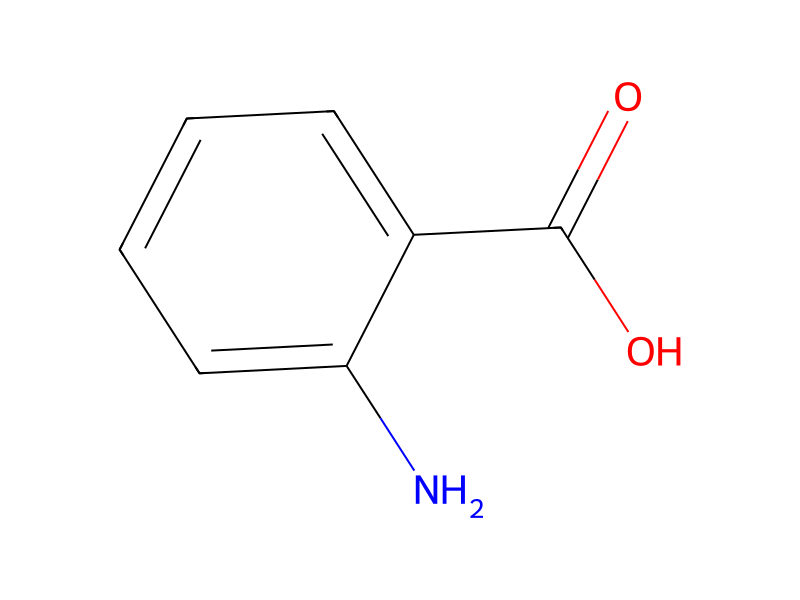
アントラニル酸

Anthranilic Acid

HCID 227
ノートを作成反応を作成見積依頼を出す
印刷プレビュー

データを補完しています。しばらくしてからページを更新すると最新の内容を表示できます
基本情報概要名称と識別子物性安全と法規制化学と産業関連反応化合物ノート
部分構造検索類似構造を探す

基本情報

CAS
118-92-3
標準SMILES
Nc1ccccc1C(=O)O
InChIKey
RWZYAGGXGHYGMB-UHFFFAOYSA-N
分子式
C7H7NO2
平均分子量
137.14 g/mol
単同位体質量
137.04767846

概要

Anthranilic acid appears as odorless white to pale-yellow or tan crystalline powder with a sweetish taste. (NTP, 1992)

名称と識別子

優先名称
Anthranilic Acid
IUPAC
2-aminobenzoic acid
現地名
アントラニル酸
英語名
Anthranilic acid
分子式
C7H7NO2
分子量
137.14

名称と別名

anthranilic acid2-aminobenzoic acid118-92-3o-aminobenzoic acidvitamin L1o-Carboxyaniline2-Carboxyanilineo-Anthranilic acidBenzoic acid, 2-amino-1-Amino-2-carboxybenzeneortho-Aminobenzoic acidBenzoic acid, o-amino-
名称をさらに表示
アントラニル酸2-アミノ安息香酸アントラニール酸ビタミンL12-アミノベンゼンカルボン酸o-アミノ安息香酸アンスラニル酸2-アミノ安息香酸(アントラニル酸)アミノ安息香酸2-aaAnthranilic acid (VitaMin L1)2-AbzAntranilic acidanthranilicAnthranilic Acid 99 %
2-azaniumylbenzoateCarboxyanilineKyselina anthranilovaNCI-C01730Vitamin LKyselina o-aminobenzoova2-amino-Benzoic acidDTXSID8020094

データベース識別子

CAS
118-92-3、1321-11-5、98072-80-1
PubChem CID
227
DTXSID
DTXSID8020094
ChEMBL
CHEMBL14173
ChEBI
CHEBI:30754
UNII
0YS975XI6W
EC Number
204-287-5、308-537-5
Nikkaji
J2.912B

物性

構造計算による物性補完中

XLogP
1.2
極性表面積
63.3 Ų
水素結合供与体数
2
水素結合受容体数
3
回転可能結合数
1
重原子数
10
形式電荷
0
複雑度
136

実験および物理化学的性質

Chemical Classes · 2 件

Nitrogen Compounds -> Aminobenzoic Acids

Dye

Drugs · 2 件

Pharmaceuticals -> Listed in ZINC15

Pharmaceuticals -> Synthetic Cannabinoids or Psychoactive Compounds

LogP · 3 件

log Kow = 1.21

1.21

0.99-1.3

TasteSweetish taste
Density · 5 件

1.412 (NTP, 1992) - Denser than water; will sink

1.412 at 20 °C

1.4 g/cm³

Relative density of the vapour/air-mixture at 20 °C (air = 1): 1.0

1.412 @ 20°C

Color/Form · 3 件

White to pale yellow, crystalline powder

Leaves from alcohol

NEEDLE-LIKE CRYSTALS

Solubility · 6 件

less than 0.1 mg/mL at 68 °F (NTP, 1992)

Freely soluble in alcohol, ether

Soluble in ethanol, ethyl ether, slightly soluble in trifluoroacetic acid, benzene, very soluble in chloroform, pyridine

In water, 3.5X10+3 mg/L at 25 °C

3.5 mg/mL

Solubility in water, g/100ml at 20 °C: 0.35 (poor)

Flash Point

安全と法規制

安全情報は参考情報です。供給元の安全データシート(SDS)、適用法令、専門家による評価に代わるものではありません。

GHS分類

GHS Classification · 6 件

This chemical does not meet GHS hazard criteria for 0.3% (1 of 321) of reports.

Danger

H318 (49.5%): Causes serious eye damage [Danger Serious eye damage/eye irritation]

P264+P265, P280, P305+P351+P338, P305+P354+P338, P317, and P337+P317 (click each P-code to see the statement)

Aggregated GHS information provided per 321 reports by companies from 9 notifications to the ECHA C&L Inventory. Each notification may be associated with multiple companies.

Danger

危険有害性情報

Regulatory Information · 4 件

Chemical: Benzoic acid, 2-amino-

List I Chemical: A chemical specified by regulation that, in addition to legitimate uses, is used in manufacturing a controlled substance in violation of the Act and is important to the manufacture of a controlled substance. (21 eCFR 1310.02)

Status: Active Update: 27-10-2021 https://echa.europa.eu/registration-dossier/-/registered-dossier/10130

Anthranilic acid: Does not have an individual approval but may be used under an appropriate group standard

Other Safety InformationIMAP assessments - Anthranilic acid and its calcium salt: Human health tier II assessment
Fire Hazards · 2 件

This chemical is combustible. (NTP, 1992)

Combustible. Gives off irritating or toxic fumes (or gases) in a fire. Finely dispersed particles form explosive mixtures in air.

Fire PotentialCombustible. /from table/
Health Hazards · 1 件

SYMPTOMS: Symptoms of exposure to this compound may include nausea, vomiting, acidosis, rash, fever, methemoglobinemia and possibly hepatitis. Other symptoms of exposure include allergic reaction and cyanosis (bluing of skin). Skin contact may cause irritation, itching and dermatitis. It may also cause pruritus. Eye contact may cause irritation. Exposure may cause respiratory irritation, mucous membrane irritation, conjunctivitis and liver inflammation.

化学と産業

薬理情報

Metabolism/Metabolites · 6 件

...Occurs as a metabolite of tryptophan, it is intermediate in biosynthesis of this amino acid in some microorganisms.

Formed from n-acetylanthranilic acid, anthranilamide, o-chloracetamidobenzoic acid, chorismic acid, n-formylanthranilic acid, n-hydroxyanthranilic acid, indole-3-acetic acid, isatic acid, isatin, methyl red, o-nitrobenzoic acid.

Yields anthranilic acid-n-beta-d-glucuronide in rat and rabbit; anthraniloyl-beta-d-glucuronic acid in rat and rabbit: Boyland E & Fahmy AR, Biochem J 91: 73 (1964). Arborine in Glycosmis; arborinine in Glycosmis: Groeger D & Johne S, Z Naturf, B 23: 1072 (1968) /from table/

Yields 1-(O-carboxyphenylamino)-1-deoxyribulose-5-phosphate in Neurospora; Wegman J & Demoss JA, J Biol Chem 240: 3781 (1965); in Aerobacter; Egan AF & Gibson F, Biochim Biophys Acta 130: 276 (1966); in Salmonella; Smith D & Bauerle RH, Biochemistry 8: 1451 (1969) /from table/

For more Metabolism/Metabolites (Complete) data for ANTHRANILIC ACID (9 total), please visit the HSDB record page.

Uremic toxins tend to accumulate in the blood either through dietary excess or through poor filtration by the kidneys. Most uremic toxins are metabolic waste products and are normally excreted in the urine or feces.

MeSH Pharmacological ClassificationDrugs used to prevent SEIZURES or reduce their severity.
Absorption, Distribution and Excretion · 2 件

Less than 10% of dose (18 or 101 mg/kg bw)...given by ip injection was excreted in bile of rats...

... Anthranilic acids brain tissue concentrations in rat brain were significantly lower at birth as compared with those found prenatally; then ... increased in the first postnatal week and decreased thereafter.

Tissue LocationsEpidermis
Cellular LocationsCytoplasm
Metabolite PathwaysTryptophan metabolism

用途と製造

関連反応

383 件
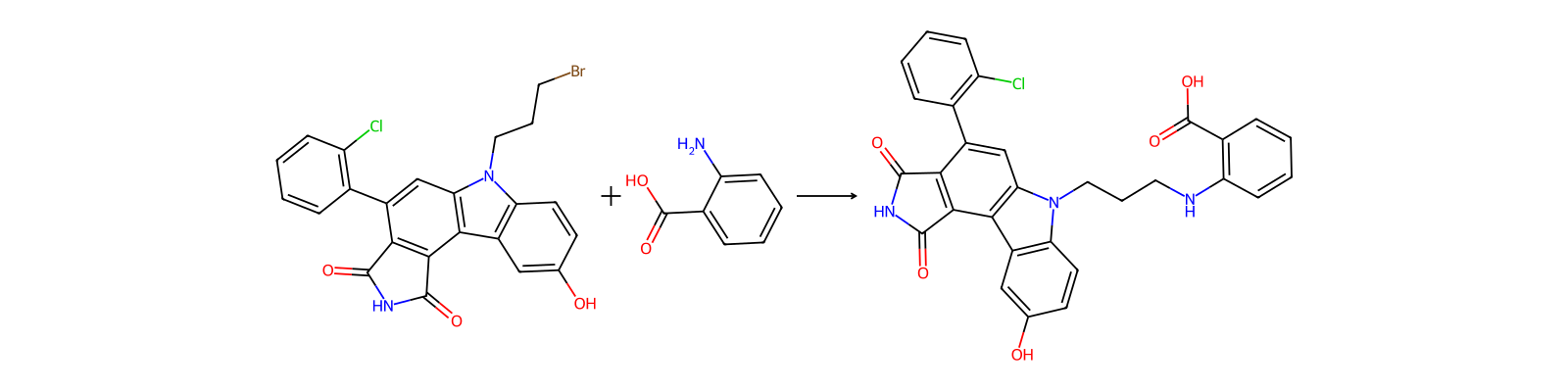
反応記録を作成
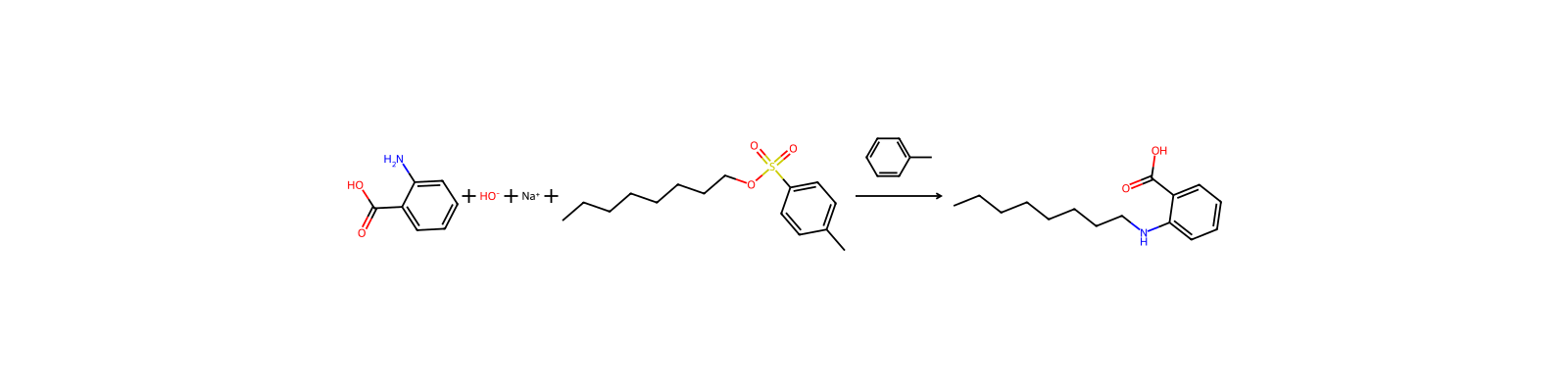
HRID 10152 の反応式
HRID 10152反応物としてuspto-grants-2006_08
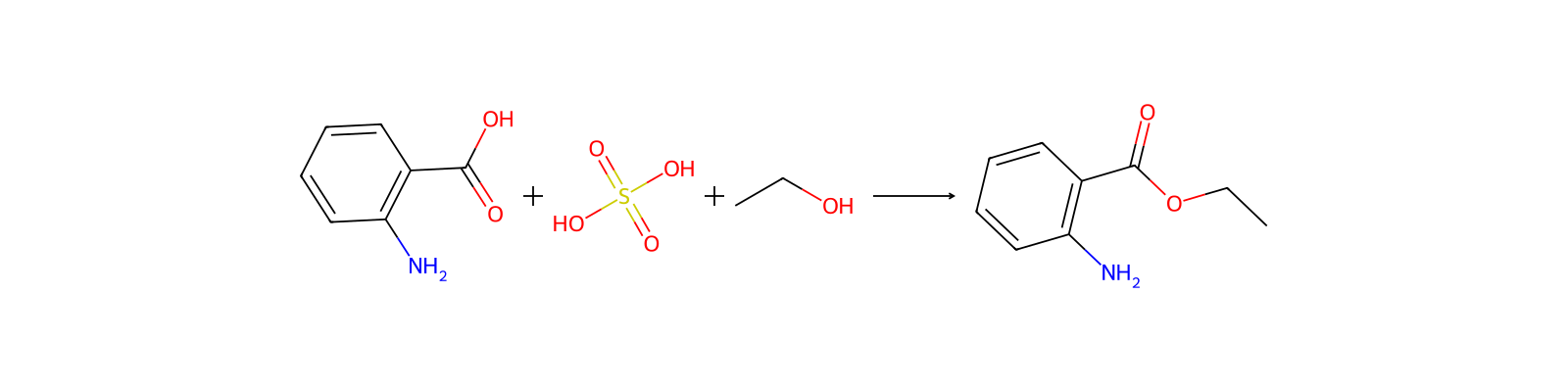
HRID 11099 の反応式
HRID 11099反応物としてuspto-grants-2006_08
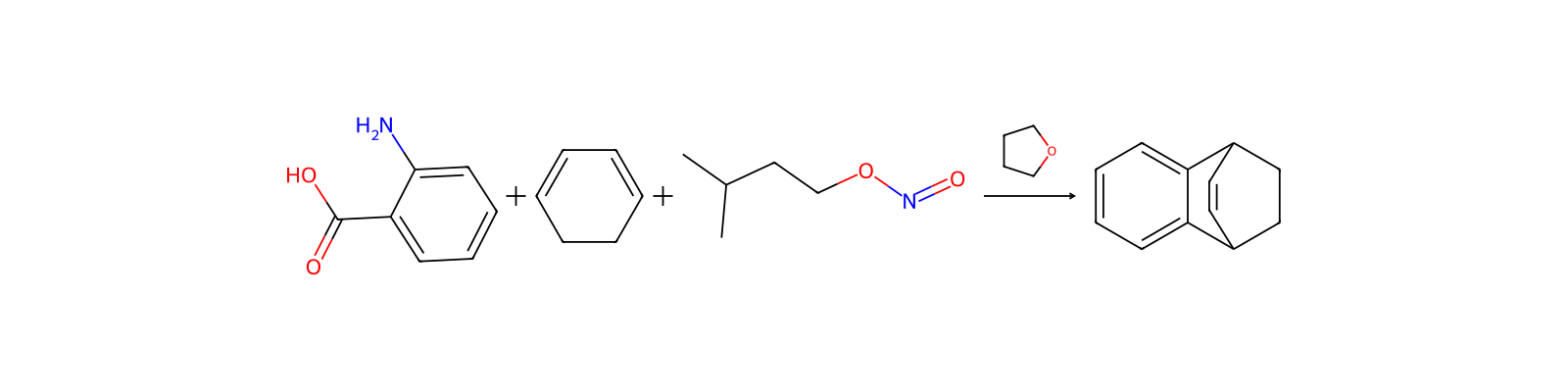
HRID 16188 の反応式
HRID 16188反応物としてuspto-grants-2010_06
HRID 23769 の反応式
HRID 23769反応物としてuspto-grants-2005_02
HRID 36312 の反応式
HRID 36312反応物としてuspto-grants-1995_05
HRID 36313 の反応式
HRID 36313反応物としてuspto-grants-1995_05
HRID 42036 の反応式
HRID 42036反応物としてuspto-grants-2013_09
HRID 62486 の反応式
HRID 62486反応物としてuspto-grants-2016_09
1 / 48 ページ

化合物ノート

読み込み中…

このページの内容基本情報概要名称と識別子物性安全と法規制化学と産業関連反応化合物ノート
その他の操作
ノートを作成反応を作成見積依頼を出す
· 4 件

340 °F (NTP, 1992)

150 °C

150 °C /from table/

150 °C

Boiling Point · 2 件

Sublimes (NTP, 1992)

Sublimes

Decomposition200 °C
Melting Point · 4 件

291 to 295 °F (NTP, 1992)

144-146 °C

146.5 °C

146-148 °C

Vapor Density · 2 件

4.7 (calculated) (NTP, 1992) - Heavier than air; will sink (Relative to Air)

Relative vapor density (air = 1): 4.7

物理化学的性質

融点
144 · 144-148 °C(lit.)
沸点
251.96 °C · 251.96°C (rough estimate)
比重(密度)
1.412 · 1.412
蒸気密度
4.7 · 4.7 (vs air)
蒸気圧
0.1 Pa · 0.1Pa at 52.6℃
屈折率
1.5323 · 1.5323 (estimate)
闪点
150 °C · 150°C
貯蔵温度
0 °C · Store at 0°C
溶解性
エタノール: 透明からわずかに濁っている場合があります
酸解離定数(Pka)
2.108 · 2.108(at 25℃)
外見
粉
色
白色~淡黄色の結晶
水溶解度
5.7 g/L · 5.7g/L(25℃)
Merck
14 · 14,422
BRN
471803 · 471803
Henry's Law Constant
2.6 · 2.6×105 mol/(m3Pa) at 25℃, HSDB (2015)
安定性
安定。強力な酸化剤とは相容れない。
主な用途
底面反射防止コーティング、半導体デバイス、インク、染毛剤、化粧品、慢性炎症性疾患の治療、うつ病
化粧品成分の機能
スキンコンディショニング - その他
InChI
1S/C7H7NO2/c8-6-4-2-1-3-5(6)7(9)10/h1-4H,8H2,(H,9,10)
InChIKey
RWZYAGGXGHYGMB-UHFFFAOYSA-N
SMILES
Nc1c(cccc1)C(=O)O
LogP
0.99 at · 0.99 at 23℃ and pH3.7
CAS データベース
118 · 118-92-3(CAS DataBase Reference)
NISTの化学物質情報
Anthranilic acid(118-92-3)
EPAの化学物質情報
Anthranilic acid (118-92-3)

化学的性質

化学的特性White to off white crystalline powder

Hazards SummaryEmergency treatment: methemoglobinemia; [HSDB] Causes somnolence and ataxia in lethal-dose feeding studies of rats; [RTECS] An eye irritant; [ICSC] May cause irritation, methemoglobinemia, and liver injury; [CAMEO] An irritant; [MSDSonline]
FDA Requirements · 1 件

The following chemical has been specifically designated by the Administrator of the Drug Enforcement Administration as subject to the provisions of this part and parts 1309 and 1313 of this chapter. Anthranilic acid, its esters and its salts are List 1 chemicals; DEA Code: 8530.

Reactive GroupAcids, Carboxylic
Special ReportsDHEW/NCI; Bioassay of o-Anthranilic Acid for Possible Carcinogenicity (1978) Technical Rpt Series No. 36 DHEW Pub No. (NIH) 78-836
Reactivity ProfileANTHRANILIC ACID is incompatible with strong oxidizers. (NTP, 1992)
Atmospheric Standards · 1 件

This action promulgates standards of performance for equipment leaks of Volatile Organic Compounds (VOC) in the Synthetic Organic Chemical Manufacturing Industry (SOCMI). The intended effect of these standards is to require all newly constructed, modified, and reconstructed SOCMI process units to use the best demonstrated system of continuous emission reduction for equipment leaks of VOC, considering costs, non air quality health and environmental impact and energy requirements. Anthranilic acid is produced, as an intermediate or a final product, by process units covered under this subpart.

Chemical DangersOn combustion, forms nitrogen oxides. The solution in water is a weak acid. Reacts with oxidants. This generates fire hazard.

安全と保護具

Fire Fighting · 2 件

Fires involving this material can be controlled with a dry chemical, carbon dioxide or Halon extinguisher. A water spray may also be used. (NTP, 1992)

Use powder, water spray, foam, carbon dioxide.

First Aid Measures · 4 件

Fresh air, rest.

Rinse and then wash skin with water and soap.

First rinse with plenty of water for several minutes (remove contact lenses if easily possible), then refer for medical attention.

Rinse mouth. Give one or two glasses of water to drink. Seek medical attention if you feel unwell.

First Aid · 1 件

EYES: First check the victim for contact lenses and remove if present. Flush victim's eyes with water or normal saline solution for 20 to 30 minutes while simultaneously calling a hospital or poison control center. Do not put any ointments, oils, or medication in the victim's eyes without specific instructions from a physician. IMMEDIATELY transport the victim after flushing eyes to a hospital even if no symptoms (such as redness or irritation) develop.

Safe StorageSeparated from oxidants.
Fire Fighting ProceduresPowder, water spray, foam, carbon dioxide. /from table/
Storage ConditionsSeparated from strong oxidants. /from table/
Cleanup MethodsRemove all ignition sources. Sweep spilled substance into covered containers; if appropriate, moisten first to prevent dusting, then remove to safe place. Do NOT let this chemical enter the environment.
Nonfire Spill Response · 1 件

SMALL SPILLS AND LEAKAGE: Should a spill occur while you are handling this chemical, FIRST REMOVE ALL SOURCES OF IGNITION, then you should dampen the solid spill material with 60-70% ethanol and transfer the dampened material to a suitable container. Use absorbent paper dampened with 60-70% ethanol to pick up any remaining material. Seal the absorbent paper, and any of your clothes, which may be contaminated, in a vapor-tight plastic bag for eventual disposal. Solvent wash all contaminated surfaces with 60-70% ethanol followed by washing with a soap and water solution. Do not reenter the contaminated area until the Safety Officer (or other responsible person) has verified that the area has been properly cleaned.

Disposal Methods · 1 件

SRP: The most favorable course of action is to use an alternative chemical product with less inherent propensity for occupational exposure or environmental contamination. Recycle any unused portion of the material for its approved use or return it to the manufacturer or supplier. Ultimate disposal of the chemical must consider: the material's impact on air quality; potential migration in soil or water; effects on animal, aquatic, and plant life; and conformance with environmental and public health regulations.

Spillage Disposal · 1 件

Personal protection: particulate filter respirator adapted to the airborne concentration of the substance. Sweep spilled substance into covered containers. If appropriate, moisten first to prevent dusting. Then store and dispose of according to local regulations. Do NOT let this chemical enter the environment.

Preventive Measures · 2 件

Local exhaust or breathing protection. Protective gloves. Safety goggles, or eye protection in combination with breathing protection if powder. Do not eat, drink, or smoke during work. /from table/

SRP: The scientific literature for the use of contact lenses in industry is conflicting. The benefit or detrimental effects of wearing contact lenses depend not only upon the substance, but also on factors including the form of the substance, characteristics and duration of the exposure, the uses of other eye protection equipment, and the hygiene of the lenses. However, there may be individual substances whose irritating or corrosive properties are such that the wearing of contact lenses would be harmful to the eye. In those specific cases, contact lenses should not be worn. In any event, the usual eye protection equipment should be worn even when contact lenses are in place.

Eye PreventionWear safety spectacles.

毒性情報

TreatmentKidney dialysis is usually needed to relieve the symptoms of uremic syndrome until normal kidney function can be restored.
Health EffectsChronic exposure to uremic toxins can lead to a number of conditions including renal damage, chronic kidney disease and cardiovascular disease.
Ecotoxicity Values · 2 件

LC50 Leuciscus idus (freshwater fish; Ide) 215-1000 mg/L for 1 hr /conditions of bioassay not specified/

LC50 Leuciscus idus (Freshwater fish, Ide) 100-215 mg/L for 96 hr /conditions of bioassay not specified/

Environmental Fate · 3 件

TERRESTRIAL FATE: Based on a classification scheme(1), an estimated Koc value of 110(SRC), determined from a log Kow of 1.21(2) and a regression-derived equation(3), indicates that anthranilic acid is expected to have high mobility in soil(SRC). The pKa of anthranilic acid is 2.14(4), indicating that this compound will primarily exist in anion form in the environment and anions generally do not adsorb more strongly to soils containing organic carbon and clay than their neutral counterparts(5). Volatilization of anthranilic acid from moist soil surfaces is not expected to be an important fate process(SRC) given an estimated Henry's Law constant of 3.8X10⁻¹¹ atm-cu m/mole(SRC), using a fragment constant estimation method(6). Anthranilic acid is not expected to volatilize from dry soil surfaces(SRC) based upon an estimated vapor pressure of 2.8X10⁻⁴ mm Hg(SRC), determined from a fragment constant method(7). Anthranilic acid (10 ppm) degraded 100% in 2 days using a 1% suspension of Niagara silt loam at 25 °C(8).

AQUATIC FATE: Based on a classification scheme(1), an estimated Koc value of 110(SRC), determined from a log Kow of 1.21(2) and a regression-derived equation(3), indicates that anthranilic acid is not expected to adsorb to suspended solids and sediment(SRC). Volatilization from water surfaces is not expected(3) based upon an estimated Henry's Law constant of 3.8X10⁻¹¹ atm-cu m/mole(SRC), developed using a fragment constant estimation method(4). According to a classification scheme(5), an estimated BCF of 3(SRC), from its log Kow(2) and a regression-derived equation(6), suggests the potential for bioconcentration in aquatic organisms is low(SRC). Anthranilic acid was shown to degrade rapidly in a variety of aqueous aerobic and anaerobic screening test(7-16). Anthranilic acid photodegrades rapidly in natural seawater(17). Anthranilic acid is shown to have a maximum absorption at 337 nm(18) and therefore may be susceptible to direct photolysis by sunlight(SRC).

ATMOSPHERIC FATE: According to a model of gas/particle partitioning of semivolatile organic compounds in the atmosphere(1), anthranilic acid, which has an estimated vapor pressure of 2.8X10⁻⁴ mm Hg at 25 °C(SRC), determined from a fragment constant method(2), is expected to exist solely as a vapor in the ambient atmosphere. Vapor-phase anthranilic acid is degraded in the atmosphere by reaction with photochemically-produced hydroxyl radicals(SRC); the half-life for this reaction in air is estimated to be 10 hours(SRC), calculated from its rate constant of 4.0X10⁻¹¹ cu cm/molecule-sec at 25 °C(SRC) that was derived using a structure estimation method(3).

Adverse EffectsOccupational hepatotoxin - Secondary hepatotoxins: the potential for toxic effect in the occupational setting is based on cases of poisoning by human ingestion or animal experimentation.
Exposure Routes · 2 件

The substance can be absorbed into the body by ingestion.

Endogenous, Ingestion, Dermal (contact)

Toxicity Summary · 1 件

Uremic toxins such as anthranilic acid are actively transported into the kidneys via organic ion transporters (especially OAT3). Increased levels of uremic toxins can stimulate the production of reactive oxygen species. This seems to be mediated by the direct binding or inhibition by uremic toxins of the enzyme NADPH oxidase (especially NOX4 which is abundant in the kidneys and heart) (A7868). Reactive oxygen species can induce several different DNA methyltransferases (DNMTs) which are involved in the silencing of a protein known as KLOTHO. KLOTHO has been identified as having important roles in anti-aging, mineral metabolism, and vitamin D metabolism. A number of studies have indicated that KLOTHO mRNA and protein levels are reduced during acute or chronic kidney diseases in response to high local levels of reactive oxygen species (A7869).

Signs and Symptoms · 2 件

Redness. Pain.

As a uremic toxin, this compound can cause uremic syndrome. Uremic syndrome may affect any part of the body and can cause nausea, vomiting, loss of appetite, and weight loss. It can also cause changes in mental status, such as confusion, reduced awareness, agitation, psychosis, seizures, and coma. Abnormal bleeding, such as bleeding spontaneously or profusely from a very minor injury can also occur. Heart problems, such as an irregular heartbeat, inflammation in the sac that surrounds the heart (pericarditis), and increased pressure on the heart can be seen in patients with uremic syndrome. Shortness of breath from fluid buildup in the space between the lungs and the chest wall (pleural effusion) can also be present.

Ongoing Test Status · 1 件

The following link will take the user to the National Toxicology Program (NTP) Test Agent Search Results page, which tabulates all of the "Standard Toxicology & Carcinogenesis Studies", "Developmental Studies", and "Genetic Toxicity Studies" performed with this chemical. Clicking on the "Testing Status" link will take the user to the status (i.e., in review, in progress, in preparation, on test, completed, etc.) and results of all the studies that the NTP has done on this chemical. [http://ntp-apps.niehs.nih.gov/ntp_tox/index.cfm?fuseaction=ntpsearch.searchresults&searchterm=118-92-3]

Effluent ConcentrationsAnthranilic acid was detected in ammunition plant wastewater in Stadtallendorf, Germany(1).
ICSC Environmental DataThe substance is harmful to aquatic organisms. This substance may be hazardous to the environment. Special attention should be given to birds.
Soil Adsorption/Mobility · 1 件

The Koc of anthranilic acid is estimated as 110(SRC), using a log Kow of 1.21(1) and a regression-derived equation(2). According to a classification scheme(3), this estimated Koc value suggests that anthranilic acid is expected to have high mobility in soil. The pKa of anthranilic acid is 2.14(4), indicating that this compound will primarily exist in anion form in the environment and anions generally do not adsorb more strongly to soils containing organic carbon and clay than their neutral counterparts(5).

法規制情報

FDA Requirements · 1 件

The following chemical has been specifically designated by the Administrator of the Drug Enforcement Administration as subject to the provisions of this part and parts 1309 and 1313 of this chapter. Anthranilic acid, its esters and its salts are List 1 chemicals; DEA Code: 8530.

Atmospheric Standards · 1 件

This action promulgates standards of performance for equipment leaks of Volatile Organic Compounds (VOC) in the Synthetic Organic Chemical Manufacturing Industry (SOCMI). The intended effect of these standards is to require all newly constructed, modified, and reconstructed SOCMI process units to use the best demonstrated system of continuous emission reduction for equipment leaks of VOC, considering costs, non air quality health and environmental impact and energy requirements. Anthranilic acid is produced, as an intermediate or a final product, by process units covered under this subpart.

安全データ

wgk
2
tsca
TSCA listed
rtecs
CB2450000
hs_code
29224300
risk_code
36-37-36/37/38
hazard_code
Xi
safety_code
26-36-39
自然発火温度
>530°C
Hazard Classifications
Eye Dam. 1
ストレージクラス
11 - Combustible Solids
有毒物質データの
118-92-3(Hazardous Substances Data)
Uses · 6 件

Used as an intermediate for dyes, drugs, pesticides, perfumes, flavors, and bird and insect repellents; Also used as a mold inhibitor in soya sauce and to enhance the milk production in cows; [HSDB]

Farming (Feed Additives) [Category: Industry]

Dyes, drugs, perfumes, and pharmaceuticals.

CHEM INT FOR CI ACID YELLOW 121, VAT VIOLET 13, VAT BLUE 1, CI DIRECT BROWN 112, MORDANT YELLOW, MORDANT RED 9, MORDANT BROWN 40, & PIGMENT RED 60, & FOR ITS ESTERS USED IN PERFUMES & FUNGICIDES, & IN SACCHARIN; CADMIUM SALT- AN ASCARICIDE IN SWINE; MOLD INHIBITOR IN SOYA SAUCE

As mold inhibitor in soya sauce; its esters have found applications in perfumes, synthetic flavors, bird and insect repellents, as fungicides for syrups

THERAP CAT (VET): The cadmium salt has been used as an acaricide in swine

U.S. Exports · 2 件

(1972) No Data

(1975) No Data

U.S. Imports · 2 件

(1972) 1.02X10+8 GRAMS (PRINCPL CUSTMS DISTS)

(1975) 5.00X10+6 GRAMS (PRINCPL CUSTMS DISTS)

U.S. Production · 3 件

(1972) PROBABLY GREATER THAN 9.08X10+5 GRAMS

(1975) PROBABLY GREATER THAN 4.54X10+5 GRAMS

Production volumes for non-confidential chemicals reported under the Inventory Update Rule. [Table#3092]

Methods of Manufacturing · 4 件

...PREPARED BY FISCHER IN 1896 BY HEATING 2-NITROSOBENZOIC ACID WITH AQ AMMONIUM SULFIDE @ 100 °C...PRODUCED COMMERCIALLY BY HOFMANN REACTION, IN WHICH PHTHALIMIDE IS REACTED WITH SODIUM HYPOCHLORITE & CAUSTIC SODA...

PREPD BY REDUCTION OF O-NITROBENZOIC ACID

TREATMENT OF PHTHALIMIDE WITH AN ALKALINE HYPOBROMITE SOLN.

2-Aminobenzoic acid is usually made from phthalic anhydride via sodium phthalamate. Oxidative decarboxylation (the Hofmann reaction) is carried out by the addition of sodium hypochlorite solution at 60 - 100 °C followed by acidification. The product is purified with activated carbon and bisulfite.

Formulations/PreparationsGRADES: TECHNICAL (95-98%); 99% OR BETTER.
DEA Listed Chemicals · 2 件

Anthranilic acid, its esters, and its salts

A chemical specified by regulation that, in addition to legitimate uses, is used in manufacturing a controlled substance in violation of the Act and is important to the manufacture of a controlled substance. (21 eCFR 1310.02)

General Manufacturing Information · 2 件

Benzoic acid, 2-amino-: ACTIVE

VITAMIN L & VITAMIN L1 FORMERLY USED TO DESCRIBE ANTHRANILIC ACID.

応用分野 · 6 件

解説アントラニル酸.フタルイミドのホフマン転位,あるいはo-ニトロ安息香酸の還元によってつくられる.生体内ではビタミン L1 として存在し,キヌレニナーゼの作用によりキヌレニンからつくられる.結晶.融点145 ℃.熱水,エタノール,エーテルに可溶.酸性および塩基性を示す.Ka 9.3×10⁻⁶(19 ℃),Kb 6.3×10⁻³(25 ℃).トリプトファン代謝の中間物である.またカドミウム,コバルトなどの金属イオンと不溶性のキレート化合物をつくるので,これらの定量に用いられる.染料や顔料の合成の中間体としても用いられる.肝臓や酵母中に存在し、ネズミの乳汁分泌に必要であるが、人間については未確認である。o-ニトロ安息香酸の還元によってつくられる。生体内では、アントラニル酸合成酵素によってつくられ、トリプトファンの母体となるほか、トリプトファンの代謝産物のキヌレニンからキヌラーゼの作用によってもつくられる。

用途生体内でのトリプトファン合成に関与するシキミ酸経路では、コリスミ酸とグルタミンからアントラニル酸シンターゼによって合成される。また様々なアルカロイドの前駆体となる。一方、トリプトファンの代謝経路であるキヌレニン経路においてキヌレニンより生合成される。 メタノールとのエステルであるアントラニル酸メチルはブドウやジャスミンに含まれる香気成分である。1991年(平成3年)に改正された麻薬及び向精神薬取締法で、向精神薬原料に加えられた。

使用Anthranilic acid can be used in organic synthesis to generate the benzyne intermediate. It is used as an intermediate for production of dyes, pigments, and saccharin. It and its esters are used in preparing perfumes to imitate jasmine and orange, pharmaceuticals and UV-absorber as well as corrosion inhibitors for metals and mold inhibitors in soya sauce.

一般的な説明Odorless white to pale-yellow or tan crystalline powder with a sweetish taste.

使用用途アントラニル酸は、カドミウムやコバルト等の金属イオンと不溶性のキレート化合物を生成するため、これらの金属イオンの定量に用いられている他、インディゴ等の染料や顔料を合成する際に、合成中間体としても使用されています。例えば、ジメチルアニリンとのジアゾカップリング反応により、アゾ染料であるメチルレッドの合成が可能です。 また、アントラニル酸の誘導体も、種々の利用法があります。例えば、アントラニル酸とメタノールのエステル化合物は、香料として利用される化合物です。 アントラニル酸カルシウムは、工業的にはアクリジンの原料として有用な化合物です。このアクリジンは、アクリジン系染料や医薬品の有機合成原料、生体組織の部分染着試薬として広く利用されています。

使用用途アミノ安息香酸のうち、o-アミノ安息香酸は、水銀、などの金属イオンの分析試薬として使用されます。また、染料の合成にも利用可能です。 それに対して、p-アミノ安息香酸は主に美容分野に用いられており、紫外線が体内や肌の奥に侵入するのを抑制するため、肌の美白を補助する成分としてサプリメントに使われています。医薬品としては、過敏性腸症候群の治療薬としても使用可能です。 さらに、アミノ安息香酸のエステルの誘導体やアミドの誘導体は、局所麻酔薬としても利用されています。

調製方法

純化方法Crystallise anthranilic acid from water (charcoal). It has also been recrystallised from 50% aqueous acetic acid. It sublimes in a vacuum. [Beilstein 14 IV 1004.]

上流・下流製品情報

上流原料

安息香酸ナトリウム次亜塩素酸ナトリウムアンモニア水塩素水和物フタル酸無水物塩酸水酸化ナトリウム活性炭素硫酸水素

下流製品

トラニラスト3-(2-クロロ-9-ヒドロキシ-9H-チオキサンテン-9-イル)-N,N-ジメチル-1-プロパンアミン2-ヒドラジノ安息香酸塩酸塩Benzoic acid, 2-[[1-amino-7-[[4-[[6-amino-5-[(3-carboxy-4-hydroxyphenyl)azo]-1-hydroxy-3-sulfo-2-naphthalenyl]azo]-2-methoxyphenyl]azo]-8-hydroxy-3,6-disulfo-2-naphthalenyl]azo]-5-[[6-amino-5-[(3-carboxy-4-hydroxyphenyl)azo]-1-hydroxy-3-sul6,10,12-トリクロロナフト[2,3-c]アクリジン-5,8,14(13H)-トリオンメチルレッド2-ヨード安息香酸4-クロロ-2-(2-カルボキシフェニルアミノ)安息香酸アントラニル酸エチルフェナジン-1-カルボン酸2,2'-ジチオジ安息香酸trisodium [mu-[2-[[1-hydroxy-6-[[[[5-hydroxy-6-[(2-hydroxy-5-sulphophenyl)azo]-7-sulpho-2-naphthyl]amino]carbonyl]amino]-3-sulpho-2-naphthyl]azo]benzoato(7-)]]dicuprate(3-)5-ヨードアントラニル酸1,2-ジヒドロ-3H-インダゾール-3-オンチオインジゴ4-ヒドロキシ-1-メチル-3-[(3-ニトロフェニル)アゾ]-2(1H)-キノリノンFluorescent Brightener PfN-ベンジルアントラニル酸2-クロロチオキサントン2-フルオロ安息香酸2-(ジメチルアミノ)安息香酸N-フェニルアントラニル酸N-アセチルアントラニル酸4-ヒドロキシキナゾリン2-[(2-ヒドロキシ-3,6-ジスルホ-1-ナフタレニル)アゾ]安息香酸·2バリウムアントラニル酸フェネチル3,5-ジブロモ安息香酸5-ブロモアントラニル酸2-(2-オキソ-2-ヒドロキシエチルアミノ)安息香酸アクリジン-9-アミンクロザピンReactive Blue X-R2,5-ジブロモ安息香酸1-ベンジル-1H-インダゾール-3-オール2-(4-クロロフェニルチオ)安息香酸Copper, 2,2'-[carbonylbis[imino(1-hydroxy-3-sulfo-6,2-naphthalenediyl)azo]]bis[benzoic acid] complexテトラフルオロほう酸 1,3-ベンゾジチオリリウム6-ヨード-4-キナゾロン ヨウ化物イサト酸無水物4-クロロキナゾリン

補足説明

定義ChEBI: An aminobenzoic acid that is benzoic acid having a single amino substituent located at position 2. It is a metabolite produced in L-tryptophan-kynurenine pathway in the central nervous system.