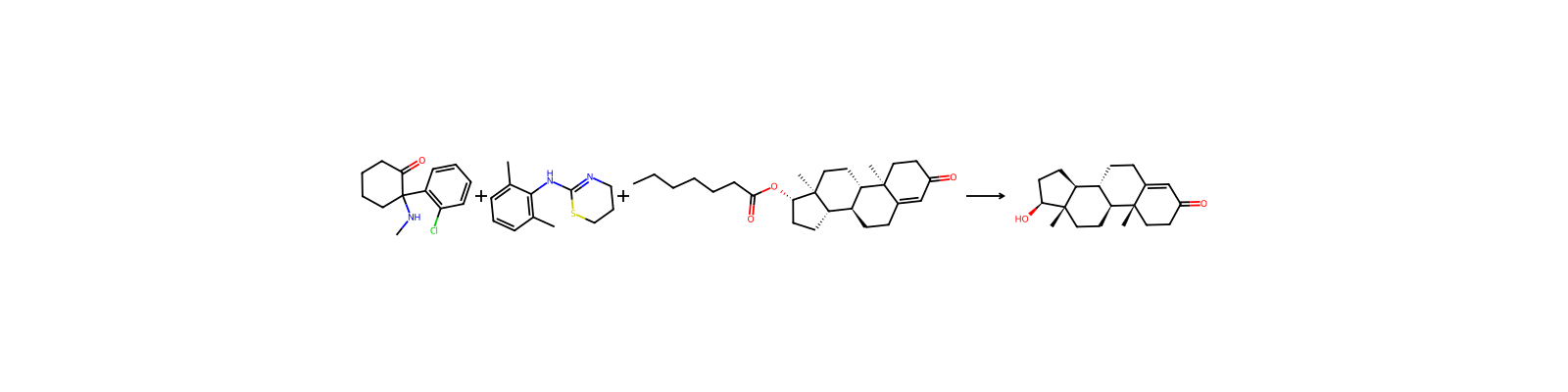

基本情報
- 標準SMILES
Cc1cccc(C)c1NC1=NCCCS1- InChIKey
BPICBUSOMSTKRF-UHFFFAOYSA-N- 分子式
- C12H16N2S
- 平均分子量
- 220.34 g/mol
- 単同位体質量
- 220.10341951
概要
Xylazine is a methyl benzene that is 1,3-dimethylbenzene which is substituted by a 5,6-dihydro-4H-1,3-thiazin-2-ylnitrilo group at position 2. It is an alpha2 adrenergic receptor agonist and frequently used in veterinary medicine as an emetic and sedative with analgesic and muscle relaxant properties. It has a role as an emetic, an analgesic, an alpha-adrenergic agonist, a sedative and a muscle relaxant. It is a methylbenzene, a 1,3-thiazine and a secondary amino compound. It is a conjugate base of a xylazine(1+).
名称と識別子
- 優先名称
- Xylazine
- IUPAC
- N-(2,6-dimethylphenyl)-5,6-dihydro-4H-1,3-thiazin-2-amine
- 現地名
- キシラジン
- 英語名
- Xylazine
- 分子式
- C12H16N2S
- 分子量
- 220.33
名称と別名
xylazine7361-61-7N-(2,6-Dimethylphenyl)-5,6-dihydro-4H-1,3-thiazin-2-amineXilazinaChanazineXylazinumXylazinBAY 14705,6-Dihydro-2-(2,6-xylidino)-4H-1,3-thiazineWH 72864H-1,3-Thiazin-2-amine, N-(2,6-dimethylphenyl)-5,6-dihydro-2-(2,6-Dimethylanilino)-5,6-dihydro-4H-1,3-thiazine
名称をさらに表示
2-[(2,6-ジメチルフェニル)アミノ]-5,6-ジヒドロ-4H-1,3-チアジンN-(2,6-ジメチルフェニル)-5,6-ジヒドロ-4H-1,3-チアジン-2-アミン5,6-ジヒドロ-2-(2,6-キシリジノ)-4H-1,3-チアジンキシラジンキシラジン標準品Xylazine (free base)wh7286bay1470Mobay RompunXylazine (CRM)Xylazine, >=99%
DTXSID30406432-(2,6-Dimethylphenylamino)-4H-5,6-dihydro-1,3-thiazine2KFG9TP5V8NSC-758142CHEBI:92386DTXCID1020643XylaxineRefChem:56228
データベース識別子
- CAS
7361-61-7- PubChem CID
- 5707
- DTXSID
DTXSID3040643- ChEMBL
CHEMBL297362- ChEBI
CHEBI:92386- UNII
- 2KFG9TP5V8
- EC Number
- 230-902-1
- Nikkaji
- J8.925G
物性
構造計算による物性
- XLogP
- 2.8
- 極性表面積
- 49.7 Ų
- 水素結合供与体数
- 1
- 水素結合受容体数
- 2
- 回転可能結合数
- 2
- 重原子数
- 15
- 形式電荷
- 0
- 複雑度
- 230
実験および物理化学的性質
Drugs
DEA NFLIS-Drug Category -> Depressants and Tranquilizers
Pharmaceuticals -> Listed in ZINC15
LogP1.34
Animal Drugs
Active Ingredients (Xylazine) -> FDA Greenbook
Pharmaceuticals -> UK Veterinary Medicines Directorate List
Pharmaceuticals -> Animal Drugs -> Approved in Taiwan
Collision Cross Section
147.9 Ų [M+H]+ [CCS Type: TW; Method: Major Mix IMS/Tof Calibration Kit (Waters)]
148.6 Ų [M+H]+ [CCS Type: DT; Method: single field calibrated]
147.8 Ų [M+H]+ [CCS Type: TW; Method: calibrated with polyalanine and drug standards]
147.16 Ų [M+H]+ [CCS Type: TW; Method: calibrated with polyalanine and drug standards]
148.72 Ų [M+H]+
物理化学的性質
- 融点
- 140 C · 140 C
- 沸点
- 334.2 · 334.2±52.0 °C(Predicted)
- 比重(密度)
- 1.0905 · 1.0905 (rough estimate)
- 屈折率
- 1.57 · 1.5700 (estimate)
- 貯蔵温度
- -20 °C · -20°C
- 溶解性
- 50 mg/mlでメタノールに可溶。希酸溶液にも可溶。 · 50mg/mlでメタノールに可溶。希酸溶液にも可溶。
- 酸解離定数(Pka)
- 7.67 · 7.67±0.20(Predicted)
- 外見
- Powder
- InChI
- InChI=1S/C12H16N2S/c1-9-5-3-6-10(2)11(9)14-12-13-7-4-8-15-12/h3,5-6H,4,7-8H2,1-2H3,(H,13,14)
- InChIKey
- BPICBUSOMSTKRF-UHFFFAOYSA-N
- SMILES
- S1CCCN=C1NC1=C(C)C=CC=C1C
- CAS データベース
- 7361 · 7361-61-7(CAS DataBase Reference)
安全と法規制
GHS分類
GHS Classification
Danger
H301 (98.1%): Toxic if swallowed [Danger Acute toxicity, oral]
P264, P270, P301+P316, P321, P330, P405, and P501 (click each P-code to see the statement)
Aggregated GHS information provided per 54 reports by companies from 6 notifications to the ECHA C&L Inventory.
危険有害性情報
Regulatory InformationXylazine: Does not have an individual approval but may be used as a component in a product covered by a group standard. It is not approved for use as a chemical in its own right.
Other Safety InformationIMAP assessments - 4H-1,3-Thiazin-2-amine, N-(2,6-dimethylphenyl)-5,6-dihydro-: Environment tier I assessment
Hazard Classes and CategoriesAcute Tox. 3 (98.1%)
毒性情報
Exposure RoutesIIntravenous (IV) administration was a common route for Xylazine as noted in case reports. Other routes included subcutaneous (SC), intramuscular (IM), and inhalation, with overall doses ranging from 40 mg to 4300 mg in humans.
Toxicity Summary
Xylazine use can cause drowsiness, abnormally slow or absent breathing, low blood pressure, and a slow heart rate. A coma can develop and require the insertion of a breathing tube and hospitalization. The overdoes signs and symptoms are similar to those of heroin, fentanyl, and other opioids. If xylazine is added to opioids, severe toxicity and death can occur due to the combined effects of the drugs. Withdrawal can occur in people who abruptly discontinue use, and can result in markedly elevated blood pressure, rapid heart rate, and agitation. Headaches, insomnia, and nausea can also occur during withdrawal.
Acute xylazine exposure can lead to severe central nervous system (CNS) depression, respiratory depression, bradycardia, hypotension, and, in extreme cases, cardiac arrest. Long-term use of xylazine-mixed illicit substances can result in cumulative toxic effects, e.g., chronic wounds and ulcers on the skin. The primary metabolite of xylazine, 2,6-xylidine, has carcinogenic and genotoxic effects, and long-term users of xylazine appear to be at increased risk for malignancies. There are no human data on the effect of xylazine on embryogenesis and pregnancy. Studies have found increased uterine contractions, decreased uterine blood flow, and fetal loss when used in pregnant cattle and goats.
Antidote and Emergency Treatment
Identification of xylazine toxicity is difficult due to its use as an adulterant and possible polysubstance use. Identifying xylazine toxicity based on history and physical examination is challenging since other substances and their toxidromes may be present. The authors of this publication suggest having a low threshold of suspicion for coadministration of xylazine and any available illicit drug. Xylazine toxicity by itself is characterized by CNS depression. Symptoms may include a "high" feeling, sedation, dry mouth, dysarthria, hyporeflexia, disorientation, dysmetria, miosis, hypotension, bradycardia, hypothermia, and hyperglycemia. Xylazine combined with other CNS depressants such as opioids, benzodiazepines, or alcohol can cause severe CNS depression with signs and symptoms of obtundation, coma, muscle relaxation, hypotension or hypertension, respiratory depression, areflexia, asthenia or apnea, cardiac arrhythmias or cardiac arrest. As of June 2023, no pharmacological antidote for xylazine intoxication has been approved by the United States Food and Drug Administration (FDA). Management of xylazine intoxication involves supportive care, monitoring for adverse effects, and interventional management as symptoms present. The few studies on humans and animals indicate potentially life-threatening complications of xylazine use, including biventricular failure, pulmonary edema, cardiac necrosis, valvular dysfunction, and insulin-dependent diabetes mellitus.
Human Toxicity Values
The doses in case reports ranged from 40 mg to 4300 mg in humans. The average dose in fatal cases was 1,200 mg, compared to 525 mg in non-fatal cases. Concurrent administration of other drugs, primarily opioids, occurred in 28 cases (47.5%).
安全データ
- wgk
- 3
- rtecs
- XJ0776300
- ridadr
- UN 2811 6.1/PG 3
- 毒性
- LD50 in mice (mg/kg): 43 i.v.; 121 s.c.; 240 orally; LD50 in rats (mg/kg): 130 orally (Sagner)
- hs_code
- 2934990002
- risk_code
- 25-36/37/38
- hazard_code
- T,Xi
- safety_code
- 45-37/39-26
- hazard_class
- 6.1
- Hazard Classifications
- Acute Tox. 3 Oral
- ストレージクラス
- 6.1C - Combustible acute toxic Cat.3toxic compounds or compounds which causing chronic effects
化学と産業
薬理情報
ATC CodeQN - Nervous system
MeSH Pharmacological Classification
Compounds capable of relieving pain without the loss of CONSCIOUSNESS.
Drugs used to induce drowsiness or sleep or to reduce psychological excitement or anxiety.
A heterogeneous group of drugs used to produce muscle relaxation, excepting the neuromuscular blocking agents. They have their primary clinical and therapeutic uses in the treatment of muscle spasm and immobility associated with strains, sprains, and injuries of the back and, to a lesser degree, injuries to the neck. They have been used also for the treatment of a variety of clinical conditions that have in common only the presence of skeletal muscle hyperactivity, for example, the muscle spasms that can occur in MULTIPLE SCLEROSIS. (From Smith and Reynard, Textbook of Pharmacology, 1991, p358)
Compounds that bind to and activate ADRENERGIC ALPHA-2 RECEPTORS.
用途と製造
Consumer Uses
Xylazine is available for veterinary usage for injection in concentrations of 20 mg/mL, 100 mg/mL, and 300 mg/mL. The solution may be dried into a powder or salted. Xylazine may be added to other illicit substances for many reasons.
Xylazine is an animal tranquilizer used to provide sedation, pain relief, and muscle relaxation. It was initially studied in humans as a potential blood pressure-lowering drug; however, it was found to cause excessive sleepiness. Currently, xylazine is not approved for human use by the U.S. Food and Drug Administration. Xylazine was initially discovered as an illicit drug contaminant in the U.S. in the early 2000s, e.g., it has been found in cocaine, heroin, and fentanyl.
Use Classification
Animal Drugs -> FDA Approved Animal Drug Products (Green Book) -> Active Ingredients
Veterinary Drug -> ADRENOCEPTOR_AGONIST -> JECFA Functional Classes
Pharmaceuticals -> Animal Drugs -> Approved in Taiwan
応用分野
説明Xylazine is an agonist of α2-adrenergic receptors (Ki = 194 nM). It is an analog of clonidine, an α2-adrenergic receptor agonist used to reduce blood pressure. Xylazine is used for sedation, anesthesia, and analgesia in non-human mammals. This product is also available as an analytical reference standard .
使用Xylazine is an α2 class of adrenergic receptor agonist. Xylazine is a clonidine analoque that acts on presynaptic and postsynaptic receptors as an a 2-adrenergic agonist.
一般的な説明Xylazine is soluble in methanol (50 mg/ml), yielding a clear, colorless solution. It is also soluble in dilute HCl acid and in chloroform. Xylazine is practically insoluble in water and in alkali solutions.
上流・下流製品情報
上流原料
関連反応
25 件


関連ノート
読み込み中…