ホームMCPワークベンチSkills
ホームワークベンチ通知マイページ
llms.txt · MCPガイドプライバシーポリシー · 利用規約 · サポートv1.8.0
  1. ホーム
  2. /化合物

3-クロロアニリン

3-Chloroaniline

HCID 7932
ノートを作成反応を作成見積依頼を出す
印刷プレビュー
基本情報概要名称と識別子物性安全と法規制化学と産業関連反応化合物ノート
部分構造検索類似構造を探す

基本情報

CAS
108-42-9
標準SMILES
Nc1cccc(Cl)c1
InChIKey
PNPCRKVUWYDDST-UHFFFAOYSA-N
分子式
C6H6ClN
平均分子量
127.57 g/mol
単同位体質量
127.01887687

概要

M-chloroaniline is a colorless to light amber liquid with a sweet odor. (NTP, 1992)

名称と識別子

優先名称
3-Chloroaniline
IUPAC
3-chloroaniline
現地名
3-クロロアニリン
英語名
3-Chloroaniline
分子式
C6H6ClN
分子量
127.57

名称と別名

3-CHLOROANILINE108-42-9m-Chloroaniline3-ChlorobenzenamineBenzenamine, 3-chloro-3-Chlorophenylaminem-ChloranilineOrange GC BaseFast Orange GC Basem-Chlorophenylaminem-Aminochlorobenzenem-Chloroaminobenzene
名称をさらに表示
3-クロロアニリンダイトーオレンジベースGCオレンジベースNGC3-クロロフェニルアミンオレンジGCベース3-クロロベンゼン-1-アミンC.I.アゾイックジアゾコンポーネント(ベース)C.I.アゾイックジアゾコンポーネント2(ベース)1-クロロ-3-アミノベンゼンファーストオレンジGベースファーストオレンジGCベースアゾイックDC2(ベース)m-クロロアニリンC.I.アゾイックジアゾコンポーネント2【base】(3-クロロフェニル)アミン1-アミノ-3-クロロベンゼン3-クロロベンゼンアミンmクロロアニリンM‐クロロアニリン3-Chloranilin3-Chloraniline1,3-aminochlorobenzeneoroaniLCI 37005
Aniline, m-chloro-1-Amino-3-chlorobenzene3-Cloroaniline3-Chlooranilinenmeta-AminochlorobenzeneDTXSID00247616GKR52SKIYmeta-chloroaniline

データベース識別子

CAS
108-42-9
PubChem CID
7932
DTXSID
DTXSID0024761
ChEMBL
CHEMBL325415
ChEBI
CHEBI:229245
UNII
6GKR52SKIY
EC Number
203-581-0
Nikkaji
J2.422H、J2.759.604E

物性

構造計算による物性

XLogP
1.9
極性表面積
26 Ų
水素結合供与体数
1
水素結合受容体数
1
回転可能結合数
0
重原子数
8
形式電荷
0
複雑度
74.9

実験および物理化学的性質

Chemical ClassesNitrogen Compounds -> Amines, Aromatic
SpringerMaterials Properties13C nuclear magnetic resonance spectrum
LogP · 3 件

log Kow = 1.88

1.9

1.9

OdorCharacteristic sweet odor
Density · 3 件

1.216 at 68 °F (NTP, 1992) - Denser than water; will sink

1.2150 at 22 °C/4 °C

Relative density (water = 1): 1.216

Color/FormColorless to light amber, tends to darken during storage
Solubility · 5 件

less than 1 mg/mL at 64 °F (NTP, 1992)

Soluble in most common organic solvents

Miscible in ethanol, ether, and acetone

In water, 5,400 mg/L at 20 °C

Solubility in water, g/100ml at 20 °C: 0.6

Flash Point · 3 件

255 °F (NTP, 1992)

255 °F

118 °C c.c.

Boiling Point · 2 件

446.9 °F at 760 mmHg (NTP, 1992)

230.5 °C

安全と法規制

安全情報は参考情報です。供給元の安全データシート(SDS)、適用法令、専門家による評価に代わるものではありません。

GHS分類

GHS Classification · 6 件

Danger

H301+H311 (25%): Toxic if swallowed or in contact with skin [Danger Acute toxicity, oral; acute toxicity, dermal]

P203, P260, P261, P262, P264, P264+P265, P270, P271, P272, P273, P280, P284, P301+P316, P302+P352, P304+P340, P305+P351+P338, P316, P318, P319, P320, P321, P330, P333+P317, P337+P317, P361+P364, P362+P364, P391, P403+P233, P405, and P501 (click each P-code to see the statement)

Aggregated GHS information provided per 160 reports by companies from 15 notifications to the ECHA C&L Inventory. Each notification may be associated with multiple companies.

Danger

H301: Toxic if swallowed [Danger Acute toxicity, oral]

危険有害性情報

Regulatory Information · 5 件

Chemical: Benzenamine, 3-chloro-

Commission Regulation No 844/2012

Benzenamine, 3-chloro- is listed on the EPA's Chemical Data Reporting (CDR) system. Manufacturers and importers of Benzenamine, 3-chloro- are required to report information about their production and use of this chemical to the EPA under the Toxic Substances Control Act (TSCA). (40 eCFR Part 711)

Status: Cease Manufacture Update: 07-11-2014 https://echa.europa.eu/registration-dossier/-/registered-dossier/6855

3-Chloroaniline: Does not have an individual approval but may be used under an appropriate group standard

DOT LabelPoison
Fire Hazards · 2 件

This chemical is combustible. (NTP, 1992)

Combustible. Gives off irritating or toxic fumes (or gases) in a fire.

Health HazardsSYMPTOMS: Symptoms of exposure to this chemical may include methemoglobinemia and, in large concentrations cyanosis; dermatitis, liver and kidney damage, and death.
Hazards Summary · 1 件

In the United Kingdom between 1961 and 1980, chloroaniline, p-toluidine, nitrobenzene, and nitrochlorobenzene were the most common industrial causes of methemoglobinemia. Dermal exposure was a more frequent route of toxicity than inhalation with these compounds. (Ellenhorn, M.J. and D.G. Barceloux. Medical Toxicology - Diagnosis and Treatment of Human Poisoning. New York, NY: Elsevier Science Publishing Co., Inc. 1988.) A skin and eye irritant; Can induce methemoglobinemia; [ICSC] Danger of skin sensitization; [MAK]

化学と産業

薬理情報

Metabolism/Metabolites · 5 件

3-Chloroaniline was excreted /by rats/ in urine as glucuronides and sulfate esters of 4-hydroxy-3-chloroacetanilide (a major metabolite) and 2-hydroxy-5-chloroacetanilide (a minor metabolite).

...In male albino rats after a single oral dose /of 3-chloroaniline/ urine was collected and analyzed. ...TLC showed the presence of 2-amino-4-chlorophenol and 4-amino-2-chlorophenol. ...Acetyl phenols were also identified /as were/ glucuronides and sulfates of the phenols and their acetyl derivatives. ...2-Amino-6-chlorophenol was not found but traces of the glucuronide and sulfate were. ...

Metabolites identified following oral administration of 150 mg/kg in rats: 2-amino-4-chlorophenyl-beta-d-glucuronide, 4-amino-2-chloro phenyl-beta-d-glucuronide, 4-acetylamino-2-chlorophenyl-beta-d-glucuronide, 2-acetylamino-4-chlorophenyl-beta-d-glucuronide, 2-amino-4-chlorophenylsulfate, 4-amino-2-chlorophenylsulfate, 2-acetylamino-4-chlorophenylsulfate, and 4-acetylamino-2-chlorophenylsulfate.

High performance liquid chromatography was used to quantify the metabolism of free chlorpham and its metabolites in isolated rat hepatocyte incubations. ... 10 percent was metabolized to 3-chloroaniline which was broken down to 3-chloroacetanilide. ...

For more Metabolism/Metabolites (Complete) data for 3-CHLOROANILINE (6 total), please visit the HSDB record page.

Absorption, Distribution and Excretionm-Chloroaniline is readily absorbed through the skin and also via the gastrointestinal tract and lung. .

用途と製造

Uses · 4 件

Used as an intermediate to produce herbicides, pharmaceuticals, azo dyes, and pigments; [HSDB]

... Used as an intermediate for pesticides, pharmaceuticals, and dyes.

Chem int for the herbicide chlorpropham, m-chlorophenyl isocyanurate, pharmaceuticals, and azo dyes and pigments

Intermediate for azo dyes and pigments, insecticides, agricultural chemicals.

U.S. Production2022: 60,000 lb
Industry Uses

関連反応

540 件
反応記録を作成
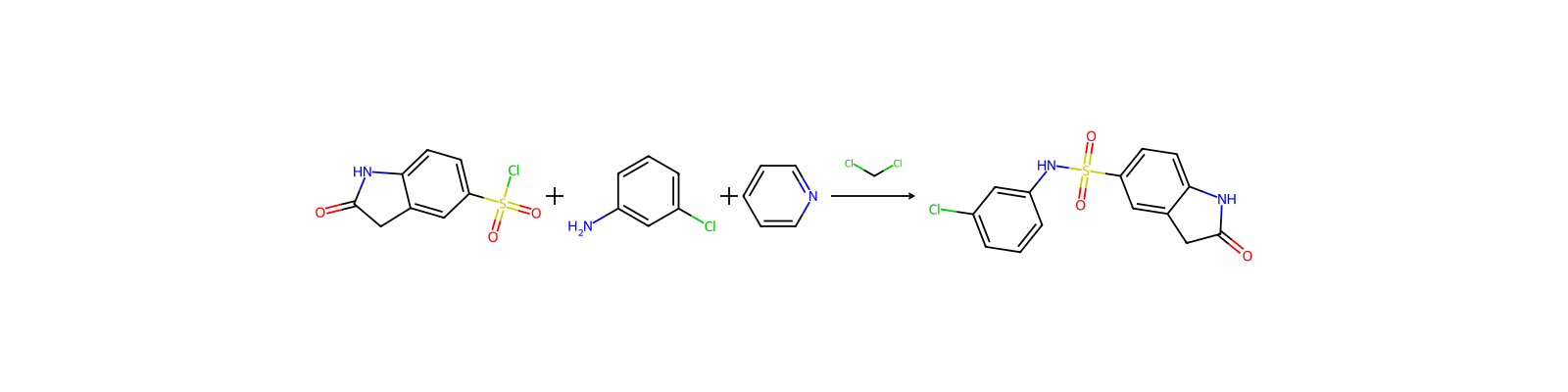
HRID 6601 の反応式
HRID 6601反応物としてuspto-grants-2006_08
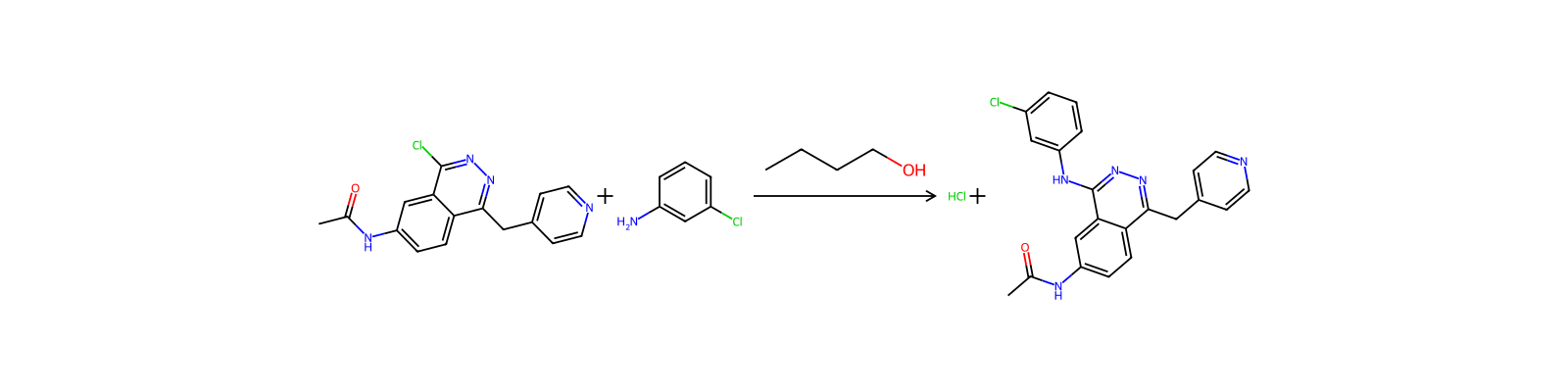
HRID 7602 の反応式
HRID 7602反応物としてuspto-grants-2006_08
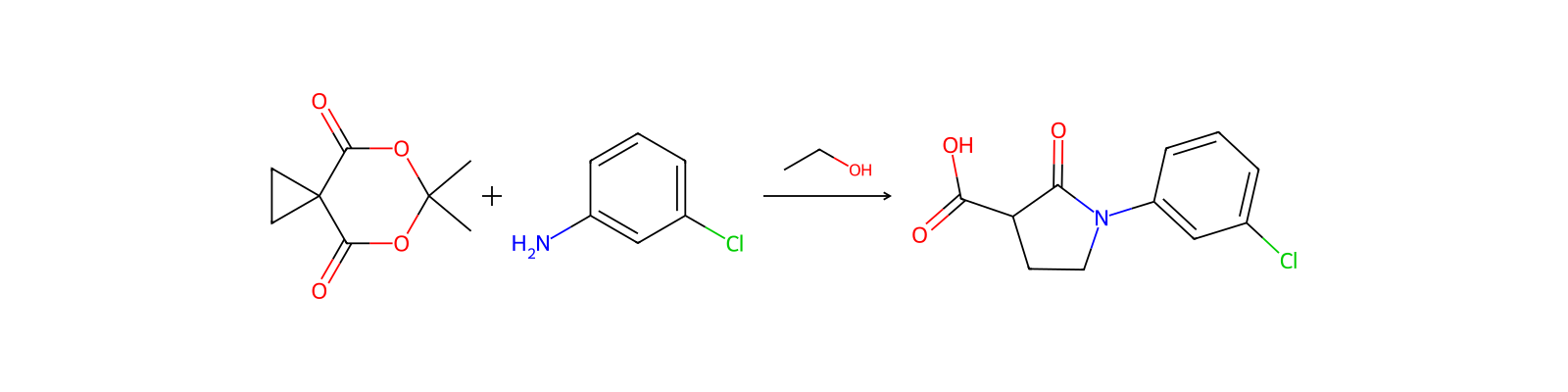
HRID 9895 の反応式
HRID 9895反応物としてuspto-grants-2006_08
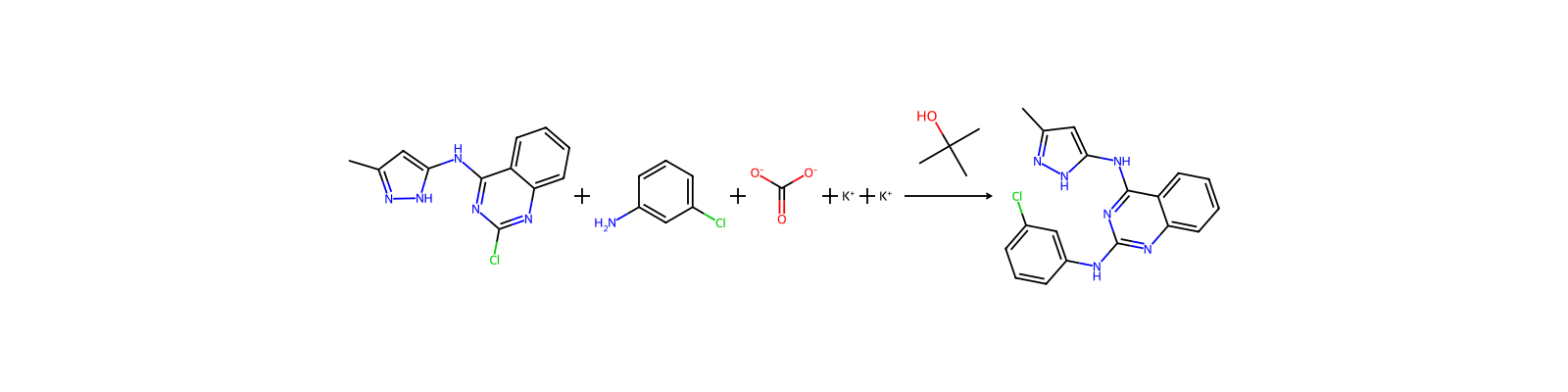
HRID 19593 の反応式
HRID 19593反応物としてuspto-grants-2010_06
HRID 30427 の反応式
HRID 30427反応物としてuspto-grants-2008_09
HRID 49112 の反応式
HRID 49112反応物としてuspto-grants-2004_03
HRID 49876 の反応式
HRID 49876反応物としてuspto-grants-2004_03
HRID 58588 の反応式
HRID 58588反応物としてuspto-grants-2016_09
1 / 68 ページ

化合物ノート

読み込み中…

このページの内容基本情報概要名称と識別子物性安全と法規制化学と産業関連反応化合物ノート
その他の操作
ノートを作成反応を作成見積依頼を出す
Decomposition · 2 件

When heated to decomposition, it emits toxic fumes of /hydrogen chloride and nitrogen oxides/.

230 °C

Melting Point · 3 件

13.5 °F (NTP, 1992)

-10.4 °C

-10 °C

Vapor Density · 2 件

4.41 (NTP, 1992) - Heavier than air; will sink (Relative to Air)

Relative vapor density (air = 1): 4.4

物理化学的性質

融点
11 · −11-−9 °C(lit.)
沸点
95 · 95-96 °C11 mm Hg(lit.)
比重(密度)
1.206 g/mL · 1.206 g/mL at 25 °C(lit.)
蒸気圧
1 mm · 1 mm Hg ( 63.5 °C)
屈折率
20 · n20/D 1.594(lit.)
闪点
255 °F · 255 °F
貯蔵温度
30 °C · Store below +30°C.
溶解性
6.2 g/リットル · 6.2g/リットル
外見
液体
酸解離定数(Pka)
3.46 · 3.46(at 25℃)
色
澄んだ淡黄色~褐色
PH
7.3 · 7.3 (H2O)(saturated aqueous solution)
臭い (Odor)
特有の臭い
水溶解度
6.8 g/L · 6.8g/L(20℃)
比熱容量
1.56 J/ · Cp(liquid): 1.56 J/(g·K), at 25℃
Decomposition
190 °C · 190°C
Merck
14 · 14,2118
BRN
605969 · 605969
Henry's Law Constant
4.7 · 4.7×100 mol/(m3Pa) at 25℃, Chao et al. (2017)
Dielectric constant
13.4 · 13.4(19℃)
安定性
Material darkens in storage with no loss in purity, Material Darkens In Storage
InChI
1S/C6H6ClN/c7-5-2-1-3-6(8)4-5/h1-4H,8H2
InChIKey
PNPCRKVUWYDDST-UHFFFAOYSA-N
SMILES
Nc1cccc(Cl)c1
LogP
0.77 · 0.77-2.03 at 25-30℃
CAS データベース
108 · 108-42-9(CAS DataBase Reference)
NISTの化学物質情報
m-Chloroaniline(108-42-9)
EPAの化学物質情報
m-Chloroaniline (108-42-9)

化学的性質

化学的特性3-Chloroaniline is a clear pale yellow to brown liquid, which becomes darker during storage, insoluble in water, but soluble in ethanol, ether and acid solution.

Reactive GroupAryl Halides
EC ClassificationSymbol: T, N; R: 23/24/25-33-50/53; S: (1/2)-28-36/37-45-60-61; Note: C
UN ClassificationUN Hazard Class: 6.1; UN Pack Group: II
Special ReportsSakamoto Y, Watanabe S; Bull Chem Soc Jpn 59 (10): 3033-8 (1986). The relation between chem structure and carcinogenicity was investigated in 38 polycyclic aromatic cmpd and 44 chlorinated aromatic hydrocarbons by means of (13)C-NMR.
TSCA Requirements · 1 件

Pursuant to section 8(d) of TSCA, EPA promulgated a model Health and Safety Data Reporting Rule. The section 8(d) model rule requires manufacturers, importers, and processors of listed chemical substances and mixtures to submit to EPA copies and lists of unpublished health and safety studies. Benzenamine, 3-chloro- is included on this list.

Reactivity ProfileM-CHLOROANILINE is incompatible with acids, acid chlorides, acid anhydrides, chloroformates and strong oxidizing agents. (NTP, 1992)
Atmospheric Standards · 1 件

This action promulgates standards of performance for equipment leaks of Volatile Organic Compounds (VOC) in the Synthetic Organic Chemical Manufacturing Industry (SOCMI). The intended effect of these standards is to require all newly constructed, modified, and reconstructed SOCMI process units to use the best demonstrated system of continuous emission reduction for equipment leaks of VOC, considering costs, non air quality health and environmental impact and energy requirements. m-chloroaniline is produced, as an intermediate or a final product, by process units covered under this subpart.

安全と保護具

Fire Fighting · 2 件

Fires involving this compound can be controlled with a dry chemical, carbon dioxide or Halon extinguisher. (NTP, 1992)

Use powder, AFFF, foam, carbon dioxide.

First Aid Measures · 4 件

Fresh air, rest. Artificial respiration may be needed. Refer for medical attention.

Remove contaminated clothes. Rinse and then wash skin with water and soap. Refer for medical attention .

First rinse with plenty of water for several minutes (remove contact lenses if easily possible), then refer for medical attention.

Rinse mouth. Give one or two glasses of water to drink. Refer for medical attention .

First Aid · 1 件

EYES: First check the victim for contact lenses and remove if present. Flush victim's eyes with water or normal saline solution for 20 to 30 minutes while simultaneously calling a hospital or poison control center. Do not put any ointments, oils, or medication in the victim's eyes without specific instructions from a physician. IMMEDIATELY transport the victim after flushing eyes to a hospital even if no symptoms (such as redness or irritation) develop.

Safe StorageSeparated from food and feedstuffs. Keep in the dark. Well closed.
Exposure Control and Personal ProtectionBiological Exposure Indices (BEI) [ACGIH] - Methemoglobin in blood = 1.5% of hemoglobin during or at end of shift. [ACGIH]
Fire Fighting ProceduresWater, dry chemical, foam or carbon dioxide. /4-Chloroaniline/
Nonfire Spill Response · 1 件

SMALL SPILLS AND LEAKAGE: If you spill this chemical, FIRST REMOVE ALL SOURCES OF IGNITION. Then, use absorbent paper to pick up all liquid spill material. Your contaminated clothing and absorbent paper should be sealed in a vapor-tight plastic bag for eventual disposal. Solvent wash all contaminated surfaces with 60-70% ethanol followed by washing with a soap and water solution. Do not reenter the contaminated area until the Safety Officer (or other responsible person) has verified that the area has been properly cleaned.

Disposal Methods · 1 件

SRP: The most favorable course of action is to use an alternative chemical product with less inherent propensity for occupational exposure or environmental contamination. Recycle any unused portion of the material for its approved use or return it to the manufacturer or supplier. Ultimate disposal of the chemical must consider: the material's impact on air quality; potential migration in soil or water; effects on animal, aquatic, and plant life; and conformance with environmental and public health regulations.

Spillage Disposal · 1 件

Personal protection: chemical protection suit including self-contained breathing apparatus. Do NOT let this chemical enter the environment. Collect leaking and spilled liquid in sealable containers as far as possible. Absorb remaining liquid in sand or inert absorbent. Then store and dispose of according to local regulations.

Preventive Measures · 4 件

Immediately wash contaminated areas of body with concentrated soap solution. Remove contaminated clothing, dry, then wash with concentrated soap solution or dispose as waste. Contaminated shoes may be disposed of in an incinerator.

...Precaution should be taken to avoid inhalation of vapors.

SRP: The scientific literature for the use of contact lenses in industry is conflicting. The benefit or detrimental effects of wearing contact lenses depend not only upon the substance, but also on factors including the form of the substance, characteristics and duration of the exposure, the uses of other eye protection equipment, and the hygiene of the lenses. However, there may be individual substances whose irritating or corrosive properties are such that the wearing of contact lenses would be harmful to the eye. In those specific cases, contact lenses should not be worn. In any event, the usual eye protection equipment should be worn even when contact lenses are in place.

SRP: Contaminated protective clothing should be segregated in such a manner so that there is no direct personal contact by personnel who handle, dispose, or clean the clothing. Quality assurance to ascertain the completeness of the cleaning procedures should be implemented before the decontaminated protective clothing is returned for reuse by the workers. Contaminated clothing should not be taken home at end of shift, but should remain at employee's place of work for cleaning.

Isolation and EvacuationExcerpt from ERG Guide 152 [Substances - Toxic (Combustible)]:
Eye PreventionWear safety goggles or face shield.

毒性情報

Ecotoxicity Values · 5 件

LC50 Eisenia andrei (Earthworm) 568-725 ug/L/14 days

LC50 Lumbricus rubellus (Earthworm) 388-469 ug/L/14 days

LC50 Poecilia reticulata (Guppy) 13 mg/L/14 days /Conditions of bioassay not specified in source examined/

LC50 Crangon septemspinosa (Bay shrimp, Sand shrimp) 25 mg/L/96 hr; renewal, aerated sea water, 10 °C

For more Ecotoxicity Values (Complete) data for 3-CHLOROANILINE (9 total), please visit the HSDB record page.

Environmental Fate · 3 件

TERRESTRIAL FATE: Based on a classification scheme(1), an estimated Koc value of 250(SRC), determined from a log Kow of 1.88(2) and a regression-derived equation(3), indicates that 3-chloroaniline is expected to have moderate mobility in soil(SRC). However, aromatic amines are expected to bind strongly to humus or organic matter in soils due to the high reactivity of the aromatic amino group(4,5), suggesting that mobility may be much lower in some soils(SRC). 3-Chloroaniline may undergo covalent chemical bonding with humic materials which results in its chemical alteration and tight adsorption(6). There is evidence to suggest that this complexing may extend the residual life of these substances in soil for as much as 10 years(7). Due to this covalent bonding, significant leaching in soil systems is not generally expected to occur(SRC). The pKa of 3-chloroaniline is 3.52(10), indicating that this compound will primarily exist in its nonionic form in the environment. Volatilization of 3-chloroaniline from moist soil surfaces is expected to occur(SRC) given a Henry's Law constant of 1.0X10⁻⁶ atm-cu m/mole(8). However, adsorption to soil is expected to attenuate volatilization(SRC). 3-Chloroaniline is not expected to volatilize from dry soil surfaces(SRC) based upon a vapor pressure of 0.066 mm Hg(9). 3-Chloroaniline may degrade in soil by chemical and microbial processes(11). When 3-chloroaniline (30 ppm) was incubated in Guelph loam with water added to 60% water-holding capacity, levels declined rapidly for 2 weeks after which time the rate of loss decreased(11). The percent of 3-chlororaniline remaining in soil after 2 and 8 weeks were 38% and 18%, respectively(11).

AQUATIC FATE: Based on a classification scheme(1), an estimated Koc value of 250(SRC), determined from a log Kow of 1.88(2) and a regression-derived equation(3), indicates that 3-chloroaniline may adsorb to suspended solids and sediment(SRC). In addition, 3-chloroaniline may undergo chemical bonding with humic materials in the water column and in the sediment(4). Volatilization from water surfaces is expected(3) based upon a Henry's Law constant of 1.0X10⁻⁶ atm-cu m/mole(5). Using this Henry's Law constant and an estimation method(3), volatilization half-lives for a model river and model lake are 42 and 310 days, respectively(SRC). However, aromatic amines are expected to bind strongly to humus or organic matter in soils due to the high reactivity of the aromatic amino group(13,14), and volatilization from water surfaces is expected to be attenuated by adsorption to suspended solids and sediment in the water column(SRC). The pKa of 3-chloroaniline is 3.52(6), indicating that this compound will primarily exist in its nonionic form in the environment. According to a classification scheme(7), measured BCF values ranging from 0.8 to 11.5(8,9) suggests the potential for bioconcentration in aquatic organisms is low(SRC). In a 3-day cultivation test using 2 different river waters from Japan and two different sea waters, 50% of initial 3-chloroaniline was degraded; the degradation was paralleled by growth of microbes(9,10). A biotransformation half-life of 0.4 year was determined for 3-chloroaniline in laboratory studies using two pond and one river water samples obtained near Athens, GA(12). Irradiation of an aqueous solution of 3-chloroaniline in a quartz tube with a fluorochemical lamp (wavelengths above 300 nm) resulted in a photodegradation half-life of 2.6 hours(14).

ATMOSPHERIC FATE: According to a model of gas/particle partitioning of semivolatile organic compounds in the atmosphere(1), 3-chloroaniline, which has a vapor pressure of 0.066 mm Hg at 25 °C(2), is expected to exist solely as a vapor in the ambient atmosphere. Vapor-phase 3-chloroaniline is degraded in the atmosphere by reaction with photochemically-produced hydroxyl radicals(SRC); the half-life for this reaction in air is estimated to be 5.1 hours(SRC), calculated from its rate constant of 7.6X10⁻¹¹ cu cm/molecule-sec at 25 °C(SRC) that was derived using a structure estimation method(3). 3-Chloroaniline absorbs light with wavelengths >290 nm(4) and may be susceptible to direct photolysis by sunlight(SRC).

Food Survey Values3-Chloroaniline was detected in several samples of potato peels, 0.18-0.36 ppb, from potatoes obtained from various geographic locations(1).
Adverse EffectsMethemoglobinemia - The presence of increased methemoglobin in the blood; the compound is classified as primary toxic effect.
Exposure RoutesThe substance can be absorbed into the body by inhalation, through the skin and by ingestion.
Ecotoxicity Excerpts · 1 件

/AQUATIC SPECIES/ 21 day Daphnia reproduction tests were conducted in line with the provisional procedure proposed by the Federal Environmental Agency, as of Jan 1, 1984. Groups of 20, 24-hr old Daphnia magna Straus were exposed to 6.3 to 800 ug/L 3-chloroaniline in semi-static test vessels. Parent animals in the test and control vessels had to be pipetted 3 times/wk in freshly prepared test and control media at the corresponding concentration level. The no observed effect concentration (NOEC) was determined from the parameters of mortality of the parent animals, reproduction rate and appearance of the first offspring during the test period. In preliminary acute Daphnia tests, the 24 hr EC50 was 0.9 mg/L for 3-chloroaniline, the EC0 was 0.40 mg/L. The nominal 21 day no observed effect concn was 0.013 mg/L, with the more sensitive parameters being reproductive rate and the appearance of first offspring.

Plant Concentrations · 1 件

3-Chloroaniline, which is the main metabolite of chloropropham, corresponded to about 50% of the applied dosage of chloropropham in the 2nd of 3rd successive lettuce cultures(1). After the 3rd culture, the amount of chloropropham and 3-chloroaniline increased lettuce, as well as soil(1).

Signs and Symptoms · 4 件

Blue lips, fingernails and skin. Dizziness. Headache. Shortness of breath. Nausea. Vomiting. Convulsions. Weakness. Confusion. Unconsciousness.

MAY BE ABSORBED! Redness. Burning sensation. Further see Inhalation.

Redness. Pain.

Abdominal pain. Further see Inhalation.

Ongoing Test Status · 1 件

The following link will take the user to the National Toxicology Program (NTP) Test Agent Search Results page, which tabulates all of the "Standard Toxicology & Carcinogenesis Studies", "Developmental Studies", and "Genetic Toxicity Studies" performed with this chemical. Clicking on the "Testing Status" link will take the user to the status (i.e., in review, in progress, in preparation, on test, completed, etc.) and results of all the studies that the NTP has done on this chemical. [http://ntp-apps.niehs.nih.gov/ntp_tox/index.cfm?fuseaction=ntpsearch.searchresults&searchterm=108-42-9]

Effluent Concentrations · 1 件

In a comprehensive survey of wastewater from 4,000 industrial and publicly owned treatment works (POTWs) sponsored by the Effluent Guidelines Division of the U.S. EPA, 3-chloroaniline was identified in discharges of the following industrial category (positive occurrences, median concn in ug/L): organics and plastics (5; 96.7), soaps and detergents (1; 28.0), pharmaceuticals (6; 58.7), organic chemicals (3; 13.8), publicly owned treatment works (14; 2.6)(3). The highest effluent concn was 612 ug/L in the pharmaceutical industry(3). Unspecified isomers of chloroaniline have been detected in the effluent from the publicly owned treatment works (POTW) of Sauget, IL(1). 3-Chloroaniline has been qualitatively detected in effluent water concentrates collected in 1974 and 1975 from advanced waste treatment facilities in Pomona, CA(2).

ICSC Environmental DataThe substance is toxic to aquatic organisms.
Soil Adsorption/Mobility · 1 件

The Koc of 3-chloroaniline is estimated as 250(SRC), using a log Kow of 1.88(1) and a regression-derived equation(2). According to a classification scheme(3), this estimated Koc value suggests that 3-chloroaniline is expected to have moderate mobility in soil. However, aromatic amines are expected to bind strongly to humus or organic matter in soils due to the high reactivity of the aromatic amino group(4,5), suggesting that mobility may be much lower in some soils(SRC). In laboratory persistence studies using non-sterilized Hagerstown silty clay loam soil, 73% of applied 3-chloroaniline remained chemically bound to soil particles after 64 days of incubation(6). A related chemical, 2-chloroaniline, has been observed to undergo rapid and reversible covalent bonding with humic materials in aqueous solution; the initial bonding reaction is followed by a slower and much less reversible reaction believed to represent the addition of the amine to quinoidal structures followed by oxidation of the product to give an amino-substituted quinone(7).

法規制情報

TSCA Requirements · 1 件

Pursuant to section 8(d) of TSCA, EPA promulgated a model Health and Safety Data Reporting Rule. The section 8(d) model rule requires manufacturers, importers, and processors of listed chemical substances and mixtures to submit to EPA copies and lists of unpublished health and safety studies. Benzenamine, 3-chloro- is included on this list.

Atmospheric Standards · 1 件

This action promulgates standards of performance for equipment leaks of Volatile Organic Compounds (VOC) in the Synthetic Organic Chemical Manufacturing Industry (SOCMI). The intended effect of these standards is to require all newly constructed, modified, and reconstructed SOCMI process units to use the best demonstrated system of continuous emission reduction for equipment leaks of VOC, considering costs, non air quality health and environmental impact and energy requirements. m-chloroaniline is produced, as an intermediate or a final product, by process units covered under this subpart.

安全データ

F
8-10-23
wgk
2
tsca
TSCA listed
rtecs
BX0350000
ridadr
UN 2019 6.1/PG 2
毒性
LD50 orally in Rabbit: 256 mg/kg LD50 dermal Rat 250 mg/kg
PRTR法
第一種指定化学物質
hs_code
29214210
risk_code
23/24/25-33-50/53
化審法
(3)-194 優先評価化学物質
消防法
危-4-3-III
hazard_code
T,N
hazard_note
Toxic
safety_code
28-36/37-45-60-61-28A
hazard_class
6.1
packing_group
II
自然発火温度
705 °C
環境リスク評価
m-クロロアニリン(108-42-9)
Hazard Classifications
Acute Tox. 2 InhalationAcute Tox. 3 DermalAcute Tox. 3 OralAquatic Acute 1Aquatic Chronic 1Eye Irrit. 2Skin Sens. 1BSTOT RE 2 Oral
ストレージクラス
6.1A - Combustible acute toxic Cat. 1 and 2very toxic hazardous materials
有毒物質データの
108-42-9(Hazardous Substances Data)
Intermediate
Methods of Manufacturing · 3 件

... Produced by low-pressure hydrogenation of 3-chloronitrobenzene in the liquid phase with noble metal and/or noble metal sulfide catalysts. The addition of metal oxides to the reaction helps avoid dehalogenation. The yield is approximately 98%.

... Catalytic hydrogenation of chloronitrobenzene.

... By reduction of chloronitrobenzene with NaHS.

Formulations/PreparationsGRADES: Technical
General Manufacturing Information · 2 件

All Other Basic Organic Chemical Manufacturing

Benzenamine, 3-chloro-: ACTIVE

応用分野

用途有機合成原料。

一般的な説明Colorless to light amber liquid with a sweet odor.

調製方法

製造方法3-Chloroaniline is obtained by reducing 3-Nitrochlorobenzene with iron powder in the presence of ferrous sulfate.

上流・下流製品情報

上流原料

硫化ナトリウムFerrous3-クロロニトロベンゼン

下流製品

3-クロロベンゼンジアゾニウム硝酸ミコナゾール4-アミノ-6-クロロベンゼン-1,3-ジスルホニルジクロリド1-(3-クロロフェニル)-4-(3-クロロプロピル)ピペラジン 塩酸塩4'-ブロモ-3'-クロロアセトアニリドイソシアン酸3-クロロフェニル4-ヒドロキシ-7-クロロキノリン-3-カルボン酸エチルフェバンテルFluorescent brightener No.311-(3-クロロフェニル)ピペラジン·2塩酸塩N-(3-クロロフェニル)カルバミド酸4-クロロ-2-ブチニルヒドロクロロチアジド3-クロロジフェニルアミンN-(3-クロロフェニル)アントラニル酸5-Chloro-2-(trifluoromethyl)quinoline-4-carboxylic acid3-クロロフェノール7-クロロ-4-ヒドロキシキノリン3-クロロアニリン塩酸塩1,3-ジクロロベンゼン7-Chloro-4-hydroxy-3-quinolinecarboxylic acidフェンベンダゾール4-アミノ-6-クロロ-1,3-ベンゼンジスルホンアミド[(3-クロロフェニルアミノ)メチレン]プロパン二酸ジエチル