ホームMCPワークベンチSkills
ホームワークベンチ通知マイページ
llms.txt · MCPガイドプライバシーポリシー · 利用規約 · サポートv1.8.0
  1. ホーム
  2. /化合物

1,3-ジブロモプロパン

1,3-Dibromopropane

HCID 8001
ノートを作成反応を作成見積依頼を出す
印刷プレビュー

データを補完しています。しばらくしてからページを更新すると最新の内容を表示できます

基本情報概要名称と識別子物性安全と法規制化学と産業関連反応化合物ノート
部分構造検索類似構造を探す

基本情報

CAS
109-64-8
標準SMILES
BrCCCBr
InChIKey
VEFLKXRACNJHOV-UHFFFAOYSA-N
分子式
C3H6Br2
平均分子量
201.89 g/mol
単同位体質量
199.88362439

概要

1,3-Dibromopropane is an organobromide compound. Bromine is a halogen element with the symbol Br and atomic number 35. Diatomic bromine does not occur naturally, but bromine salts can be found in crustal rock. (L625)

名称と識別子

優先名称
1,3-Dibromopropane
IUPAC
1,3-dibromopropane
現地名
1,3-ジブロモプロパン
英語名
1,3-Dibromopropane
分子式
C3H6Br2
分子量
201.89

名称と別名

1,3-DIBROMOPROPANE109-64-8Trimethylene bromideTrimethylene dibromidePropane, 1,3-dibromo-alpha,gamma-DibromopropaneDTXSID1021902YQR3048IX9NSC-62663DTXCID701902RefChem:72605203-690-3
名称をさらに表示
1,3-ジブロモプロパントリメチレンジブロミドトリメチレンブロミド3-ブロモプロピルブロミド二臭化トリメチレン1,3ジブロモプロパン臭化トリメチレン1,3‐ジブロモプロパン1,3-Dibrompropan1,3-dibromo-propan,’-DibromopropaneDibromo-1,3 propane1,3-Propylenebromide1,3-propanedibromideNSC 62663TX85750000
1,3-dibromo-propaneC3H6Br2.alpha.,.gamma.-DibromopropaneMFCD000002551,3-Dibromopropane-2-13C.omega.,.omega.'-DibromopropaneCCRIS 67111,3-dibromo propane

データベース識別子

CAS
109-64-8
PubChem CID
8001
DTXSID
DTXSID1021902
UNII
YQR3048IX9
EC Number
203-690-3
Nikkaji
J2.433C

物性

構造計算による物性補完中

XLogP
2.4
極性表面積
0 Ų
水素結合供与体数
0
水素結合受容体数
0
回転可能結合数
2
重原子数
5
形式電荷
0
複雑度
12.4

実験および物理化学的性質

Chemical ClassesOther Classes -> Halogenated Aliphatics, Saturated
SpringerMaterials PropertiesSchoenflies notation
LogP · 2 件

log Kow = 2.37

2.37

OdorSweet odor
Density · 2 件

1.9712 g/cu cm at 15 °C

1.977 @25 °C

Color/FormColorless liquid
Solubility · 2 件

1.68 g/L in water at 30 °C. Soluble in alcohol and ether

In water, 1,700 mg/L at 25 °C

Flash PointFlash point: -34.4 °C
Boiling Point · 2 件

167 °C

166.5 °C @760 [mm Hg]

DecompositionWhen heated to decomposition it emits toxic fumes of /hydrogen bromide/.
Melting Point · 2 件

-36 °C

-34.5 °C

安全と法規制

安全情報は参考情報です。供給元の安全データシート(SDS)、適用法令、専門家による評価に代わるものではありません。

GHS分類

GHS Classification · 6 件

This chemical does not meet GHS hazard criteria for 23.7% (52 of 219) of reports.

Warning

H226 (75.3%): Flammable liquid and vapor [Warning Flammable liquids]

P210, P233, P240, P241, P242, P243, P264, P264+P265, P270, P273, P280, P301+P317, P302+P352, P303+P361+P353, P305+P351+P338, P321, P330, P332+P317, P337+P317, P362+P364, P370+P378, P391, P403+P235, and P501 (click each P-code to see the statement)

Aggregated GHS information provided per 219 reports by companies from 12 notifications to the ECHA C&L Inventory. Each notification may be associated with multiple companies.

H401: Toxic to aquatic life [Hazardous to the aquatic environment, acute hazard]

危険有害性情報

Regulatory Information · 3 件

Chemical: Propane, 1,3-dibromo-

Status: Active Update: 09-04-2018 https://echa.europa.eu/registration-dossier/-/registered-dossier/19530

1,3-Dibromopropane: Does not have an individual approval but may be used under an appropriate group standard

Other Safety InformationEvaluation - 1-bromo-3-chloropropane and 1,3-dibromopropane
Hazards Summary · 1 件

Feeding study with young and newborn rats showed liver toxicity (hypertrophy of hepatocytes and change in biochemical parameters) and reduction of body weights; Emergency medical treatment: 1-Bromopropane. [HSDB] A mutagen; Effects in high-dose animal studies include convulsions; [RTECS]

Hazard Classes and Categories · 3 件

Flam. Liq. 3 (75.3%)

Flammable liquids - Category 3

Hazardous to the aquatic environment (Acute) - Category 2

安全と保護具

化学と産業

薬理情報

Metabolism/Metabolites · 2 件

The metabolism of 1,3-dibromopropane had been investigated in the rat. Two conjugated metabolites have been isolated from the urine and identified as S-(3-hydroxypropyl)cysteine and N-acetyl-S-(3-hydroxypropyl)cysteine. An oxidation product, identified as beta-bromolactic acid, has been isolated as a urinary metabolite. 1,3-dibromopropane is not excreted unchanged in expired air or in the urine. Approx. 15% of the dose (100 mg/kg) is excreted as metabolic products over 50 h and 3.5% as CO2 within 6 h, indicating that oxidation is the main route of detoxication.

Bromine is mainly absorbed via inhalation, but may also enter the body through dermal contact. Bromine salts can be ingested. Due to its reactivity, bromine quickly forms bromide and may be deposited in the tissues, displacing other halogens. (L626)

用途と製造

Uses · 4 件

Used as an intermediate to make dyestuff, drugs, and cyclopropane; Also used as a herbicide; [HSDB]

Farming (Pesticides) [Category: Industry]

Intermediate for dyestuff and pharmaceutical industries, cyclopropane manufacture.

Used as a herbicide /SRP65: Former use/

Methods of Manufacturing · 2 件

Prepared by the action of hydrobromic acid on trimethylene glycil in the presence of sulfuric acid

From trimethylene glycol and PBr3

Formulations/PreparationsGrade: Technical, CP
General Manufacturing InformationPropane, 1,3-dibromo-: ACTIVE
応用分野 · 2 件

使用1,3-Dibromopropane is used to prepare C3-bridged compounds through C-N coupling reactions. It is used in the preparation of 2,3,4,5-tetrahydro-7,7-diphenylimidazo- [2,1-b]-thiazine-6(7H)-one by reacting with potassium salt of 5,5-diphenyl-2-thiohydantoin.

関連反応

1,812 件
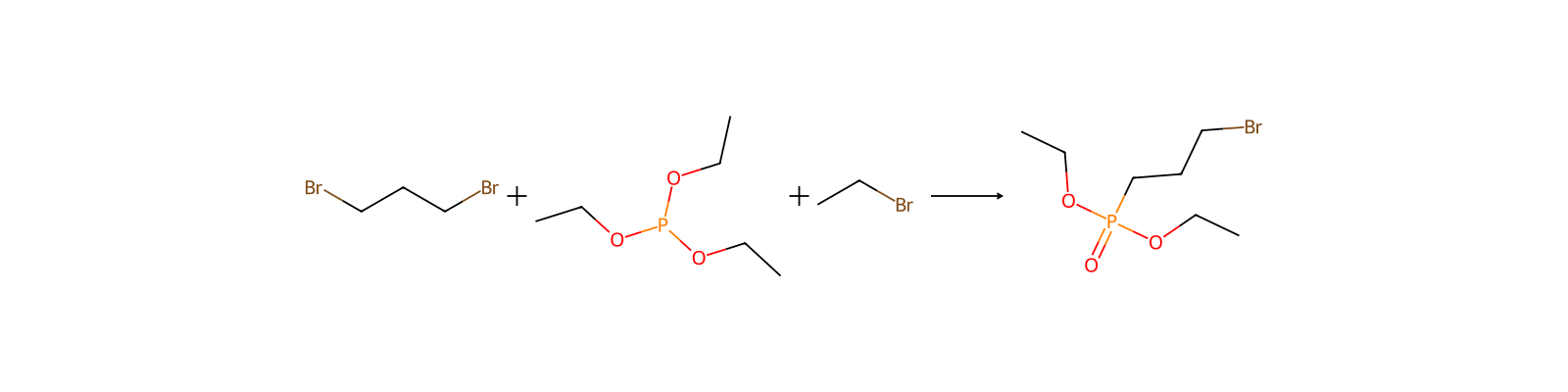
反応記録を作成
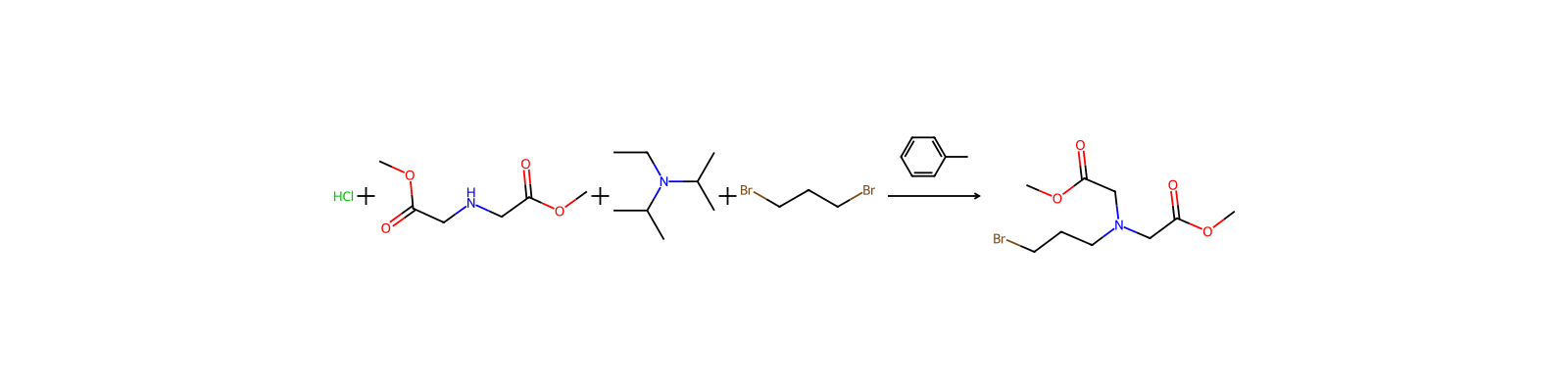
HRID 1931 の反応式
HRID 1931反応物としてuspto-grants-1998_03
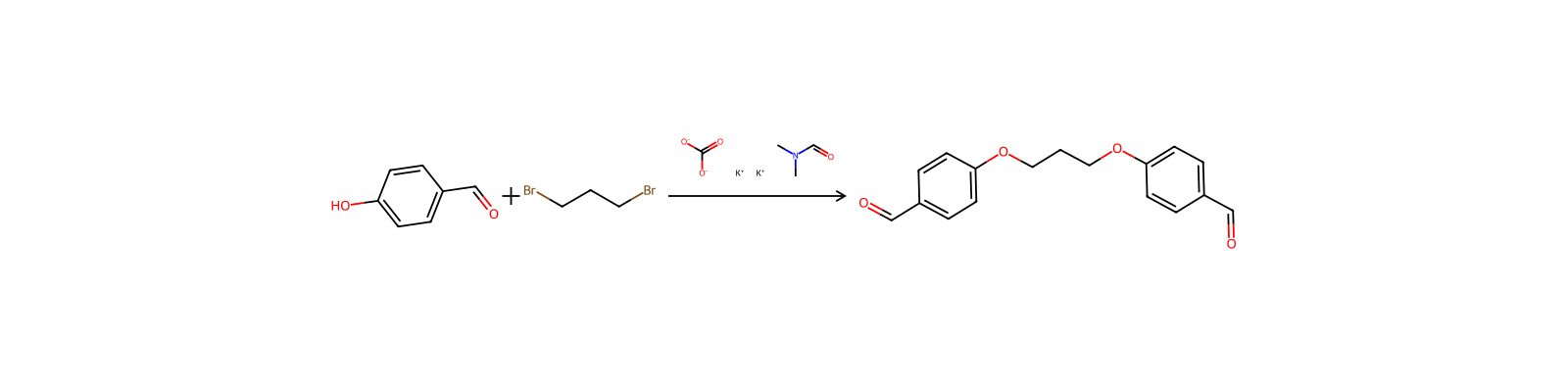
HRID 1986 の反応式
HRID 1986反応物としてuspto-grants-1998_03
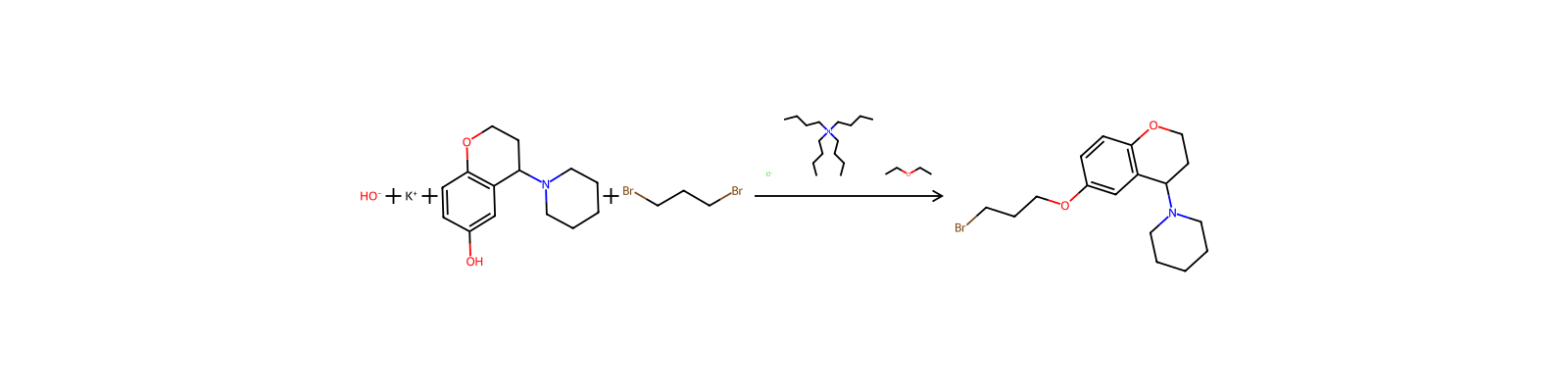
HRID 2966 の反応式
HRID 2966反応物としてuspto-grants-1998_03
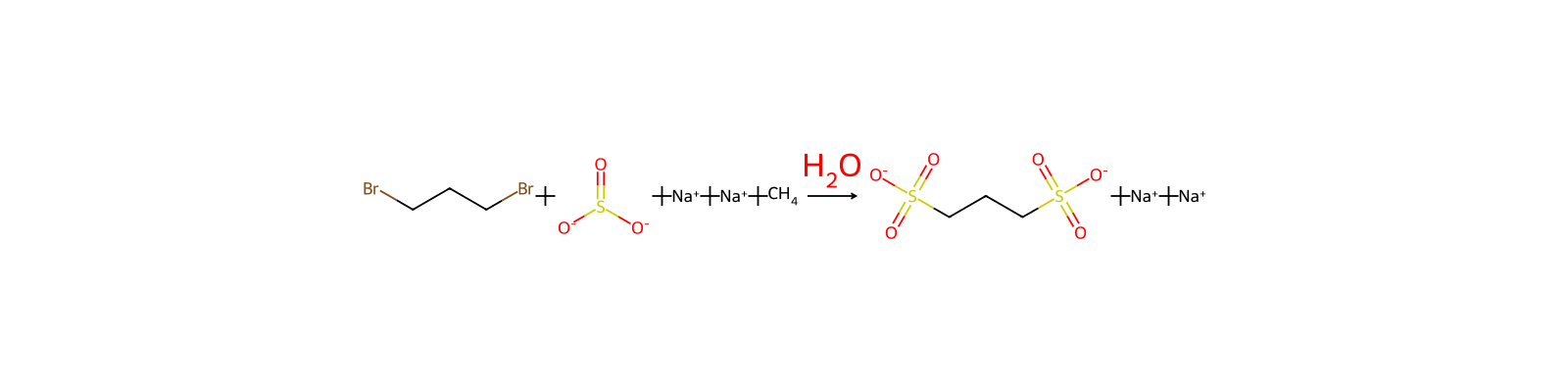
HRID 3025 の反応式
HRID 3025反応物としてuspto-grants-1998_03
HRID 3768 の反応式
HRID 3768反応物としてuspto-grants-1988_02
HRID 3771 の反応式
HRID 3771反応物としてuspto-grants-1988_02
HRID 3775 の反応式
HRID 3775反応物としてuspto-grants-1988_02
HRID 7728 の反応式
HRID 7728反応物としてuspto-grants-2006_08
1 / 227 ページ

化合物ノート

読み込み中…

このページの内容基本情報概要名称と識別子物性安全と法規制化学と産業関連反応化合物ノート
その他の操作
ノートを作成反応を作成見積依頼を出す
Vapor Pressure · 3 件

1.36 [mmHg]

1.36 mm Hg at 25 °C

1.36 [mm Hg] @25 °C

物理化学的性質

融点
-34 °C · -34 °C (lit.)
沸点
167 °C · 167 °C (lit.)
比重(密度)
1.989 g/mL · 1.989 g/mL at 25 °C (lit.)
蒸気密度
7 · 7 (vs air)
蒸気圧
2.6 hPa · 2.6 hPa (20 °C)
屈折率
20 · n20/D 1.524(lit.)
闪点
54 °C · 54 °C
貯蔵温度
30 °C · Store below +30°C.
溶解性
1.68 g/リットル · 1.68g/リットル
外見
液体
色
無色透明~黄色
水溶解度
1.7 g/L · 1.7g/L(30℃)
Merck
14 · 14,9713
BRN
635662 · 635662
Henry's Law Constant
1.1 · 1.1×10-3 mol/(m3Pa) at 25℃, Mackay et al. (1993)
Dielectric constant
4.3 · 4.3(20℃)
安定性
安定。強酸化剤、強塩基とは相容れない。可燃性。
InChI
1S/C3H6Br2/c4-2-1-3-5/h1-3H2
InChIKey
VEFLKXRACNJHOV-UHFFFAOYSA-N
SMILES
BrCCCBr
CAS データベース
109 · 109-64-8(CAS DataBase Reference)
NISTの化学物質情報
1 · Propane, 1,3-dibromo-(109-64-8)
EPAの化学物質情報
1 · Propane, 1,3-dibromo- (109-64-8)
化学的性質 · 1 件

化学的特性1,3-Dibromopropane is a colourless to slightly yellow liquid with sweet odor. soluble in ether, acetone and chloroform, insoluble in water. Decomposes when exposed to heat for a long time and is partially converted to 1,2-dibromopropane. Boiling with water produces propylene glycol. It is used substrate specificity of haloalkane dehalogenases.

Fire Fighting Procedures · 1 件

If material on fire or involved in fire: Do not extinguish fire unless flow can be stopped. Use water in flooding quantities as fog. Solid streams of water may be ineffective. Cool all affected containers with flooding quantities of water. Use alcohol foam, dry chemical or carbon dioxide. Keep run-off water out of sewers and water sources. /Bromopropanes/

Preventive Measures · 2 件

If material on fire or involved in fire: Do not extinguish fire unless flow can be stopped. Use water in flooding quantities as fog. Solid streams of water may be ineffective. Cool all affected containers with flooding quantities of water. Use alcohol foam, dry chemical or carbon dioxide. Keep run-off water out of sewers and water sources. /Bromopropanes/

Personnel protection: Avoid breathing vapors. Keep upwind. Do not handle broken packages unless wearing appropriate personal protective equipment. If contact with the material anticipated, wear appropriate chemical protective clothing. /Bromopropanes/

Protective Action Criteria (PAC) · 3 件

1.6 [mg/m3]

17 [mg/m3]

100 [mg/m3]

Personal Protective Equipment (PPE)Personnel Protection: ... Wear appropriate chemical protective gloves, boots and goggles. /Bromopropanes/

毒性情報

Treatment · 1 件

EYES: irrigate opened eyes for several minutes under running water. INGESTION: do not induce vomiting. Rinse mouth with water (never give anything by mouth to an unconscious person). Seek immediate medical advice. SKIN: should be treated immediately by rinsing the affected parts in cold running water for at least 15 minutes, followed by thorough washing with soap and water. If necessary, the person should shower and change contaminated clothing and shoes, and then must seek medical attention. INHALATION: supply fresh air. If required provide artificial respiration.

Health Effects · 1 件

Bromine vapour causes irritation and direct damage to the mucous membranes. Elemental bromine also burns the skin. The bromide ion is a central nervous system depressant and chronic exposure produces neuronal effects. This is called bromism and can result in central reactions reaching from somnolence to coma, cachexia, exicosis, loss of reflexes or pathologic reflexes, clonic seizures, tremor, ataxia, loss of neural sensitivity, paresis, papillar edema of the eyes, abnormal speech, cerebral edema, delirium, aggressiveness, and psychoses. (L625, L626, L627)

Ecotoxicity Values · 2 件

LC50 Pimephales promelas (Fathead minnow) 5.3 mg/L/24 hr /Conditions of bioassay not specified in source examined/

LC50 Pimephales promelas (Fathead minnow) 1.79 mg/L/96 hr /Conditions of bioassay not specified in source examined/

Environmental Fate · 3 件

TERRESTRIAL FATE: Based on a classification scheme(1), an estimated Koc value of 460(SRC), determined from a measured log Kow of 2.37(2) and a regression derived equation(3), indicates that 1,3-dibromopropane is expected to have moderate mobility in soil(SRC). Volatilization of 1,3-dibromopropane from moist soil surfaces is expected to be an important fate process(SRC) given a Henry's Law constant of 8.88X10⁻⁴ atm-cu m/mole(4). The potential for volatilization of 1,3-dibromopropane from dry soil surfaces exists(SRC) based upon its vapor pressure of 1.36 mm Hg(4). Biodegradation data were not available(SRC, 2005).

AQUATIC FATE: Based on a classification scheme(1), an estimated Koc value of 460(SRC), determined from a measured log Kow of 2.37(2) and a regression derived equation(3), indicates that 1,3-dibromopropane is not expected to adsorb to suspended solids and sediment(SRC). Volatilization from water surfaces is expected(3) based upon a Henry's Law constant of 8.88X10⁻⁴ atm-cu m/mole(4). Using this Henry's Law constant and an estimation method(3), volatilization half-lives for a model river and model lake are 2 hours and 6 days, respectively(SRC). According to a classification scheme(5), an estimated BCF of 13(SRC), from log Kow(2) and a regression-derived equation(6), suggests the potential for bioconcentration in aquatic organisms is low(SRC). The hydrolysis half-life of 1,3-dibromopropane is about 48 days at pH 7 and 25 °C(7). Biodegradation data were not available(SRC, 2005).

ATMOSPHERIC FATE: According to a model of gas/particle partitioning of semivolatile organic compounds in the atmosphere(1), 1,3-dibromopropane, which has a vapor pressure of 1.36 mm Hg at 25 °C(2), is expected to exist solely as a vapor in the ambient atmosphere. Vapor-phase 1,3-dibromopropane is degraded in the atmosphere by reaction with photochemically-produced hydroxyl radicals(SRC); the half-life for this reaction in air is estimated to be 19 days(SRC), calculated from its rate constant of 8.4X10⁻¹³ cu cm/molecule-sec at 25 °C(SRC) that was derived using a structure estimation method(3).

Adverse EffectsNeurotoxin - Acute solvent syndrome
Exposure RoutesOral (L626) ; inhalation (L626) ; dermal (L626)
Toxicity Summary · 1 件

Bromine is a powerful oxidizing agent and is able to release oxygen free radicals from the water in mucous membranes. These free radicals are also potent oxidizers and produce tissue damage. In additon, the formation of hydrobromic and bromic acids will result in secondary irritation. The bromide ion is also known to affect the central nervous system, causing bromism. This is believed to be a result of bromide ions substituting for chloride ions in the in actions of neurotransmitters and transport systems, thus affecting numerous synaptic processes. (L626, L627, A543)

Signs and Symptoms · 1 件

Bromine vapour causes irritation and direct damage to the mucous membranes. Symptoms include lacrimation, rhinorrhoea, eye irritation with mucous secretions from the oropharyngeal and upper airways, coughing, dyspnoea, choking, wheezing, epistaxis, and headache. The bromide ion is a central nervous system depressant producing ataxia, slurred speech, tremor, nausea, vomiting, lethargy, dizziness, visual disturbances, unsteadiness, headaches, impaired memory and concentration, disorientation and hallucinations. This is called bromism. (L626, L627)

Soil Adsorption/Mobility · 1 件

The Koc of 1,3-dibromopropane is estimated as 460(SRC), using a measured log Kow of 2.37(1) and a regression-derived equation(2). According to a classification scheme(3), this estimated Koc value suggests that 1,3-dibromopropane is expected to have moderate mobility in soil(SRC). Adsorption isotherms for 1,3-dibromopropane were calculated using a highly organic Florida Pahokee soil(4). The adsorption isotherms were non linear with an average soil adsorption coefficient (Kd) of 22.5 L/kg(4). The Freundlich adsorption coefficient (Kf) was 54 L/kg with fitting parameter N equal to 0.874(4).

Artificial Pollution Sources1,3-Dibromopropane's production and use as an intermediate for dyestuff and pharmaceutical industries, and in the manufacture of cyclopropane(1) may result in its release to the environment through various waste streams(SRC).
Carcinogen ClassificationNo indication of carcinogenicity to humans (not listed by IARC).
Environmental Bioconcentration · 1 件

An estimated BCF of 13 was calculated for 1,3-dibromopropane (SRC), using a measured log Kow of 2.37(1) and a regression-derived equation(2). According to a classification scheme(3), this BCF suggests the potential for bioconcentration in aquatic organisms is low(SRC).

安全データ

wgk
2
tsca
TSCA listed
rtecs
TX8575000
ridadr
UN 1993 3/PG 3
毒性
LD50 orally in Rabbit: 315 mg/kg
PRTR法
第二種指定化学物質
hs_code
29033036
risk_code
10-22-38-51/53-36/37/38
化審法
(2)-59
安衛法
変異原性物質
消防法
危-4-2-III
hazard_code
Xn,N,Xi
safety_code
16-26-36-61-24/25
hazard_class
3
packing_group
III
Hazard Classifications
Acute Tox. 4 OralAquatic Chronic 2Flam. Liq. 3Skin Irrit. 2
ストレージクラス
3 - Flammable liquids
有毒物質データの
109-64-8(Hazardous Substances Data)

一般的な説明1,3-Dibromopropane is a dihalogenated propane. It undergoes reduction catalyzed by electrogenerated solution-phase nickel(I) salen and nickel(I) salen confined in a polymer film on the surface of a carbon electrode to afford cyclopropane and propylene, respectively.

調製方法 · 1 件

純化方法1,3-Dibromopropane [109-64-8] M 201.9, f -34.4o, b 63 -63.5o/26mm, 76 -77o/40mm, 9 0o/80mm, 165o/atm, d 4 1.977, n 1.522. Wash the dibromide with dilute aqueous Na2CO3, then water. Dry and fractionally distil it under reduced pressure. [Beilstein 1 IV 216.]

上流・下流製品情報

上流原料

1,3-プロパンジオール臭化水素酸2,3-プロパンジオール

下流製品

3-ブロモプロピルアミン臭化水素酸塩3-(3,5-ジメチル-1H-ピラゾール-1-イル)プロパン-1-アミン1-(3-(4-Amino-2,6-dichlorophenoxy)propyl)pyrrolidin-2-one[1,3-ビス(ジフェニルホスフィノ)プロパン]ニッケル(II)ジクロリド1,3-ビス(ジフェニルホスフィノ)プロパンドキセピンシブトラミンホモピペラジン1-ピペリジン-1-プロパンアミンpropene3,4-ジヒドロ-2H-1,5-ベンゾジオキセピン-7-カルブアルデヒド1,4-ジアゼパン-1-カルボン酸TERT-ブチルシクロプロパントリメチレンオキシドゲムフィブロジルアリルフルオリド