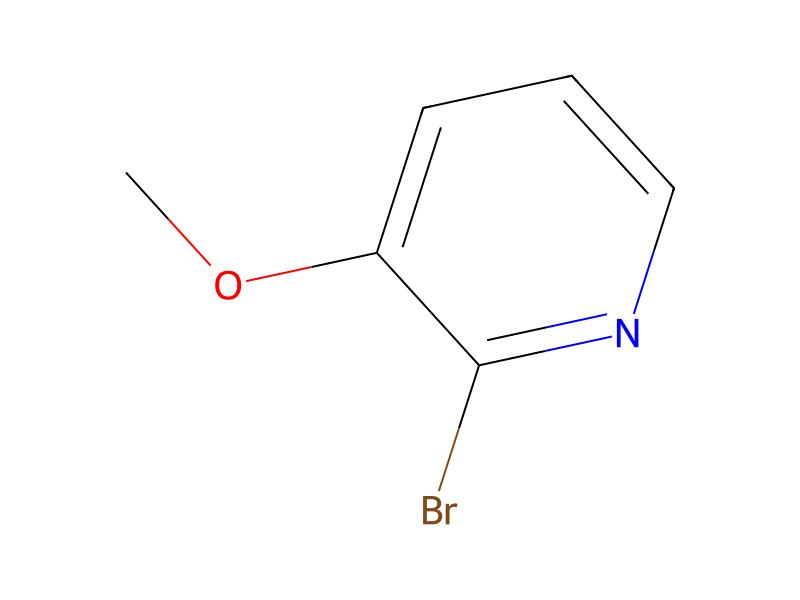
To a suspension of 2-bromo-3-methoxypyridine (1.54 g), 3-nitrophenylboronic acid (1.77 g) and tetrakis(triphenylphosphine)-palladium (473 mg) in 1,2-dimethoxyethane (30 ml) was added 2M aqueous solution of sodium carbonate (10.6 ml). The mixture was stirred at 80° C. for 15 hours under a nitrogen atmosphere, then cooled to room temperature and diluted with ethyl acetate. The organic layer was separated, washed with water and brine and dried over sodium sulfate. The solvent was evaporated under reduced pressure. The residue was purified by column chromatography (silica gel 40 g, 25% ethyl acetate in n-hexane) to give 3-(3-methoxypyridin-2-yl)nitrobenzene (1.7 g).