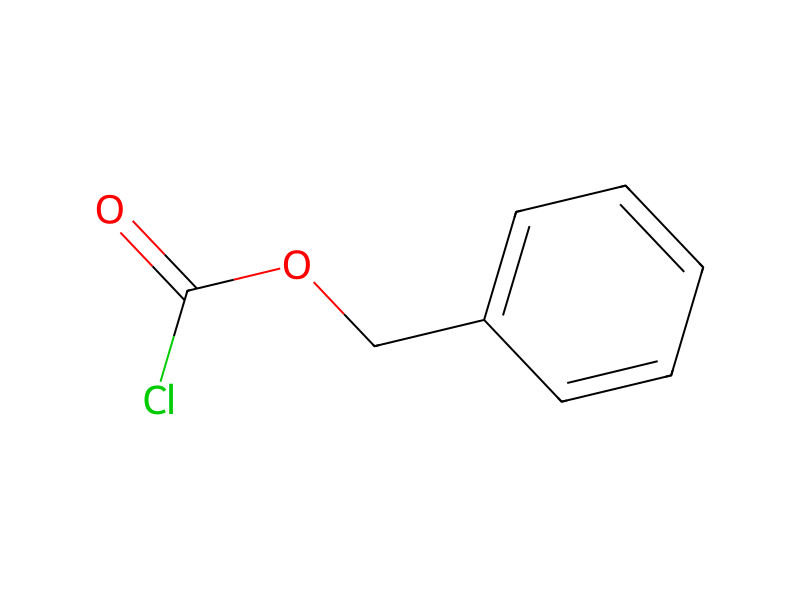
[C:1]1([CH2:7][O:8][C:9](Cl)=[O:10])[CH:6]=[CH:5][CH:4]=[CH:3][CH:2]=1.[NH:12]1[CH2:17][CH2:16][CH:15]([CH2:18][CH2:19][C:20]([O:22][CH2:23][CH3:24])=[O:21])[CH2:14][CH2:13]1.C(=O)([O-])[O-].[Na+].[Na+].ClC(Cl)Cl>O>[C:1]1([CH2:7][O:8][C:9]([N:12]2[CH2:17][CH2:16][CH:15]([CH2:18][CH2:19][C:20]([O:22][CH2:23][CH3:24])=[O:21])[CH2:14][CH2:13]2)=[O:10])[CH:6]=[CH:5][CH:4]=[CH:3][CH:2]=1A mixture of 54 parts of (phenylmethyl)carbonochloridate, 60 parts of ethyl 4-piperidinepropanoate, 31.8 parts of sodium carbonate and 600 parts of trichloromethane was stirred overnight at room temperature. Water was added and the layers were separated. The organic layer was dried, filtered and evaporated. The residue was purified by filtration over silica gel using a mixture of trichloromethane and methanol (99:1 by volume) as eluent. The pure fractions were collected and the eluent was evaporated, yielding 71 parts (74%) of ethyl 1-(phenylmethoxycarbonyl)-4-piperidinepropanoate as a residue (interm. 1).