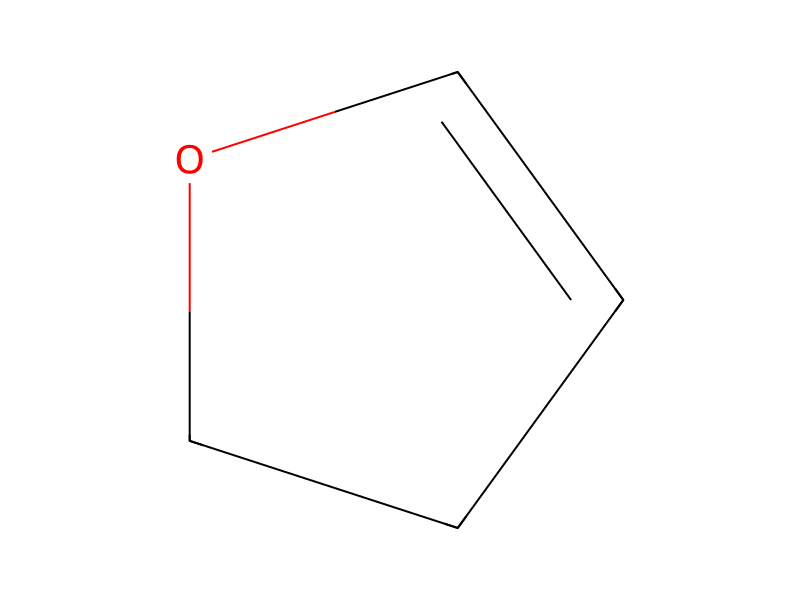
In certain embodiments, the palladium catalyst used in the Heck arylation reaction may be any suitable chiral palladium catalyst known to those skilled in the art. Examples of chiral palladium catalysts suitable for the Heck arylation reaction between bromonitrobenzene (IX) and 2,3-dihydrofuran include Pd(II) and Pd(0) complexes of 2,2′-bis(diphenylphosphino)binaphyl (BINAP), other BINAP-type ligands, JosiPhos, other JosiPhos-type ligands, PhanePhos, SynPhos, DifluoroPhos, SegPhos, P-Phos, TunePhos, 2,4-bis(diphenylphosphino)pentane, and PHox. Heck arylation reactions conducted using chiral palladium catalysts may afford enantiomerically-enriched dihydrofuranyl nitrobenzene(s) (VIIIa) and/or (VIIIb), wherein R is H or F. In some embodiments, the enantiomeric excess of dihydrofuranyl nitrobenzene(s) (VIIIa) and/or (VIIIb) may be between about 5-100%, about 10-100%, about 20-100%, about 30-100%, about 40-100%, about 50-100%, about 60-100%, about 70-100%, about 80-100%, about 85-100%, about 90-100%, about 91-100%, about 92-100%, about 93-100%, about 94-100%, about 95-100%, about 96-100%, about 97-100%, about 98-100%, about 99-100%, or about 100%. Thus, any chiral compound derived from the enantiomerically-enriched compound(s) of formula (VIIIa) and/or (VIIIb) may also contain an excess of one of the two enantiomers of the compound.