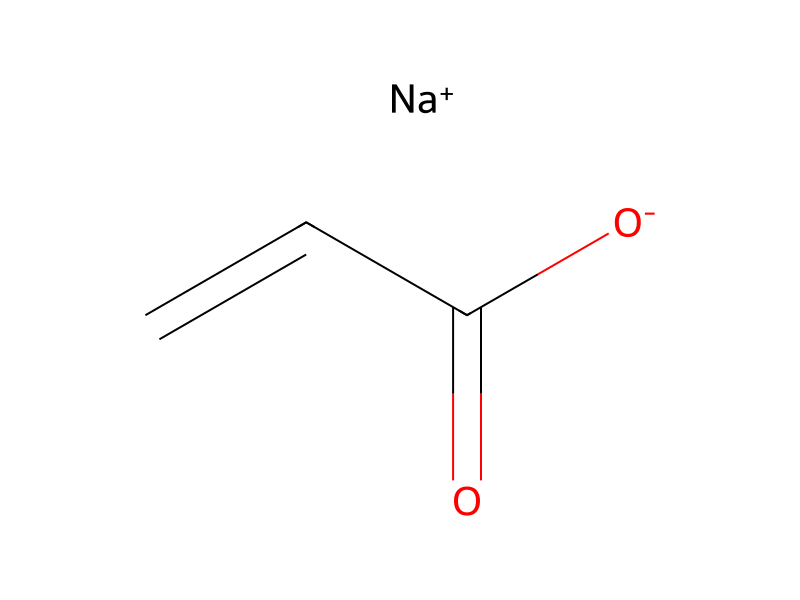
Cyclohexane (850 ml), Tween 81® (3.30 g) and Span 60® 1.10 g) were placed in a 2L resin kettle equipped with a mechanical stirrer, Teflon® stir paddle, thermometer, condenser, and a nitrogen inlet. This surfactant system has an HLB of 8.7. In a 500 ml Erlenmeyer flask, sodium hydroxide (41.5 g) was dissolved in water (140 ml). The aqeous hydroxide solution was cooled to 5° C. and acrylic acid 95.0 ml) was added. The sodium acrylate solution was introduced into the resin kettle and the reaction vessel was purged with nitrogen. Potassium persulfate (145 mg) was added to initiate the polymerization. One hour after the polymerization was initiated, U.S. Silica F-75 (83.0 g) was introduced into the resin kettle through a powder funnel over a 5 minute period. The increased viscosity of the polymerization aided in the suspension of the silica. The silica was dispersed uniformly throughout the reaction mixture. After 2 hours, the polymerization formed discrete particles and ethylene glycol diglycidyl ether (335 mg) was added. The reaction was refluxed for 1 hour and the resultant product was dried in a rotary dryer for 1 hour at 100° C. Ninety percent of the product consisted of discrete particles ranging in size from 150-600 microns.