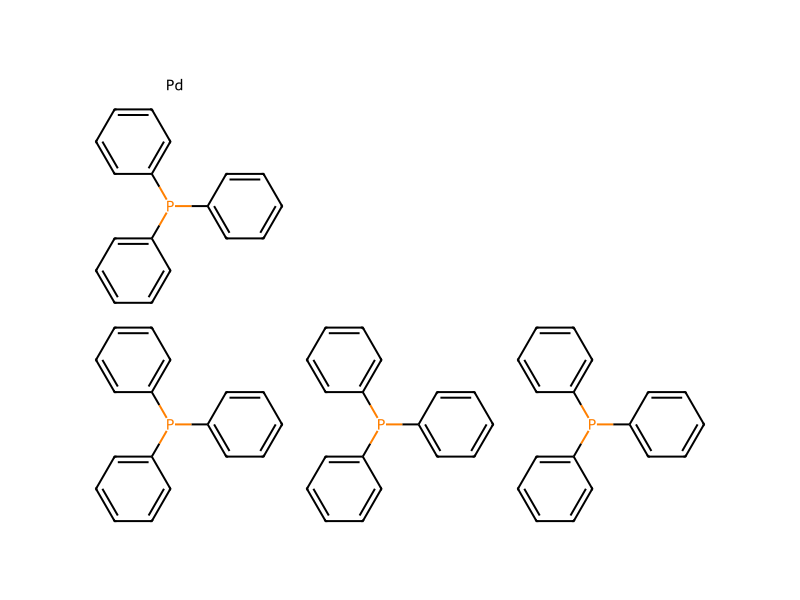
[Br:1][C:2]1[CH:7]=[CH:6][C:5](I)=[CH:4][CH:3]=1.[C:9]1([C:15]2[CH:16]=[C:17]3[C:22](=[CH:23][CH:24]=2)[CH:21]=[C:20](B(O)O)[CH:19]=[CH:18]3)[CH:14]=[CH:13][CH:12]=[CH:11][CH:10]=1.C1(C)C=CC=CC=1.C(=O)([O-])[O-].[Na+].[Na+]>[Pd].C1(P(C2C=CC=CC=2)C2C=CC=CC=2)C=CC=CC=1.C1(P(C2C=CC=CC=2)C2C=CC=CC=2)C=CC=CC=1.C1(P(C2C=CC=CC=2)C2C=CC=CC=2)C=CC=CC=1.C1(P(C2C=CC=CC=2)C2C=CC=CC=2)C=CC=CC=1.O.C(COC)OC>[Br:1][C:2]1[CH:7]=[CH:6][C:5]([C:20]2[CH:19]=[CH:18][C:17]3[C:22](=[CH:23][CH:24]=[C:15]([C:9]4[CH:14]=[CH:13][CH:12]=[CH:11][CH:10]=4)[CH:16]=3)[CH:21]=2)=[CH:4][CH:3]=1Under an argon gas atmosphere, 20.0 g (70.7 mmol) of 4-bromoiodobenzene, 17.5 g (70.7 mmol) of 6-phenylnaphthalene-2-boronic acid, 1.63 g (1.41 mmol) of tetrakis(triphenylphosphine) palladium(0), 200 mL of toluene, 50 mL of dimethoxyethane and 107 mL of 2M sodium carbonate solution were mixed, and stirred for 10 hours at 90 degrees C. Subsequently, the reaction mixture was cooled down to room temperature, added with water and stirred for one hour. After the solid precipitated during the reaction was separated by filtration, the obtained solid was cleansed with water, methanol, dimethoxyethane and toluene in this order. By dissolving the obtained solid in toluene and refining the solution by silica-gel column chromatography, 18.6 g of 2-(4-bromophenyl)-6-phenylnaphthalene was obtained at an yield of 73%.