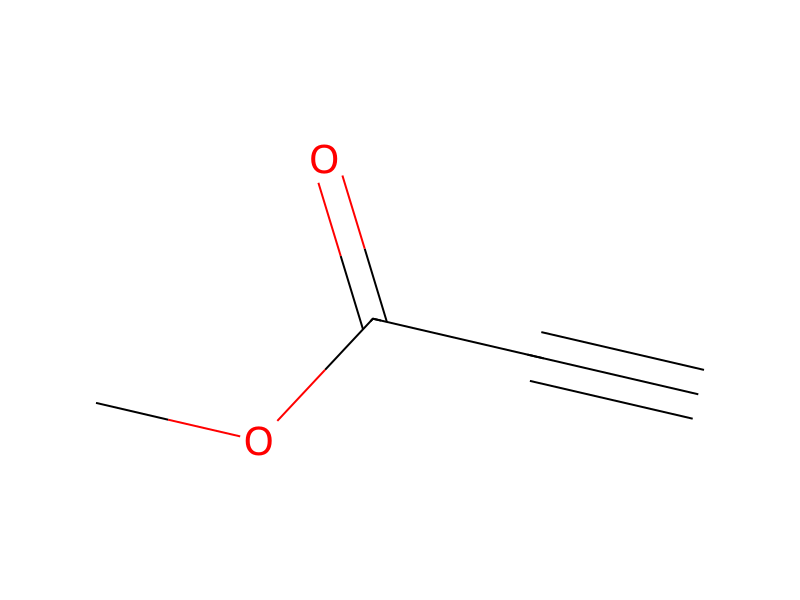
[F:1][C:2]([F:15])([F:14])[C:3](Cl)=[N:4][C:5]1[CH:10]=[CH:9][C:8]([O:11][CH3:12])=[CH:7][CH:6]=1.[C:16]([O:20][CH3:21])(=[O:19])[C:17]#[CH:18].P([O-])([O-])([O-])=O.[K+].[K+].[K+].[I-].[K+]>C(#N)C.[Cu]I.O>[F:1][C:2]([F:15])([F:14])[C:3](=[N:4][C:5]1[CH:10]=[CH:9][C:8]([O:11][CH3:12])=[CH:7][CH:6]=1)[C:18]#[C:17][C:16]([O:20][CH3:21])=[O:19]In a typical reaction, 2,2,2-trifluoro-N-(4-methoxyphenyl)acetimidoyl chloride and a slight excess of methyl propiolate are mixed with about 0.3 equivalents of copper (I) iodide and slight excesses of potassium phosphate and potassium iodide in anhydrous acetonitrile. The mixture is heated at about 60° C. under a nitrogen atmosphere until the reaction is complete. After cooling, an extraction solvent like a halogenated hydrocarbon is added to the mixture along with water. The organic layer is recovered, washed with brine and dried. The solvent is evaporated to provide crude methyl 5,5,5-trifluoro-4-((4-methoxyphenyl)imino)pent-2-ynoate.