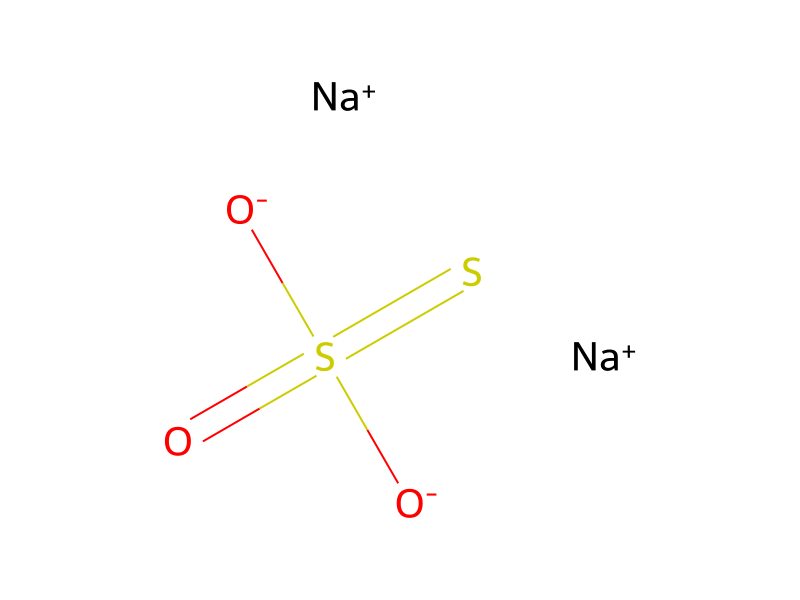
Sodium Thiosulfate → HCID 117974275、化合物
反応式

Cl[C:2]1C=C(C=C[CH:11]=1)C(OO)=O.C(S[C:15]1[N:19]([C:20]2[N:32]([CH3:33])[C:23]3=[N:24][CH:25]=[C:26]([C:28]([F:31])([F:30])[F:29])[CH:27]=[C:22]3[N:21]=2)[CH:18]=[CH:17][N:16]=1)C.[S:34]([O-:38])([O-])(=[O:36])=S.[Na+].[Na+]>C(Cl)(Cl)Cl>[CH2:2]([S:34]([C:15]1[N:19]([C:20]2[N:32]([CH3:33])[C:23]3=[N:24][CH:25]=[C:26]([C:28]([F:31])([F:29])[F:30])[CH:27]=[C:22]3[N:21]=2)[CH:18]=[CH:17][N:16]=1)(=[O:38])=[O:36])[CH3:11]参加物
5




実験手順
0.22 g of 3-chloroperoxybenzoic acid (purity of 65% or more) was added to 3 ml of a solution of 0.13 g of 2-(2-ethylthio-3H-imidazol-3-yl)-3-methyl-6-trifluoromethyl-3H-imidazo[4,5,b]pyridine in chloroform under ice cooling, and the mixture was stirred at room temperature for 1 hour. A 10% aqueous sodium thiosulfate solution was poured into the reaction mixture, and the mixture was extracted with chloroform. The organic layer was washed with a saturated aqueous sodium bicarbonate solution, then dried over anhydrous magnesium sulfate and concentrated under reduced pressure. The resulting residue was applied to a silica gel column chromatography to obtain 0.12 g of 2-(2-ethylsulfonyl-3H-imidazol-3-yl)-3-methyl-6-trifluoromethyl-3H-imidazo[4,5,b]pyridine (Compound of Present Invention (2)).