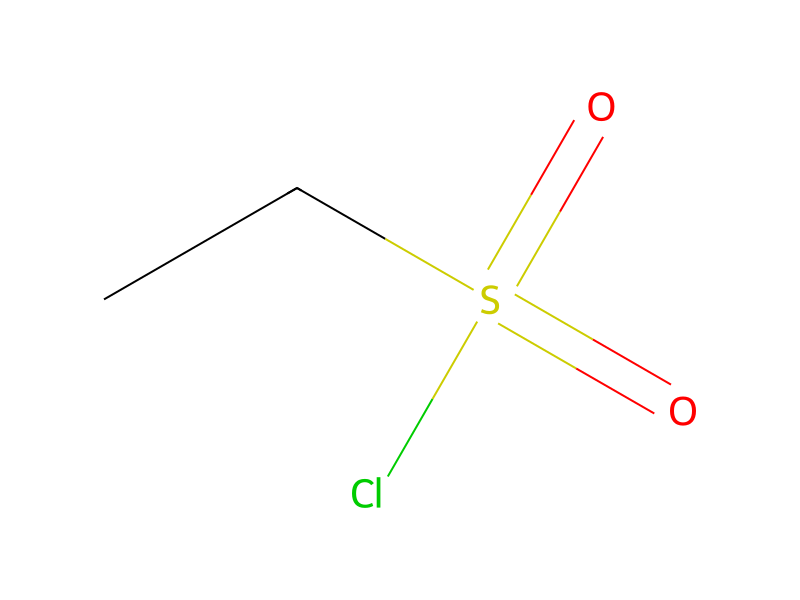
C(OCC)(=O)C.Br.[NH2:8][CH2:9][CH:10]1[CH2:18][C:17]2[C:12](=[CH:13][CH:14]=[C:15]([C:19]3[CH:20]=[CH:21][C:22](=[O:25])[NH:23][N:24]=3)[CH:16]=2)[CH2:11]1.C(=O)([O-])[O-].[Na+].[Na+].[CH2:32]([S:34](Cl)(=[O:36])=[O:35])[CH3:33]>O1CCCC1>[CH2:32]([S:34]([NH:8][CH2:9][CH:10]1[CH2:18][C:17]2[C:12](=[CH:13][CH:14]=[C:15]([C:19]3[CH:20]=[CH:21][C:22](=[O:25])[NH:23][N:24]=3)[CH:16]=2)[CH2:11]1)(=[O:36])=[O:35])[CH3:33]In a mixed solution of 30 ml of ethyl acetate and 30 ml of tetrahydrofuran was suspended 3.22 g of 2-aminomethyl-5-[pyridazin-3(2H)-on-6-yl]indane hydrobromide. A sodium carbonate aqueous solution (5.30 g/30 ml of water) was added to the suspension. Under ice cooling, 3.32 g of ethanesulfonyl chloride dissolved in 10 ml of tetrahydrofuran was added to the mixture, and the resulting mixture was stirred for 3 hours. 300 ml of ethyl acetate was added to the mixture. After the organic layer was collected by separation, washed with water and dried, and the solvent was removed. The residue was purified by silica gel column chromatography (chloroform-methanol (100:3)) to obtain 2.75 g of 2-(ethylsulfonylaminomethyl)-5-[pyridazin-3(2H)-on-6-yl]indane.