The cis and trans isomers of 3-(5,6-dihydro-4H-pyrrolo[3,2,1-ij]quinolin-1-yl)-4(1H-indol-3-yl)pyrrolidine-2,5-dione may be prepared beginning with the reaction of (1H-indol-3-yl)-oxo-acetic acid methyl ester and (5,6-dihydro-4H-pyrrolo[3,2,1-ij]quinolin-1-yl)-acetic acid methyl ester in the presence of a base such as LDA (lithium diisopropylamide) in a polar aprotic solvent such as THF to yield 2-(5,6-dihydro-4H-pyrrolo[3,2,1-ij]quinolin-1-yl)-3-(1H-indol-3-yl)-but-2-enedioic acid dimethyl ester. Alternatively, 2-(5,6-dihydro-4H-pyrrolo[3,2,1-ij]quinolin-1-yl)-3-(1H-indol-3-yl)-but-2-enedioic acid dimethyl ester may be prepared by reaction of (1H-indol-3-yl)-acetic acid methyl ester and (5,6-dihydro-4H-pyrrolo[3,2,1-ij]quinolin-1-yl)-oxo-acetic acid methyl ester in the presence of a base (e.g., LDA) in THF. The 2-(5,6-dihydro-4H-pyrrolo[3,2,1-j]quinolin-1-yl)-3-(1H-indol-3-yl)-but-2-enedioic acid dimethyl ester is reduced by catalytic hydrogenation over a noble metal catalyst (e.g., Pd on charcoal) to give 2-(5,6-dihydro-4H-pyrrolo[3,2,1-j]quinolin-1-yl)-3-(1H-indol-3-yl)-succinic acid dimethyl ester, which is reacted with benzylamine (PhCH2NH2) to yield a mixture of cis and trans 3-(5,6-dihydro-4H-pyrrolo[3,2,1-ij]quinolin-1-yl)-4-(1H-indol-3-yl)-1-phenyl-pyrrolidine-2,5-dione. The mixture of cis and trans isomers may be deprotected by catalytic hydrogenation over Pd on charcoal (Pd—C) to give rise to a mixture of cis and trans 3-(5,6-dihydro-4H-pyrrolo[3,2,1-ij]quinolin-1-yl)-4-(1H-indol-3-yl)-pyrrolidine-2,5-dione. The cis and trans isomers may be separated to give all four cis and trans isomers (e.g., by chromatography as in Examples 4 and 5). The deprotected mixture of cis and trans isomers may be treated with potassium tert-butoxide in tert-butanol (as in Example 3) or a mixture of THF and tert-butanol at 50° C. to yield a mixture with a predominance of the trans isomers. Alternatively, the 2-(5,6-dihydro-4H-pyrrolo[3,2,1-ij]quinolin-1-yl)-3-(1H-indol-3-yl)-succinic acid dimethyl ester can be reacted with ammonia in methanol at elevated temperatures to yield predominantly the cis isomers of 3-(5,6-dihydro-4H-pyrrolo[3,2,1-ij]quinolin-1-yl)-4-(1H-indol-3-yl)-pyrrolidine-2,5-dione, which may be isomerized to yield predominately the trans isomers of 3-(5,6-dihydro-4H-pyrrolo[3,2,1-j]quinolin-1-yl)-4-(1H-indol-3-yl)-pyrrolidine-2,5-dione with potassium tert-butoxide in tert-butanol (as in Example 3) or a mixture of THF and tert-butanol at 50° C.

 HCID 222Ammonia
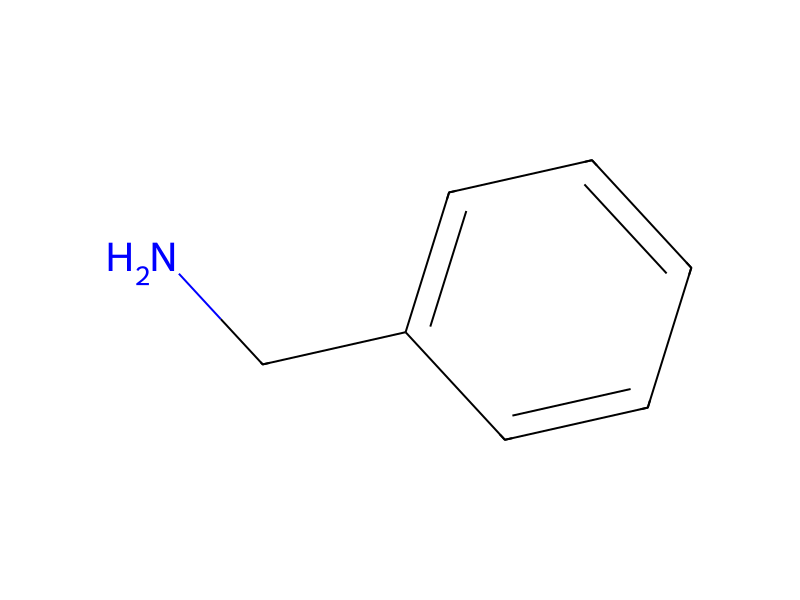 HCID 7504Benzylamine
 HCID 11494412Tivantinib
 HCID 23665647Potassium tert-butoxide
 HCID 594709652-(5,6-dihydro-4H-pyrrolo[3,2,1-ij]quinolin-1-yl)-3-(1H-indol-3-yl)-succinic acid dimethyl ester
 HCID 86608206trans 3-(5,6-dihydro-4H-pyrrolo[3,2,1-ij]quinolin-1-yl)-4-(1H-indol-3-yl)-1-phenyl-pyrrolidine-2,5-dione




