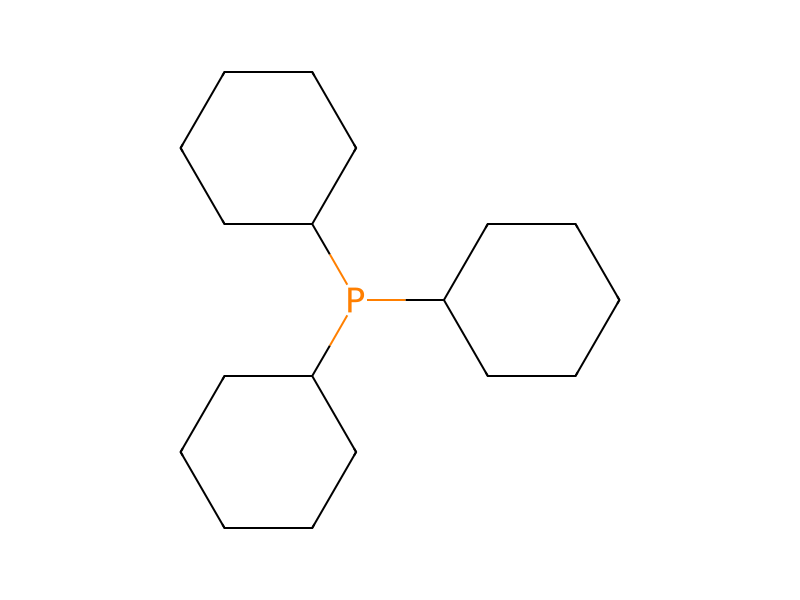
To a mixture of 2-bromonaphthalene (4.0 g, 19.32 mmol), 4-hydroxyphenylboronic acid (2.9 g, 21.24 mmol), potassium phosphate (14.35 g, 67.61 mmol), tricyclohexyl phosphine (542 mg, 1.93 mmol), toluene (80 mL) and water (4 mL) was added palladium acetate (217 mg, 0.965 mmol) under N2. The reaction mixture was heated to 100° C. for 24 h and then cooled to rt. Water was added and the mixture was extracted with EtOAc. The organic layer was separated, washed with water, brine, dried and concentrated to give crude product. Purification by column chromatography using 10% EtOAc in hexane afforded 105 mg of 4-naphthalen-2-yl-phenol. MS (ES) m/z: 220.07 (M) and 219.04 (M−1).