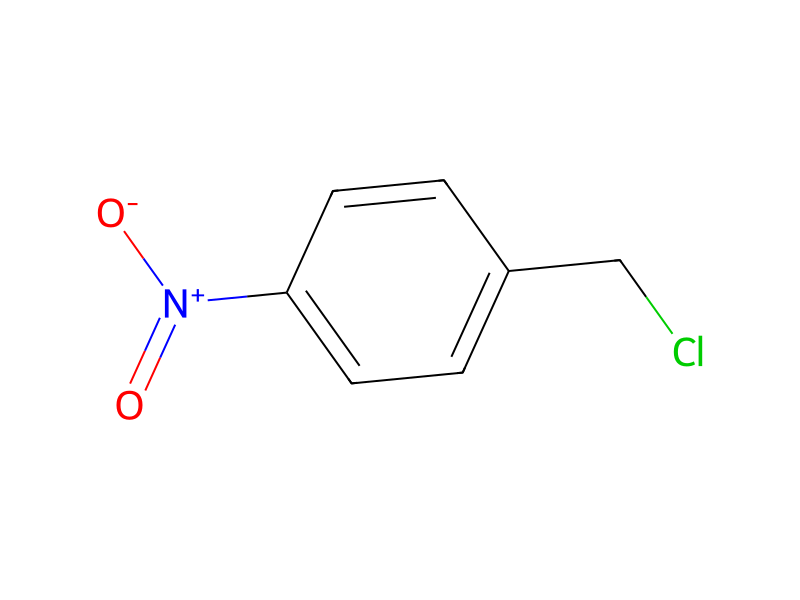
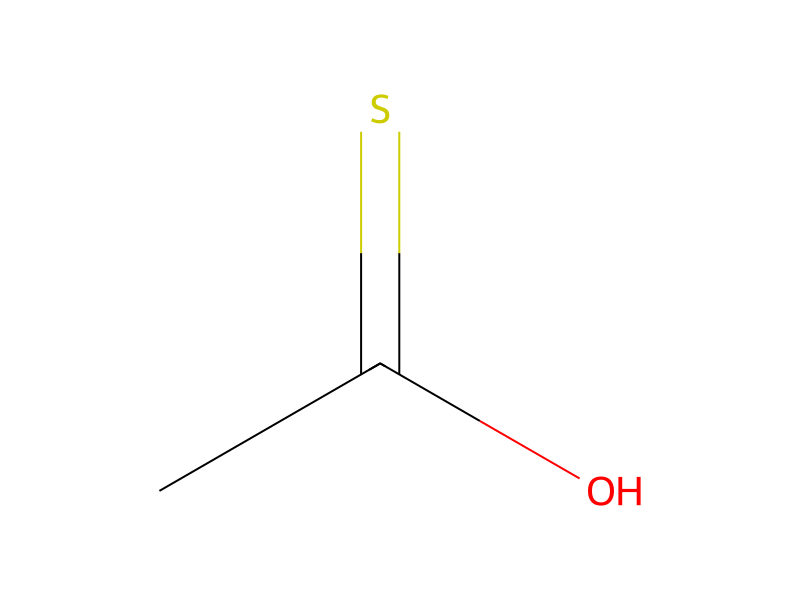
The two step procedure for the preparation of 4-nitrobenzyl, (see, for example, Horn, W. J., J. Am. Chem. Soc., 43, 2603, 1921), and 2,4-dinitrobenzyl, (see, for example, Zhao Zhengyun, Ph.D. Thesis, London University, 181-182, 1993), mercaptans (17a and 17b, respectively) is indicated in outline in Scheme 3(a). Thus, when 4-nitrobenzyl chloride 15a was treated with an excess both of thioacetic acid and pyridine in THF solution at 50° C., 4-nitrobenzyl thioacetate 16a was obtained in 77% yield. When the latter compound 16a was heated, under reflux, in sulfuric acid--water (1:1 v/v), 4-nitrobenzyl mercaptan 17a was obtained in almost quantitative yield. 2,4-dinitrobenzyl mercaptan, (see, for example, Zhao, loc cit), 17b was similarly prepared from 2,4-dinitrobenzyl chloride, (see, for example, Cohn, P., and Friedlander, P., Ber., 35, 1265, 1902) 15b in 73% overall yield. N-(4-nitrobenzylmercapto)succinimide 18 was prepared [Scheme 3(b) and Experimental below] in 65 % yield by heating a suspension of the lead(II) salt, (see, for example, Pant, B.C., and Noltes, J. G., Inorg. Nucl. Chem. Lett., 7, 63, 1971), of the mercaptan 17a with N-bromosuccinimide (NBS) in benzene. Preliminary attempts to convert 2,4-dinitrobenzyl mercaptan 17b into the corresponding succinimide and phthalimide derivatives (13 and 14, R=2,4-(O2 N)2C6H3) were unsuccessful. However, di-(2,4-dinitrobenzyl) disulfide 19, (see, for example, Zhao, loc cit), which was easily prepared in good yield by the iodine-promoted oxidation [Scheme 3(c) and Experimental below] of the mercaptan 17b, proved (see below) to be an equally effective reagent for the required purpose. Finally, 2-cyanoethyl mercaptan 20, (see, for example, Bauer, L., and Welsh, T. L., J. Org. Chem., 26, 1443, 1961) was converted (see, for example, Behforouz, M., and Kerwood, J. E., J. Org. Chem., 34, 51, 1969), [Scheme 3(d) and Experimental below] via a putative intermediate sulfenyl chloride into N-(2-cyanoethylmercapto)phthalimide 21 which was isolated without chromatography as a crystalline solid in 58% yield. ##STR10## Scheme 4 Reagents and conditions: i, a, PCl3, 1,2,4-1H-triazole, Et3N, THF, -35° C., b, Et3N, H2O, RT; ii, for 24a: 18, Me3SiCl, Et3N, CH2Cl2, RT, for 24b: 19, Me3SiCl,4-methylmorpholine, CH2Cl2, RT, for 24c: 21, Me3SiCl, 4-methylmoxpholine, CH2Cl2, RT; iii, aq. Et NH+ HCO3 --.