

기본 정보
- 표준 SMILES
[O-][N+](=Nc1ccccc1)c1ccccc1- InChIKey
GAUZCKBSTZFWCT-UHFFFAOYSA-N- 분자식
- C12H10N2O
- 평균 분자량
- 198.22 g/mol
- 단동위원소 질량
- 198.07931294
개요
Azoxybenzene appears as bright yellow crystals or yellowish-brown solid. (NTP, 1992)
이름 및 식별자
- 우선 이름
- Azoxybenzene
- IUPAC
- oxido-phenyl-phenyliminoazanium
- 영어명
- Azoxybenzene
- 분자식
- C12H10N2O
- 분자량
- 198.22
이름 및 동의어
AZOXYBENZENE495-48-7Azoxybenzidetrans-azoxybenzeneAzoxybenzolDiphenyldiazene 1-oxideAzoxydibenzeneAzobenzene, oxideBenzene, azoxydi-Diazene, diphenyl-, 1-oxideOrdinary azoxybenzeneAzossibenzene
이름 더 보기
FentoxanZOXYBENZENEAzoxybenzoleAzoxylbenzeneazoxydi-benzen
Azoxybenzeencis-azoxybenzeneoxido-phenyl-phenyliminoazanium(E)-1,2-Diphenyldiazene 1-oxide21650-65-7trans-Diphenyldiazene oxide1,2-Diphenyldiazene 1-oxidediphenyldiazene oxide
데이터베이스 식별자
- CAS
20972-43-4、21650-65-7、495-48-7- PubChem CID
- 10316
- DTXSID
DTXSID0024555- ChEMBL
CHEMBL1442921、CHEMBL2356614- ChEBI
CHEBI:51865- UNII
- 2CYQ7PT9SS、DC1P3JE72O
- EC Number
- 207-802-1
- Nikkaji
- J62.417I
물성
구조 계산 물성
- XLogP
- 3.1
- 극성 표면적
- 41.1 Ų
- 수소 결합 공여자 수
- 0
- 수소 결합 수용자 수
- 2
- 회전 가능 결합 수
- 2
- 무거운 원자 수
- 15
- 형식 전하
- 0
- 복잡도
- 216
실험 및 물리화학적 성질
Chemical ClassesNitrogen Compounds -> Other Aromatics (Nitrogen)
Density
1.159 at 79 °F (NTP, 1992) - Denser than water; will sink
1.1590 @ 26 °C/4 °C
Color/FormPALE YELLOW ORTHORHOMBIC NEEDLES
Solubility
less than 1 mg/mL at 68 °F (NTP, 1992)
INSOL IN WATER; SOL IN ALCOHOL & ETHER; 43.5 G DISSOLVE IN 100 G PETROLEUM ETHER @ 15 °C
Boiling PointDecomposes (NTP, 1992)
Decomposition...ON DECOMPOSITION IT EMITS TOXIC FUMES...
Melting Point
97 °F (NTP, 1992)
36 °C
Physical Description
Azoxybenzene appears as bright yellow crystals or yellowish-brown solid. (NTP, 1992)
Yellow solid; mp = 36 deg C; [HSDB] Bright yellow or yellowish-brown solid; mp = 36 deg C; [CAMEO] Orange solid; mp = 33-36 deg C; [Alfa Aesar MSDS]
Other Experimental Properties
100 PARTS OF ABSOLUTE ALCOHOL SATURATED AT 16 °C CONTAIN 17.5 PARTS (WT/WT) AZOXYBENZENE
EASILY VOLATILE IN SUPER-HEATED STEAM @ 140-150 °C
물리화학적 성질
- 녹는점
- 32 · 32-36 °C
- 끓는 점
- 130 °C · 130 °C / 0.9mmHg
- 밀도
- 1.16 · 1.16
- 굴절률
- 1.633 · 1.6330 (estimate)
- 저장 조건
- 0 · 0-6°C
- 색상
- 노란색, 마름모꼴 결정
- Merck
- 14 · 14,923
- BRN
- 743984 · 743984
- Dielectric constant
- 5.1 · 5.1(40℃)
- 주요 응용
- 농업환경
- InChI
- 1S/C12H10N2O/c15-14(12-9-5-2-6-10-12)13-11-7-3-1-4-8-11/h1-10H/b14-13-
- InChIKey
- GAUZCKBSTZFWCT-YPKPFQOOSA-N
- SMILES
- [O-]\[N+](=N/c1ccccc1)c2ccccc2
- EPA
- Azoxybenzene (495-48-7)
화학적 성질
ORANGE-YELLOW TO ORANGE CRYSTALS
안전 및 규제
GHS 분류
GHS Classification
Warning
H302: Harmful if swallowed [Warning Acute toxicity, oral]
P261, P264, P270, P271, P301+P317, P304+P340, P317, P330, and P501 (click each P-code to see the statement)
Warning
H302 (100%): Harmful if swallowed [Warning Acute toxicity, oral]
P261, P264, P270, P271, P301+P317, P304+P340, P317, P330, and P501 (click each P-code to see the statement)
유해성 정보
Regulatory InformationAzoxybenzene: Does not have an individual approval but may be used under an appropriate group standard
Fire HazardsFlash point data for this chemical are not available; however, it is probably combustible. (NTP, 1992)
Fire PotentialSLIGHTLY DANGEROUS...
Health HazardsSYMPTOMS: Symptoms of exposure to this compound may include irritation of the skin and eyes. Other symptoms include jaundice, cyanosis, dermatitis and liver and kidney damage.
Hazards Summary
External application to rabbit eyes scored 1 on a scale of 1-10 (10 being most severe) for degree of injury after 24 hours; Causes icteric skin, methemoglobinemia, swelling of liver and spleen, and atrophy of testis and epididymis in oral studies of rats and mice; Emergency treatment: Methemoglobinemia; [HSDB] Dust mixtures with air may be explosive; A skin and eye irritant; May cause liver and kidney injury; [CAMEO] Causes decrease in cellular immune response in intraperitoneal toxic-dose studies of rats; Causes other GI and liver changes in oral lethal-dose studies of mice; [RTECS] May cause irritation and methemoglobinemia; [Alfa Aesar MSDS]
Reactive GroupAzo, Diazo, Azido, Hydrazine, and Azide Compounds
Reactivity Profile
AZOXYBENZENE is an azo compound. Azo, diazo, azido compounds can detonate. This applies in particular to organic azides that have been sensitized by the addition of metal salts or strong acids. Toxic gases are formed by mixing materials of this class with acids, aldehydes, amides, carbamates, cyanides, inorganic fluorides, halogenated organics, isocyanates, ketones, metals, nitrides, peroxides, phenols, epoxides, acyl halides, and strong oxidizing or reducing agents. Flammable gases are formed by mixing materials in this group with alkali metals. Explosive combination can occur with strong oxidizing agents, metal salts, peroxides, and sulfides.
Air and Water ReactionsDust may form an explosive mixture in air. Insoluble in water.
Hazard Classes and Categories
Acute Tox. 4 (100%)
Acute toxicity - category 4
Acute Tox. 4 *
안전 및 보호
Fire FightingFires involving this material can be controlled with a dry chemical, carbon dioxide or Halon extinguisher. (NTP, 1992)
First Aid
EYES: First check the victim for contact lenses and remove if present. Flush victim's eyes with water or normal saline solution for 20 to 30 minutes while simultaneously calling a hospital or poison control center. Do not put any ointments, oils, or medication in the victim's eyes without specific instructions from a physician. IMMEDIATELY transport the victim after flushing eyes to a hospital even if no symptoms (such as redness or irritation) develop.
Storage Conditions
MATERIALS WHICH ARE TOXIC AS STORED OR WHICH CAN DECOMPOSE INTO TOXIC COMPONENTS...SHOULD BE STORED IN A COOL WELL VENTILATED PLACE, OUT OF DIRECT RAYS OF THE SUN, AWAY FROM AREAS OF HIGH FIRE HAZARD, AND SHOULD BE PERIODICALLY INSPECTED... INCOMPATIBLE MATERIALS SHOULD BE ISOLATED...
Nonfire Spill Response
SMALL SPILLS AND LEAKAGE: Should a spill occur while you are handling this chemical, FIRST REMOVE ALL SOURCES OF IGNITION, then you should dampen the solid spill material with 60-70% ethanol and transfer the dampened material to a suitable container. Use absorbent paper dampened with 60-70% ethanol to pick up any remaining material. Seal the absorbent paper, and any of your clothes, which may be contaminated, in a vapor-tight plastic bag for eventual disposal. Solvent wash all contaminated surfaces with 60-70% ethanol followed by washing with a soap and water solution. Do not reenter the contaminated area until the Safety Officer (or other responsible person) has verified that the area has been properly cleaned.
Personal Protective Equipment (PPE)
RECOMMENDED RESPIRATOR: Where the neat test chemical is weighed and diluted, wear a NIOSH-approved half face respirator equipped with an organic vapor/acid gas cartridge (specific for organic vapors, HCl, acid gas and SO2) with a dust/mist filter. (NTP, 1992)
독성 정보
Adverse EffectsOccupational hepatotoxin - Secondary hepatotoxins: the potential for toxic effect in the occupational setting is based on cases of poisoning by human ingestion or animal experimentation.
Artificial Pollution Sources
AZOXYBENZENES MAY RESULT FROM THE CONDENSATION OF TWO MOLECULES OF PHENYLHYDROXYLAMINE, THE CONDENSATION OF PHENYLHYDROXYLAMINE WITH NITROBENZENE... /AZOXYBENZENES/
KINETICS WERE STUDIED OF AZOBENZENE OXIDN BY OZONE IN AQ SOLN SIMULATING WASTEWATERS FROM DYE MFR. THE MAIN OXIDN PRODUCT WAS AZOXYBENZENE AND FORMATION PROCEEDED AS THE FIRST ORDER REACTION IN RESPECT TO OZONE.
Non-Human Toxicity Excerpts
RATED 1 ON RABBIT EYES...TESTED EXTERNALLY...AFTER 24 HR. THE MOST SEVERE INJURIES...RATED 10.
WHEN ADMIN ORALLY TO RATS & MICE ICTERIC SKIN, METHEMOGLOBINEMIA, SWELLING OF SPLEEN & LIVER, & ATROPHY OF TESTIS & EPIDIDYMIS WERE OBSERVED.
안전 데이터
- wgk
- 1
- tsca
- TSCA listed
- rtecs
- CO4025000
- 독성
- LD50 orl-rat: 620 mg/kg AMIHBC 10,61,54
- HS 번호
- 29153100
- risk_code
- 20/22
- hazard_code
- Xn
- safety_code
- 28A-28
- Hazard Classifications
- Acute Tox. 4 InhalationAcute Tox. 4 Oral
- 스토리지 클래스
- 10 - Combustible liquids
- 유해 물질 데이터
- 495-48-7(Hazardous Substances Data)
화학 및 산업
용도 및 제조
Uses
Used as an intermediate for dyes, an insecticide, and an agent for diagnosis and control of varroa jacobsoni and acarapis woodi on bees; [HSDB]
Farming (Pesticides) [Category: Industry]
INSECTICIDE
CHEM INT FOR DYES-EG, CI DIRECT RED 148 AND OTHER ORGANIC COMPOUNDS
AGENT FOR DIAGNOSIS AND CONTROL OF VARROA JACOBSONI AND ACARAPIS WOODI ON BEES
U.S. Exports
(1972) No Data
(1975) No Data
U.S. Imports
(1972) No Data
(1975) No Data
U.S. Production
(1972) No Data
(1975) No Data
Consumption PatternsESSENTIALLY 100% AS CHEMICAL INTERMEDIATE
Methods of Manufacturing
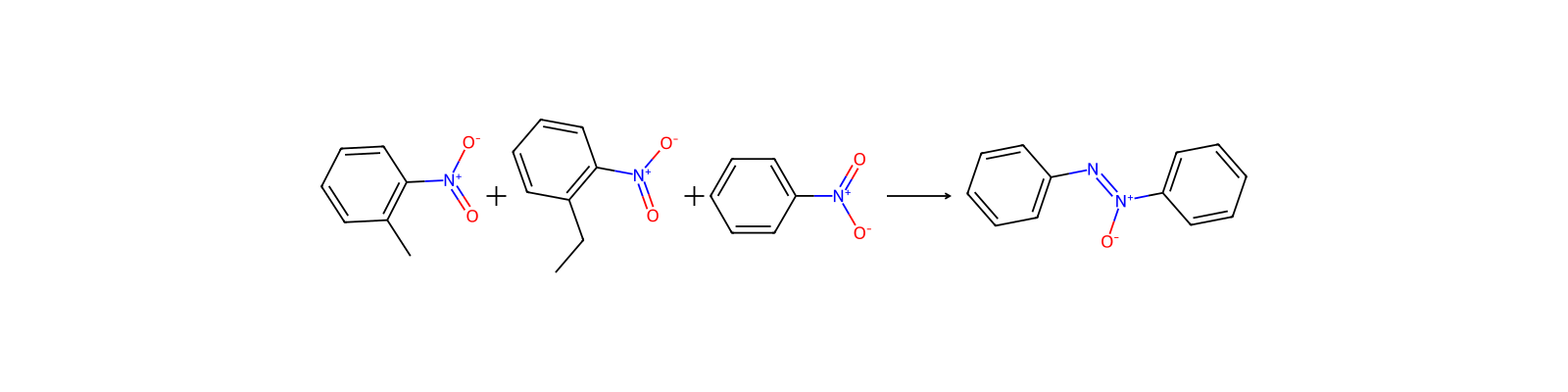
HEATING NITROBENZENE WITH SODIUM HYDROXIDE IN AN ALCOHOLIC SOLUTION
BY REDUCTION OF NITROBENZENE WITH SODIUM ARSENITE: BIGELOW, PALMER; ORG SYN 11: 16 (1931); COLL VOL II, 57 (1943); ALSO BY TREATMENT OF NITROBENZENE WITH GLUCOSE IN ALKALINE MEDIUM: OPOLONICK; IND ENG CHEM 27: 1045 (1935).
INDUSTRIAL...BY HEATING NITROBENZENE WITH MOLASSES & SODIUM HYDROXIDE IN HIGH FLASH NAPHTHA: GERMAN PATENT 228,722. ALSO...BY CATALYTIC REDUCTION OF NITROBENZENE: BUSCH, SCHULZ; BER 62: 1458 (1929). BY PERACETIC ACID OXIDN OF AZOBENZENE: D'ANS, KNEIP; BER 48: 1145 (1915); CF GREENSPAN, IND ENG CHEM 39: 847 (1947).
General Manufacturing InformationDiazene, 1,2-diphenyl-, 1-oxide: INACTIVE
응용 분야
용도Intermediate in organic synthesis.
일반 설명Bright yellow crystals or yellowish-brown solid.
상·하류 제품 정보
상류 원료
하류 제품
공급사1 곳
DAYANG CHEM (HANGZHOU) CO.,LTD+86-88938639 +86-17705817739 · [email protected]
관련 반응
7건



연결된 노트
불러오는 중…