
기본 정보
- 표준 SMILES
Cl.NCC(=O)CCC(=O)O- InChIKey
ZLHFONARZHCSET-UHFFFAOYSA-N- 분자식
- C5H10ClNO3
- 평균 분자량
- 167.59 g/mol
- 단동위원소 질량
- 167.03492086
개요
5-aminolevulinic acid hydrochloride is a hydrochloride that is the monohydrochloride of 5-aminolevulinic acid. It is metabolised to protoporphyrin IX, a photoactive compound which accumulates in the skin. Used in combination with blue light illumination for the treatment of minimally to moderately thick actinic keratosis of the face or scalp. It has a role as an antineoplastic agent, a photosensitizing agent, a dermatologic drug and a prodrug. It contains a 5-ammoniolevulinic acid.
이름 및 식별자
- 우선 이름
- Aminolevulinic Acid Hydrochloride
- IUPAC
- 5-amino-4-oxopentanoic acid;hydrochloride
- 영어명
- 5-Aminolevulinic acid hydrochloride
- 분자식
- C5H10ClNO3
- 분자량
- 167.59
이름 및 동의어
5-Aminolevulinic acid hydrochloride5451-09-2Aminolevulinic acid hydrochloride5-Amino-4-oxopentanoic acid hydrochlorideLevulanLevulan Kerastickdelta-Aminolevulinic acid hydrochlorideAminolevulinic Acid HClAmeluzAlaglioGleolanAlabel
이름 더 보기
5-Ala5-AMINOLEVULINIC ACID HCL5-AminolevulinicGliolaninic acid hydrochLevuL5-AminoL5-Amino-3-oxopentanoic acid (hydrochloride)
AlaCareDTXSID5045914Pentanoic acid, 5-amino-4-oxo-, hydrochlorideV35KBM8JGRNSC-18509NPC-075-AMINO-4-OXOPENTANOIC ACID HCLDTXCID3025914
데이터베이스 식별자
- CAS
5451-09-2- PubChem CID
- 123608
- DTXSID
DTXSID5045914- ChEMBL
CHEMBL1200582- ChEBI
CHEBI:132969- UNII
- V35KBM8JGR
물성
구조 계산 물성
- 극성 표면적
- 80.4 Ų
- 수소 결합 공여자 수
- 3
- 수소 결합 수용자 수
- 4
- 회전 가능 결합 수
- 4
- 무거운 원자 수
- 10
- 형식 전하
- 0
- 복잡도
- 121
실험 및 물리화학적 성질
Human Drugs
Breast Feeding; Lactation; Milk, Human; Dermatologic Agents; Photosensitizing Agents
FDA approved drugs -> Active ingredient
EMA approved medicines: Human medicine
EMA approved medicines: Human medicine
FDA approved drugs -> Active ingredient
물리화학적 성질
- 녹는점
- 150 °C · ~150 °C (dec.)
- 인화점
- 155 · 155-157°C
- 저장 조건
- -20 °C · -20°C
- 용해도
- 2 O: · H2O: 50 mg/mL
- 물리적 상태
- 가루
- 색상
- 흰색에서 연한 노란색
- 수소이온지수(pH)
- pH (10g/l, 25℃) : 2.5~3.0
- 수용성
- 디메틸설폭사이드, 메탄올 및 물에 용해됩니다.
- Merck
- 14 · 14,446
- BRN
- 3690651 · 3690651
- 안정성
- 흡습성
- 화장품 원료 기능
- 피부 보호항균헤어 컨디셔닝피지 억제
- InChI
- 1S/C5H9NO3.ClH/c6-3-4(7)1-2-5(8)9;/h1-3,6H2,(H,8,9);1H
- InChIKey
- ZLHFONARZHCSET-UHFFFAOYSA-N
- SMILES
- Cl[H].NCC(=O)CCC(O)=O
화학적 성질
white to pale yellow crystals or
안전 및 규제
유해성 정보
Regulatory InformationPentanoic acid, 5-amino-4-oxo-, hydrochloride: Does not have an individual approval but may be used under an appropriate group standard
Other Safety InformationIMAP assessments - Pentanoic acid, 5-amino-4-oxo-, hydrochloride: Environment tier I assessment
독성 정보
Exposure RoutesOral bioavailability is 50-60%.
Toxicity Summary
According to the presumed mechanism of action, photosensitization following application of aminolevulinic acid (ALA) topical solution occurs through the metabolic conversion of ALA to protoporphyrin IX (PpIX), which accumulates in the skin to which aminolevulinic acid has been applied. When exposed to light of appropriate wavelength and energy, the accumulated PpIX produces a photodynamic reaction, a cytotoxic process dependent upon the simultaneous presence of light and oxygen. The absorption of light results in an excited state of the porphyrin molecule, and subsequent spin transfer from PpIX to molecular oxygen generates singlet oxygen, which can further react to form superoxide and hydroxyl radicals. Photosensitization of actinic (solar) keratosis lesions using aminolevulinic acid, plus illumination with the BLU-UTM Blue Light Photodynamic Therapy Illuminator (BLU-U), is the basis for aminolevulinic acid photodynamic therapy (PDT).
Carcinogen ClassificationNo indication of carcinogenicity to humans (not listed by IARC).
Effects During Pregnancy and Lactation◉ Summary of Use during Lactation
안전 데이터
- wgk
- 3
- rtecs
- OI1640000
- HS 번호
- 29224999
- risk_code
- 36/37/38-66-20/21/22-36/38
- hazard_code
- Xi,Xn
- safety_code
- 26-36/37-37/39-36
- 기존화학 물질
- KE-05-0127
- F 고인화성물질
- 3-8-10
- 위험 참고 사항
- Irritant
- 스토리지 클래스
- 11 - Combustible Solids
화학 및 산업
약리 정보
Metabolism/MetabolitesFollowing topical administration, synthesis into protoporphyrin IX takes place in situ in the skin.
Half Life: Mean half-life is 0.70 ± 0.18 h after the oral dose and 0.83 ± 0.05 h after the intravenous dose.
FDA Pharmacological Classification
AMINOLEVULINIC ACID HYDROCHLORIDE
Optical Imaging Agent [EPC]; Porphyrin Precursor [EPC]; Porphyrinogens [CS]; Fluorescence Contrast Activity [MoA]
MeSH Pharmacological Classification
Drugs that are pharmacologically inactive but when exposed to ultraviolet radiation or sunlight are converted to their active metabolite to produce a beneficial reaction affecting the diseased tissue. These compounds can be administered topically or systemically and have been used therapeutically to treat psoriasis and various types of neoplasms.
용도 및 제조
UsesAminolevulinic acid plus blue light illumination using a blue light photodynamic therapy illuminator is indicated for the treatment of minimally to moderately thick actinic keratoses of the face or scalp.
응용 분야
용도5-Aminolevulinic acid hydrochloride finds an important role as a precursor in the synthesis of tetrapyrroles such as chlorophyll and heme. It is widely utilized in photodynamic therapy of diseases namely, Pagets disease and human papillomavirus (HPV) infection-associated cervical condylomata acuminata.
상·하류 제품 정보
상류 원료
하류 제품
공급사50 곳
北京华美互利生物化工010-56205725 · [email protected]
梯希爱(上海)化成工业发展有限公司021-67121386 · [email protected]
上海阿拉丁生化科技股份有限公司400-6206333 13167063860 · [email protected]
INTATRADE GmbH+49 3493/605464 · [email protected]
T&W GROUP021-61551611 13296011611 · [email protected]
爱斯特(成都)生物制药股份有限公司+86-28-85122536 85324413 · [email protected]
科瑞迪化学400-821-5857 021-64326257 · [email protected]
上海先辉医药科技有限公司13564796979; 13564796979 · [email protected]
LGM Pharma1-(800)-881-8210 · [email protected]
上海将来实业股份有限公司400-0066400 13621662912 · [email protected]
上海迈瑞尔生化科技有限公司4006356688 18621169109 · [email protected]
Wuhan EnTai Technology Development Co,.Ltd86-27-82330560 · [email protected]
武汉易泰科技有限公司上海分公司18930552037 · [email protected]
大连美仑生物技术有限公司0411-62910999 13889544652 · [email protected]
阿法埃莎(中国)化学有限公司400-6106006 · [email protected]
安耐吉化学&3A(安徽泽升科技股份有限公司)400-0056266 · [email protected]
石家庄斯迪亚诺精细化工有限公司0311-89250318 13582355795 · [email protected]
上海瀚鸿科技股份有限公司021-54306202 13764082696 · [email protected]
China Kouting Group Limited+86 (21) 5811-6473 5811-6475 · [email protected]
上海景颜化工科技有限公司13817811078 · [email protected]
嘉兴市艾森化工有限公司0573-85285100 18627885956 · [email protected]
Pure Chemistry Scientific Inc.001-857-928-2050 or 1-888-588-9418 · [email protected]
上海泰坦科技股份有限公司400-6009262 15618770481 · [email protected]
武汉威顺达科技发展有限公司86-027-88774375 · [email protected]
MedChemexpress LLC021-58955995 · [email protected]
医恩医疗系统研发(上海)有限公司021-58958002 18930822973 · [email protected]
孝感深远化工有限公司15527621225; 15527621225 · [email protected]
四川库利南科技有限公司400-1166-196 18981987031 · [email protected]
天津希恩思生化科技有限公司400 638 7771 · [email protected]
河南多贝化工有限公司0370-2785118 17550508557 · [email protected]
斯百全化学(上海)有限公司021-021-021-67601398-809-809-809 15221380277 · [email protected]
武汉海正工贸发展有限公司027-8866 0053/88660577/88660578
上海法凯医药科技有限公司13621878384 · [email protected]
上海厚博生物科技有限公司+21-18501659228 18501659228
上海源叶生物科技有限公司13636370518 · [email protected]
艾科试剂4008-755-333 18080918076 · [email protected]
上海思域化工科技有限公司86-21-34053660 · [email protected]
上海骏晔化工有限公司021-021-50318666 18516602538 · [email protected]
赛默飞世尔科技(中国)有限公司800-810-5118 · [email protected]
北京伊诺凯科技有限公司400-810-7969 010-59572699 · [email protected]
AdooQ BioScience, LLC+1 (866) 930-6790 · [email protected]
南京诺利斯医药科技有限公司13901585132 · [email protected]
TCI AMERICA800-4238616 · [email protected]
TOKYO CHEMICAL INDUSTRY CO., LTD.03-36680489 · [email protected]
TCI Europe320-37350700 · [email protected]
上海贤鼎生物科技有限公司4009209199 · [email protected]
深圳振强药物研发有限公司0755-66853366 13670046396 · [email protected]
上海睿升化工科技有限公司+86-021-50935922
南京杜莱生物技术有限公司025-84699383-8003;025-846993838003-8003 18013301590 · [email protected]
湖南复瑞生物医药技术有限责任公司15901640172,19275032510 15901640172 · [email protected]
추가 설명
정의ChEBI: 5-aminolevulinic acid hydrochloride is a hydrochloride that is the monohydrochloride of 5-aminolevulinic acid. It is metabolised to protoporphyrin IX, a photoactive compound which accumulates in the skin. Used in combination with blue light illumination for the treatment of minimally to moderately thick actinic keratosis of the face or scalp. It has a role as an antineoplastic agent, a photosensitizing agent, a dermatologic drug and a prodrug. It contains a 5-ammoniolevulinic acid.
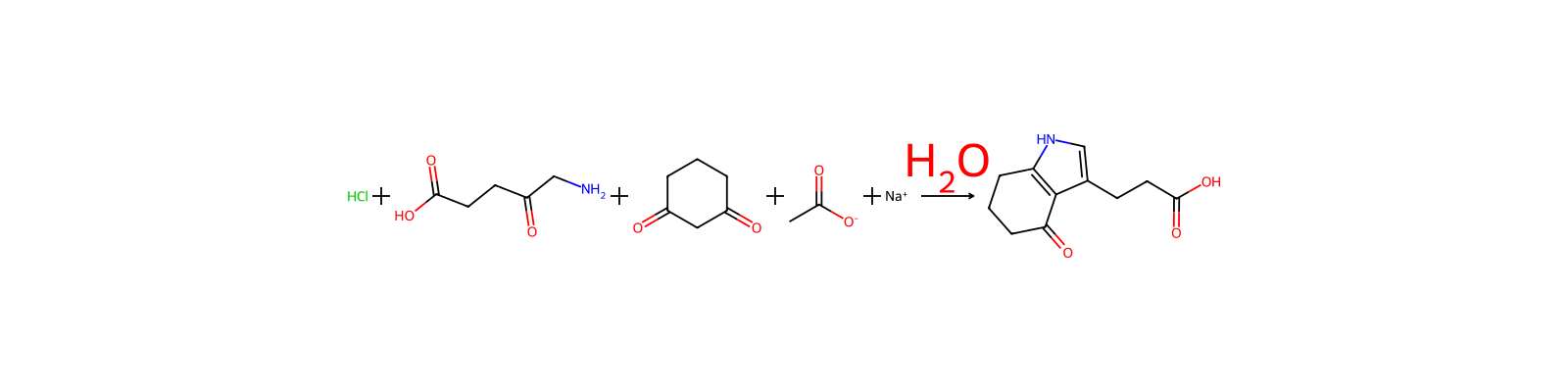
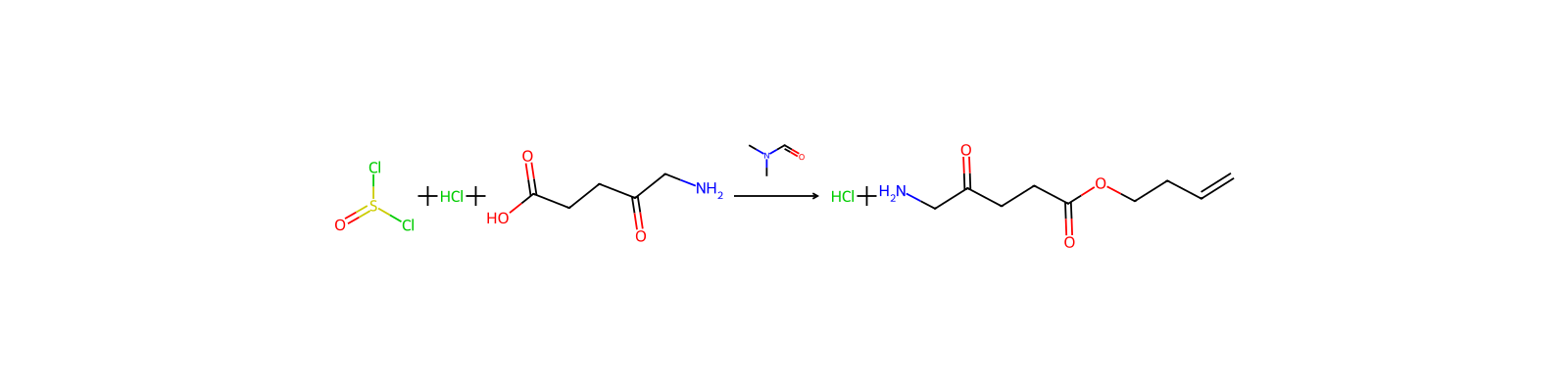
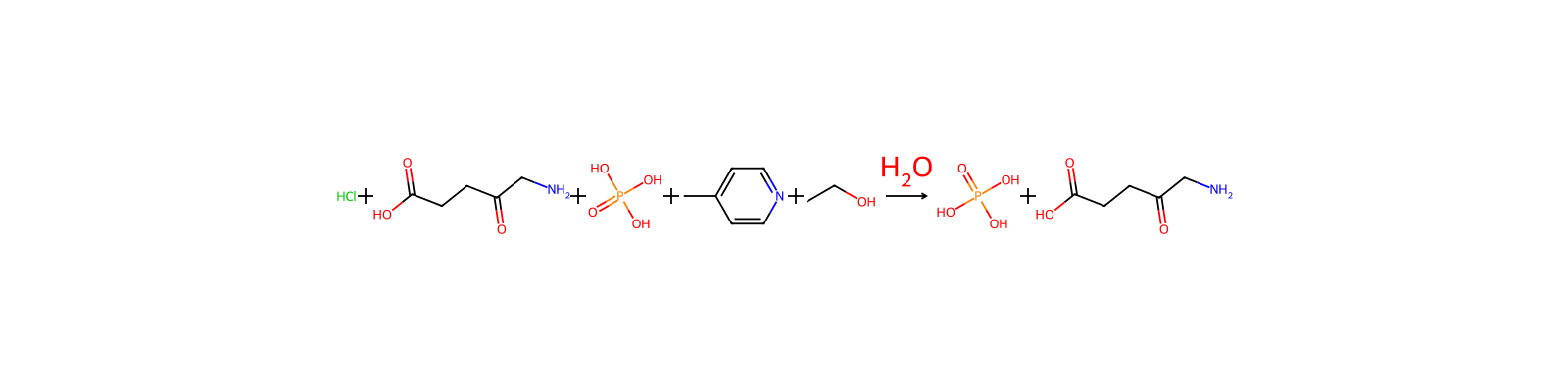
관련 반응
112건




연결된 노트
불러오는 중…