4-아미노안티피린
4-Aminoantipyrine
데이터를 보충하는 중입니다. 잠시 후 페이지를 새로 고치면 최신 내용을 볼 수 있습니다
기본 정보
- CAS
83-07-8- 표준 SMILES
Cc1c(N)c(=O)n(-c2ccccc2)n1C- InChIKey
RLFWWDJHLFCNIJ-UHFFFAOYSA-N- 분자식
- C11H13N3O
- 평균 분자량
- 203.24 g/mol
- 단동위원소 질량
- 203.10586205
개요
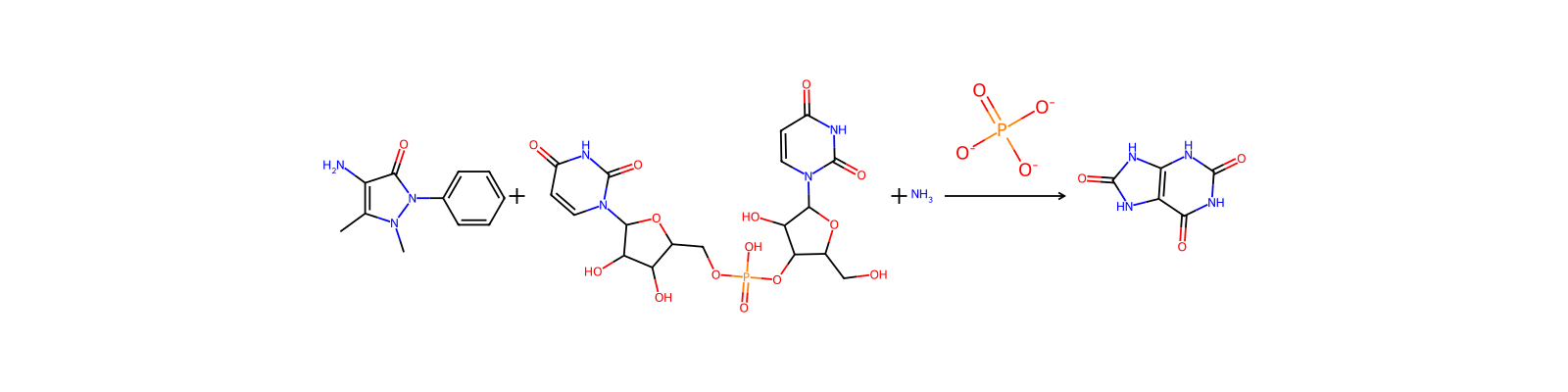
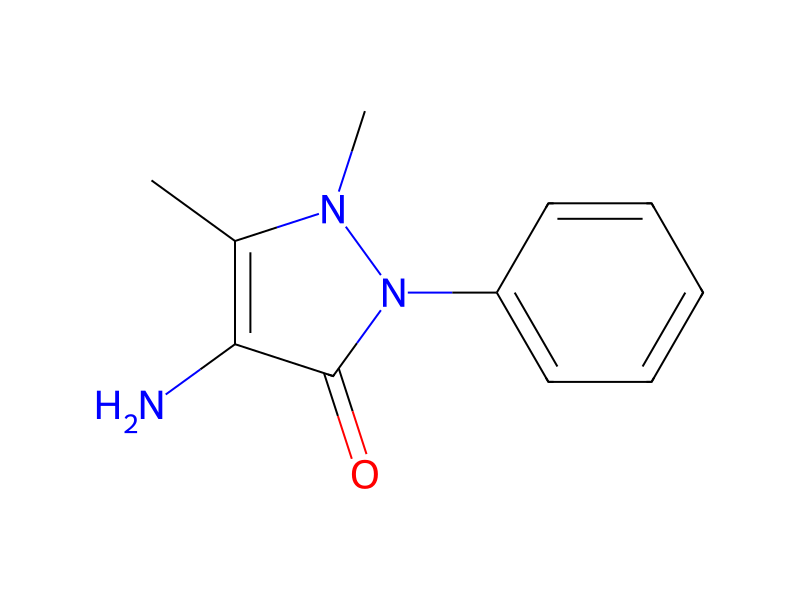
4-aminoantipyrine is a pyrazolone, a member of the class of pyrazoles that is antipyrine substituted at C-4 by an amino group. It is a metabolite of aminopyrine and of metamizole. It has a role as a non-steroidal anti-inflammatory drug, a non-narcotic analgesic, an antipyretic, an EC 1.14.99.1 (prostaglandin-endoperoxide synthase) inhibitor, an antirheumatic drug, a drug metabolite, a peripheral nervous system drug and a marine xenobiotic metabolite. It is a primary amino compound and a pyrazolone. It is functionally related to an antipyrine.
이름 및 식별자
- 우선 이름
- 4-Aminoantipyrine
- IUPAC
- 4-amino-1,5-dimethyl-2-phenylpyrazol-3-one
- 현지명
- 4-아미노안티피린
- 영어명
- 4-Aminoantipyrine
- 분자식
- C11H13N3O
- 분자량
- 203.24
이름 및 동의어
4-AminoantipyrineAMPYRONE83-07-84-AminophenazoneAminoantipyrineMetapirazone4-AminoantipyreneAminoantipyrinSolvapyrin-AAminoazopheneAminoazophenazoneSolnapyrin-A
이름 더 보기
4-아미노-1,5-디메틸-2-페닐-3H-파라졸3-온4-아미노안티피린암피론암모늄수산화물암모니아액체암모니아용액수화암모니아암모니아물암모니아수수산화4-아미노안티피렌1,2-다이하이드로-1,5-다이메틸-2-페닐-4-아미노-3H-피라졸-3-온1-페닐-2,3-다이메틸-4-아미노-5-피라졸론3H-피라졸-3-온, 4-아미노-1,2-다이하이드로-1,5-다이메틸-2-페닐-4-아미노-1,2-다이하이드로-1,5-다이메틸-2-페닐-3H-피라졸-3-온4-아미노-1,5-다이메틸-2-페닐-3-피라졸론4-아미노-2,3-다이메틸-1-페닐-5-피라졸론안티피린, 4-아미노-4-AMINOANTIPYRIN4-AMINO-1,5-DIMETHYL-2-PHENYL-1,2-DIHYDRO-PYRAZOL-3-ONENSC 60242
4-AAP3H-Pyrazol-3-one, 4-amino-1,2-dihydro-1,5-dimethyl-2-phenyl-4-Amino-2,3-dimethyl-1-phenyl-3-pyrazolin-5-one4-Amino-1,5-dimethyl-2-phenyl-1,2-dihydro-3H-pyrazol-3-oneDTXSID8048860CHEBI:590260M0B7474RANSC-60242
물성
구조 계산 물성보충 중
- XLogP
- 0.1
- 극성 표면적
- 49.6 Ų
- 수소 결합 공여자 수
- 1
- 수소 결합 수용자 수
- 3
- 회전 가능 결합 수
- 1
- 무거운 원자 수
- 15
- 형식 전하
- 0
- 복잡도
- 305
실험 및 물리화학적 성질
DrugsPharmaceuticals -> Metabolite of Metamizole
Animal DrugsPharmaceuticals -> Animal Drugs -> Approved in Taiwan
Endocrine DisruptorsPotential endocrine disrupting compound
Collision Cross Section
151.49 Ų [M+K]+ [CCS Type: TW; Method: calibrated with polyalanine and drug standards]
142.6 Ų [M+H]+ [CCS Type: TW; Method: calibrated with polyalanine and drug standards]
142.48 Ų [M+H]+
물리화학적 성질
- 녹는점
- 105 · 105-110 °C(lit.)
- 끓는 점
- 340 C · 340 C
- 밀도
- 0.8 · 0.8
- 굴절률
- 1.493 · 1.4930 (estimate)
- 저장 조건
- Keep in dark place,Inert atmosphere,Room temperature
- 용해도
- 2 O: · H2O: 0.1 g/mL, 투명
- 산도 계수 (pKa)
- 1 · pK1: 4.94(+1) (25°C)
- 물리적 상태
- 분말 또는 결정
- 색상
- 노란색에서 황갈색
안전 및 규제
안전 정보는 참고용이며, 공급업체의 물질안전보건자료(SDS), 관련 법규 및 전문가 평가를 대체하지 않습니다.
GHS 분류
GHS Classification
This chemical does not meet GHS hazard criteria for 1% (1 of 105) of reports.
Warning
H302 (99%): Harmful if swallowed [Warning Acute toxicity, oral]
P261, P264, P264+P265, P270, P271, P280, P301+P317, P302+P352, P304+P340, P305+P351+P338, P319, P321, P330, P332+P317, P337+P317, P362+P364, P403+P233, P405, and P501 (click each P-code to see the statement)
Aggregated GHS information provided per 105 reports by companies from 13 notifications to the ECHA C&L Inventory. Each notification may be associated with multiple companies.
유해성 정보
Regulatory Information4-Amino-2,3-dimethyl-1-phenyl-3-pyrazolin-5-one: Does not have an individual approval but may be used under an appropriate group standard
Other Safety InformationIMAP assessments - 3H-Pyrazol-3-one, 4-amino-1,2-dihydro-1,5-dimethyl-2-phenyl-: Environment tier I assessment
Hazard Classes and CategoriesAcute Tox. 4 (99%)
안전 데이터
- wgk
- 3
- tsca
- TSCA listed
- rtecs
- CD2480000
- 독성
- LD50 orally in Rabbit: 1700 mg/kg
- HS 번호
- 29331190
- risk_code
- 22-36/37/38-20/21/22
- hazard_code
- Xn
- safety_code
- 26-36-36/37/39
- 기존화학 물질
- KE-01297
- F 고인화성물질
- 8-9-23
- 위험 참고 사항
- Harmful
화학 및 산업
약리 정보
ATC CodeN02BB03
MeSH Pharmacological Classification
Anti-inflammatory agents that are non-steroidal in nature. In addition to anti-inflammatory actions, they have analgesic, antipyretic, and platelet-inhibitory actions. They act by blocking the synthesis of prostaglandins by inhibiting cyclooxygenase, which converts arachidonic acid to cyclic endoperoxides, precursors of prostaglandins. Inhibition of prostaglandin synthesis accounts for their analgesic, antipyretic, and platelet-inhibitory actions; other mechanisms may contribute to their anti-inflammatory effects.
Substances used for the detection, identification, analysis, etc. of chemical, biological, or pathologic processes or conditions. Indicators are substances that change in physical appearance, e.g., color, at or approaching the endpoint of a chemical titration, e.g., on the passage between acidity and alkalinity. Reagents are substances used for the detection or determination of another substance by chemical or microscopical means, especially analysis. Types of reagents are precipitants, solvents, oxidizers, reducers, fluxes, and colorimetric reagents. (From Grant & Hackh's Chemical Dictionary, 5th ed, p301, p499)
용도 및 제조
Use Classification
Pharmaceuticals -> Animal Drugs -> Approved in Taiwan
Pharmaceuticals -> Nervous System -> Analgesics -> Pyrazolones -> Transformation products
General Manufacturing Information3H-Pyrazol-3-one, 4-amino-1,2-dihydro-1,5-dimethyl-2-phenyl-: ACTIVE
응용 분야
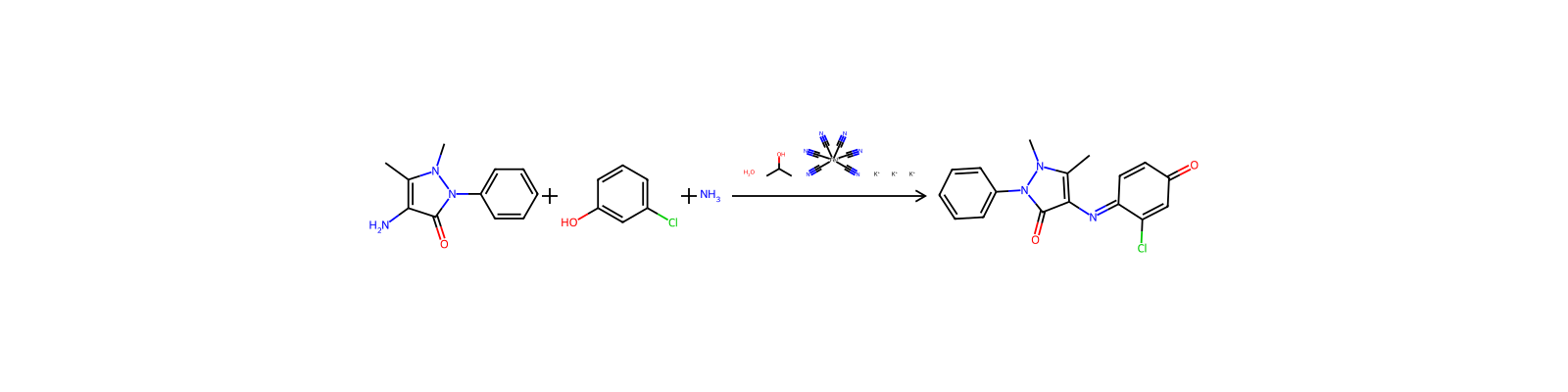
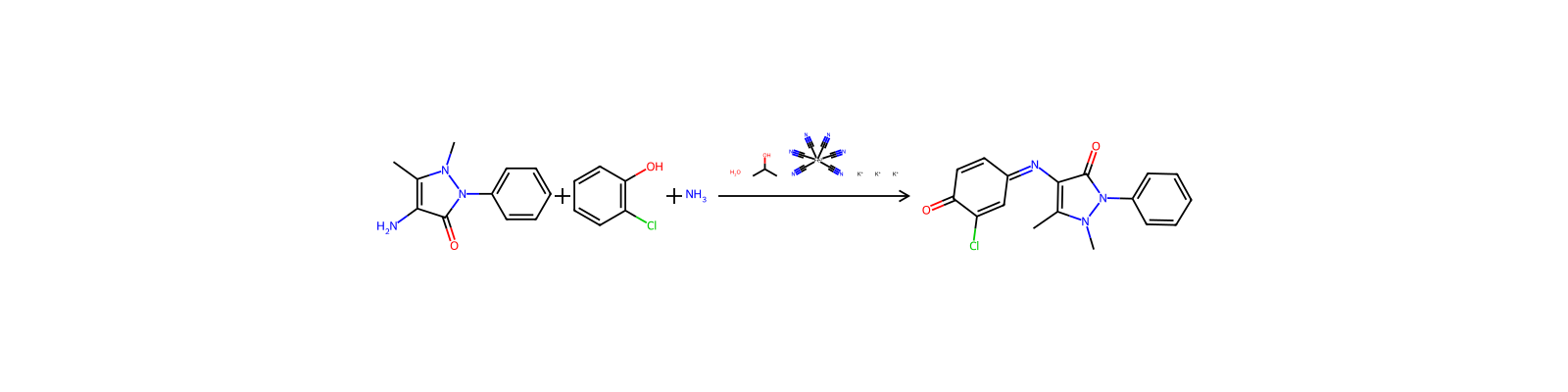
용도4-Aminoantipyrine is a metabolite of aminopyrine, having both analgesic and anti-inflammatory properties. It readily forms metal complexes due to its amino nitrogen, a strong coordination site.4-aminoantipyrine forms Schiff bases when treated with aldehydes/ketones, which are used in chemosensing applications.Coupling Reagent for Trinder's reagent in colorimetric hydrogen peroxide detectionassays.Forms highly stable dyes by coupling with Trinder's reagent in presence of Peroxidase and H2O2. Therefore suitable for use in test strip and solution diagnostics.
관련 반응
19건





화합물 노트
불러오는 중…