

기본 정보
- 표준 SMILES
CCNC(=S)NCC- InChIKey
FLVIGYVXZHLUHP-UHFFFAOYSA-N- 분자식
- C5H12N2S
- 평균 분자량
- 132.23 g/mol
- 단동위원소 질량
- 132.07211938
개요
Buff solid or white powder. (NTP, 1992)
이름 및 식별자
- 우선 이름
- N,N'-Diethylthiourea
- IUPAC
- 1,3-diethylthiourea
- 현지명
- N,N'-디에틸티오요소
- 영어명
- N,N'-Diethylthiourea
- 분자식
- C5H12N2S
- 분자량
- 132.23
이름 및 동의어
N,N'-DIETHYLTHIOUREA105-55-51,3-Diethyl-2-thiourea1,3-DiethylthioureaThiourea, N,N'-diethyl-N,N-Diethyl-2-thioureaCCRIS 243DTXSID8020466HSDB 4106UNII-J2RDK7O9MZJ2RDK7O9MZEINECS 203-308-5
이름 더 보기
1,3-디에틸티오요소N,N'-디에틸티오요소1,3-디에틸티오요소DETUDIETHYL THIOUREAu15030U 15030THIATE HpennzoneeNCI-C03816Pennzone Eu15030[qr]usafek-1803
N,N'-Diethylthiourea (sym)BRN 0773905CHEBI:82448AI3-14636NSC-3507DTXCID40466EC 203-308-54-04-00-00375 (Beilstein Handbook Reference)
데이터베이스 식별자
- CAS
105-55-5- PubChem CID
- 2735009
- DTXSID
DTXSID8020466- ChEMBL
CHEMBL1611590- ChEBI
CHEBI:82448- UNII
- J2RDK7O9MZ
- EC Number
- 203-308-5
- Nikkaji
- J22.148A
물성
구조 계산 물성
- XLogP
- 0.6
- 극성 표면적
- 56.2 Ų
- 수소 결합 공여자 수
- 2
- 수소 결합 수용자 수
- 1
- 회전 가능 결합 수
- 2
- 무거운 원자 수
- 8
- 형식 전하
- 0
- 복잡도
- 64.8
실험 및 물리화학적 성질
Chemical ClassesNitrogen Compounds -> Thiourea Compounds
SpringerMaterials PropertiesDiamagnetic susceptibility
LogP
log Kow= 0.57
0.57
Color/FormBUFF SOLID
Solubility
1 to 5 mg/mL at 68 °F (NTP, 1992)
SLIGHTLY SOL IN WATER; SOL IN METHANOL, ETHER, ACETONE, BENZENE, & ETHYL ACETATE; INSOL IN GASOLINE.
Boiling PointDecomposes (NTP, 1992)
Melting Point
291 °F (NTP, 1992)
68-71 °C
77 °C
Vapor Pressure0.24 [mmHg]
Physical Description
Buff solid or white powder. (NTP, 1992)
Dry Powder
Beige solid; [Hawley] Off-white flakes; [MSDSonline]
Collision Cross Section189.4 Ų [M+H]+ [CCS Type: DT; Buffer gas: N2; Ionization: ESI+; Dataset: TOXCAST; Source Identifier: DTXSID8020466]
Other Experimental PropertiesDecomposes
물리화학적 성질
- 녹는점
- 76 · 76-78 °C(lit.)
- 끓는 점
- 245 °C · 245°C (estimate)
- 밀도
- 1 · 1,12 g/cm3
- 증기압
- 0.001 Pa · 0.001Pa at 25℃
- 굴절률
- 1.53 · 1.5300 (estimate)
- 인화점
- 186 °C · 186 °C
- 저장 조건
- 30 °C · Store below +30°C.
- 용해도
- 42 g/L · 42g/L
- 물리적 상태
- 고체
- 산도 계수 (pKa)
- 14.47 · 14.47±0.70(Predicted)
- 색상
- 흰색에서 황백색까지
- 수소이온지수(pH)
- 7 · 7 (38g/l, H2O, 20℃)
- 수용성
- 38 g/L · 38g/L(20℃)
- BRN
- 773905 · 773905
- Henry's Law Constant
- 1.4 · 1.4×102 mol/(m3Pa) at 25℃, HSDB (2015)
- 안정성
- 안정적인. 공기에 민감할 수 있습니다. 강한 산화제와 호환되지 않습니다.
- InChI
- 1S/C5H12N2S/c1-3-6-5(8)7-4-2/h3-4H2,1-2H3,(H2,6,7,8)
- InChIKey
- FLVIGYVXZHLUHP-UHFFFAOYSA-N
- SMILES
- CCNC(=S)NCC
- LogP
- 0.57 · 0.57
- NIST
- -2 · Diethyl-2-thiourea(105-55-5)
- EPA
- N,N'-Diethylthiourea (105-55-5)
화학적 성질
white to buff-coloured solid
안전 및 규제
GHS 분류
GHS Classification
This chemical does not meet GHS hazard criteria for 8.1% (29 of 359) of reports.
Danger
H302+H312 (43.7%): Harmful if swallowed or in contact with skin [Warning Acute toxicity, oral; acute toxicity, dermal]
P203, P260, P261, P264, P264+P265, P270, P271, P272, P273, P280, P301+P317, P302+P352, P304+P340, P305+P354+P338, P317, P318, P319, P321, P330, P333+P317, P362+P364, P403+P233, P405, and P501 (click each P-code to see the statement)
Aggregated GHS information provided per 359 reports by companies from 22 notifications to the ECHA C&L Inventory. Each notification may be associated with multiple companies.
Danger
유해성 정보
Regulatory Information
Chemical: Thiourea, N,N'-diethyl-
Thiourea, N,N'-diethyl- is listed on the EPA's Chemical Data Reporting (CDR) system. Manufacturers and importers of Thiourea, N,N'-diethyl- are required to report information about their production and use of this chemical to the EPA under the Toxic Substances Control Act (TSCA). (40 eCFR Part 711)
Status: Active Update: 16-02-2023 https://echa.europa.eu/registration-dossier/-/registered-dossier/12736
1,3-Diethyl-2-thiourea: Does not have an individual approval but may be used under an appropriate group standard
Fire HazardsFlash point data are not available for this chemical, but it is probably combustible. (NTP, 1992)
Health HazardsACUTE/CHRONIC HAZARDS: When heated to decomposition this compound emits toxic fumes. (NTP, 1992)
Hazards SummaryA strong skin sensitizer; [HSDB] An irritant; [MSDSonline]
Reactive GroupAmides and Imides
Special ReportsDHEW/NCI; Bioassay of N,N-Diethylthiourea for Possible Carcinogenicity (1979) Technical Rpt Series No. 149 DHEW Pub No. (NIH) 79-1705
Reactivity Profile
N,N'-DIETHYLTHIOUREA is an amide. Amides/imides react with azo and diazo compounds to generate toxic gases. Flammable gases are formed by the reaction of organic amides/imides with strong reducing agents. Amides are very weak bases (weaker than water). Imides are less basic yet and in fact react with strong bases to form salts. That is, they can react as acids. Mixing amides with dehydrating agents such as P2O5 or SOCl2 generates the corresponding nitrile. The combustion of these compounds generates mixed oxides of nitrogen (NOx).
Air and Water ReactionsThis material may be sensitive to exposure to air. (NTP, 1992). Slightly soluble in water.
Hazard Classes and Categories
Acute Tox. 4 (85.8%)
Acute toxicity (Oral) - Category 4
Serious eye damage/eye irritation - Category 1
안전 및 보호
Fire FightingFires involving this compound should be controlled with a dry chemical, carbon dioxide or Halon extinguisher. (NTP, 1992)
First Aid
EYES: First check the victim for contact lenses and remove if present. Flush victim's eyes with water or normal saline solution for 20 to 30 minutes while simultaneously calling a hospital or poison control center. Do not put any ointments, oils, or medication in the victim's eyes without specific instructions from a physician. IMMEDIATELY transport the victim after flushing eyes to a hospital even if no symptoms (such as redness or irritation) develop.
Nonfire Spill Response
SMALL SPILLS AND LEAKAGE: Should a spill occur while you are handling this chemical, FIRST REMOVE ALL SOURCES OF IGNITION, then you should dampen the solid spill material with 60-70% ethanol and transfer the dampened material to a suitable container. Use absorbent paper dampened with 60-70% ethanol to pick up any remaining material. Seal the absorbent paper, and any of your clothes, which may be contaminated, in a vapor-tight plastic bag for eventual disposal. Solvent wash all contaminated surfaces with 60-70% ethanol followed by washing with a soap and water solution. Do not reenter the contaminated area until the Safety Officer (or other responsible person) has verified that the area has been properly cleaned.
Protective Action Criteria (PAC)
0.95 [mg/m3]
10 [mg/m3]
63 [mg/m3]
Personal Protective Equipment (PPE)
RECOMMENDED RESPIRATOR: Where the neat test chemical is weighed and diluted, wear a NIOSH-approved half face respirator equipped with a combination filter cartridge, i.e. organic vapor/acid gas/HEPA (specific for organic vapors, HCl, acid gas, SO2 and a high efficiency particulate filter). (NTP, 1992)
독성 정보
Interactions
The effects of combined administration of three carcinogens in male F344 rats were investigated. The analysis of additive or synergistic effects was performed by comparing data for simultaneous and individual treatment at dose levels of one third of the reported TD50 values in rats. 2,4-Diaminoanisole sulfate, N,N'-diethylthiourea, and 4,4'-thiodianiline were administered alone or in combination in the diet at 610, 200, and 46 ppm levels, respectively, for a 52 wk period. The resultant incidence of thyroid adenocarcinomas in the combined treatment group was significantly higher than those in each individual treatment groups, 18/18 versus 0/21 (2,4-diaminoanisole sulfate), 1/21 (N,N'-diethylthiourea), and 2/20 (4,4'-thiodianiline). Hepatocellular carcinomas occurred in 9/18 and lung adenomas in 6/18 of those receiving the combined treatment. Hepatocellular carcinomas occurred in 3/20 and lung adenomas in 4/20 treated with 4,4'-thiodianiline. It was concluded that the three carcinogens exert apparent synergism in thyroid carcinogenesis when administered simultaneously.
Environmental Fate
TERRESTRIAL FATE: The estimated Koc(1,SRC) indicates that N,N-diethylthiourea may be highly mobile in soil(3). The estimated low value for Henry's Law constant(3) suggests that volatilization of N,N-diethylthiourea from moist soil would not be important(SRC).
AQUATIC FATE: Thiourea was found to be stable towards hydrolysis and photolysis(1). Therefore, hydrolysis and photolysis of N,N-diethylthiourea, which is structurally similar to thiourea, may not be important(SRC). Based on the estimated low value of 49(2,SRC) for Koc, adsorption of N,N-diethylthiourea to suspended solids and sediment should not be important and N,N-diethylthiourea should be present mostly in the aquatic phase in water(SRC). The estimated BCF value of 2(2,SRC) indicates that N,N-diethylthiourea would not bioconcentrate in aquatic organisms in water. Based on the estimated value of Henry's Law constant of 6.85X10⁻⁸ atm-cu m/mole at 25 °C(3) and the volatility characteristics associated with H(2), volatilization of N,N-diethylthiourea from water would not be important(SRC).
ATMOSPHERIC FATE: Based on an estimation method(1), the rate constant for the reaction of vapor-phase N,N-diethylthiourea with photochemically generated hydroxyl radicals in the atmosphere is 1.06X10⁻¹⁰ cu cm/molecule-sec. Assuming the daily average concn of hydroxyl radicals in the atmosphere of 5X10+5/cu cm(2), the half-life for the reaction would be 4 hrs. Based on a water solubility of 4555 mg/l(SRC) estimated from the experimental log Kow value of 0.57(3) and a regression equation(4), wet deposition may partly remove N,N-diethylthiourea from the atmosphere(SRC). If present in particulate form, N,N-diethylthiourea may also be removed from the atmosphere by dry deposition(SRC).
Adverse EffectsSkin Sensitizer - An agent that can induce an allergic reaction in the skin.
Soil Adsorption/Mobility
Based upon an experimental value of 0.57 for log Kow(1), the Koc for N,N-diethylthiourea can be estimated to be 49 from a linear regression-derived equation(2,SRC). This estimated Koc suggests that N,N-diethylthiourea will be highly mobile in soil(3,SRC).
Human Toxicity Excerpts
DIETHYLTHIOUREA HAS BEEN SHOWN TO BE POTENT SKIN SENSITIZER, BUT WHETHER THIS HAS ANY RELATIONSHIP TO POSSIBLE KERATITIS REMAINS TO BE DETERMINED.
In the manufacture of rubber, irritant contact dermatitis may occur from a variety of acids, alkalies, detergents, and solvents used in the process. Allergic contact dermatitis occurs not infrequently and is almost always due to an organic accelerator or antioxidant. While the list of potential sensitizing accelerators and antioxidants is enormous, common allergens include ... thioureas. /Thioureas/
Case reports of contact and photocontact sensitivity to dimethylthiourea were described. Four patients, a 24 yr old female textile worker, a 30 yr old female textile cutter, a 35 yr old female textile worker, and a 40 yr old male employed as a draftsman in an architectural firm, developed recurrent itchy dermatitis on the eyelids, nostrils and mouth, which spread to other locations such as the neck and hands. The draftsman became light sensitive, even to exposure to neon light, with episodes occurring soon after he returned to work and continuing for several wk. The patients were patch tested with dimethylthiourea and other thiourea agents which were used in diazo sensitized papers which they used in their work. The three female patients showed contact allergic sensitization to dimethylthiourea. The draftsman showed contact and photocontact allergic sensitization to thiourea. The 24 yr old female patient showed cross sensitization to diethylthiourea and ethylbutylthiourea. All patients changed their jobs. It was concluded that skin problems of these patients have been primarily induced by airborne contact with the allergens.
Artificial Pollution SourcesSince N,N-diethylthiourea is used as a corrosion inhibitor in metal pickling solutions and as an accelerator for rubber processing(1), release to the environment may occur during waste disposal from its production and use(SRC).
Carcinogen Classification
N,N'-Diethylthiourea
Group 3: Not classifiable as to its carcinogenicity to humans
Volume 79: (2001) Some Thyrotropic Agents
2001
2000
N,N'-diethylthiourea
Environmental BioconcentrationBased on a log Kow value of 0.57(1), the BCF for N,N-diethylthiourea can be estimated to be 2 from a regression-derived equation(2). Thus bioconcentration should not be important in aquatic organisms(SRC).
Volatilization from Water/Soil
The Henry's Law constant for N,N-diethylthiourea can be estimated to be approximately 6.85X10⁻⁸ atm-cu m/mole at 25 °C using a chemical structure estimation method(1,SRC). Based on this value and the volatility characteristics associated with Henry's Law constant(2), N,N-diethylthiourea should be less volatile than water(SRC).
Non-Human Toxicity Excerpts
N,N-diethylthiourea was tested for mutagenicity in the Salmonella/microsome preincubation assay using the standard protocol approved by the National Toxicology Program. N,N-diethylthiourea was tested at doses of 0.10, 0.33, 1.0, 3.3, 6.7, and 10 mg/plate in as many as 5 Salmonella typhimurium strains (TA1535, TA1537, TA97, TA98, and TA100) in the presence and absence of rat or hamster liver S-9. N,N-diethylthiourea was negative in these tests and the highest ineffective dose tested without toxicity in any Salmonella typhimurium strain was 10 mg/plate. Slight clearing of the background bacterial lawn occurred in strains TA100, TA1535, and TA1537 when tested without activation at a dose of 6.7 mg/plate.
... Levels of Evidence of Carcinogenicity: Male Rats: Positive; Female Rats: Positive; Male Mice: Negative; Female Mice: Negative.
Evidence for Carcinogenicity
Evaluation: There is inadequate evidence in humans for the carcinogenicity of N,N'-diethylthiourea. There is limited evidence in experimental animals for the carcinogenicity of N,N'-diethylthiourea. Overall evaluation: N,N-diethylthiourea os not classifiable as to its carcinogenicity to humans (Group 3).
Environmental Abiotic Degradation
In tests to assess the environmental hazard of chemicals, thiourea was found to be stable towards hydrolysis and photolysis(1). Therefore, hydrolysis and photolysis of N,N-diethylthiourea, which is structurally similar to thiourea, may not be important(SRC). Based on an estimation method, the rate constant for the reaction of vapor-phase N,N-diethylthiourea with hydroxyl radicals has been estimated to be 1.06X10⁻¹⁰ cu cm/molecule-sec(2,SRC). Assuming the daily average concn of hydroxyl radicals in the atmosphere of 5X10+5/cu cm(3), the half-life for this reaction has been estimated to be 4 hrs(SRC).
안전 데이터
- wgk
- 2
- tsca
- TSCA listed
- rtecs
- YS9800000
- HS 번호
- 29309070
- risk_code
- 22-40-45-20/21/22
- hazard_code
- Xn,T
- safety_code
- 45-36/37-53-24/25
- 기존화학 물질
- KE-10527
- Hazard Classifications
- Acute Tox. 4 DermalAcute Tox. 4 OralAquatic Chronic 3Carc. 2Eye Dam. 1Skin Sens. 1B
- 스토리지 클래스
- 11 - Combustible Solids
- 유해 물질 데이터
- 105-55-5(Hazardous Substances Data)
화학 및 산업
용도 및 제조
Uses
Used as an accelerator for rubber processing; as an inhibitor of corrosion in metal pickling solutions; as an activator in elastomers; [HSDB]
ACCELERATOR FOR RUBBER PROCESSING
INHIBITOR OF CORROSION IN METAL PICKLING SOLN; ACCELERATOR ACTIVATOR IN ELASTOMERS
U.S. Production
2023: 25,000 - <50,000 lb
(1977) PROBABLY GREATER THAN 4.54X10+6 GRAMS
(1979) PROBABLY GREATER THAN 4.54X10+6 GRAMS
Consumer UsesPolymerization promoter
Industry UsesPolymerization promoter
Methods of ManufacturingFROM MONOMETHYLAMINE
General Manufacturing Information
Rubber Product Manufacturing
Thiourea, N,N'-diethyl-: ACTIVE
응용 분야
개요Diethylthiourea, a thiourea derivative, is used mainly as a rubber chemical, particularly in solid neoprene products.
용도Diethyl thiourea is the inhibitor of corrosion in metal pick/ing solutions; accelerator for mercaptan-modified chloroprene rubber; antidegradant for natural, nitrile-butadiene, styrene-butadiene, and chloroprene rubbers
일반 설명Buff solid or white powder.
상·하류 제품 정보
상류 원료
하류 제품
공급사50 곳
国药集团化学试剂有限公司86-21-63210123 · [email protected]
梯希爱(上海)化成工业发展有限公司021-67121386 · [email protected]
上海阿拉丁生化科技股份有限公司400-6206333 13167063860 · [email protected]
Shandong chuangyingchemical Co., Ltd.18853181302 · [email protected]
武汉欣扬瑞和化学科技有限公司153-07155313 15307155313 · [email protected]
Dayang Chem (Hangzhou) Co.,Ltd.+86-0571-88938639 17705817739 · [email protected]
Hebei Yanxi Chemical Co., Ltd.+86-17531190177 · [email protected]
上海弘顺生物科技有限公司15901914505 · [email protected]
Syntechem Co.,Ltd[email protected]
武汉易泰科技有限公司上海分公司18930552037 · [email protected]
阿法埃莎(中国)化学有限公司400-6106006 · [email protected]
安耐吉化学&3A(安徽泽升科技股份有限公司)400-0056266 · [email protected]
Allfluoro Pharmaceutical Company Limited+86-400-0216110 +86-15958047586 · [email protected]
上海瀚鸿科技股份有限公司021-54306202 13764082696 · [email protected]
上海泰坦科技股份有限公司400-6009262 15618770481 · [email protected]
合肥天健化工有限公司551-65418679 15856988503;15837135945 · [email protected]
孝感深远化工有限公司15527621225; 15527621225 · [email protected]
山东西亚化学有限公司13355009207 13355009207 · [email protected]
天津希恩思生化科技有限公司400 638 7771 · [email protected]
武汉吉业升化工有限公司027-13545242311 13545242311 · [email protected]
赛默飞世尔科技(中国)有限公司800-810-5118 · [email protected]
江苏艾康生物医药研发有限公司025-66113011 13913916777 · [email protected]
TCI AMERICA800-4238616 · [email protected]
TOKYO CHEMICAL INDUSTRY CO., LTD.03-36680489 · [email protected]
TCI Europe320-37350700 · [email protected]
上海贤鼎生物科技有限公司4009209199 · [email protected]
上海将来实业股份有限公司400-0066400 13621662912 · [email protected]
上海将来实业股份有限公司021-61552785 · [email protected]
HBCChem, Inc.+1-510-219-6317 · [email protected]
日照力德士化工有限公司010-51268198 · [email protected]
美岚实业(上海)有限公司021-58958189 · [email protected]
上海爱蝶实业有限公司021-58957966 18930537195 · [email protected]
广拓化学(上海)有限公司021-60899189-8001 18918189673 · [email protected]
上海御略医药科技有限公司021-60345187 13671753212 · [email protected]
上海麦克林生化科技股份有限公司15221275939 15221275939 · [email protected]
杭州杰恒化工有限公司0571-87396432 · [email protected]
上海有朋化工有限公司021-69005955 13701776567 · [email protected]
北京海力扬化学科技有限公司13718199399 · [email protected]
北京欣赛维化学科技有限公司010-56218822 13717722232 · [email protected]
四川海诺威科技有限公司13708085536 13708085536 · [email protected]
上海凯赛化工有限公司021-33516722 13701817765 · [email protected]
上海彤源化工有限公司021-021-69182866 13701855675 · [email protected]
北京华扬致成科技有限公司13716033033 · [email protected]
上海蓝润化学有限公司021-69515658 ; 69515628 13701998368 · [email protected]
上海容立化学科技有限公司021-69992220 13701886816 · [email protected]
上海康拓化工有限公司021-69185552 13701777608 · [email protected]
湖北巨胜科技有限公司027-59599241 18871490274 · [email protected]
池州凯隆进出口贸易有限公司[email protected]
Sigma-Aldrich西格玛奥德里奇(上海)贸易有限公司021-61415566 800-8193336 · [email protected]
Henan Alfa Chemical Co., Ltd+8618339805032 · [email protected]
추가 설명
정의ChEBI: Thiourea in which each nitogen carries an ethyl substituent.
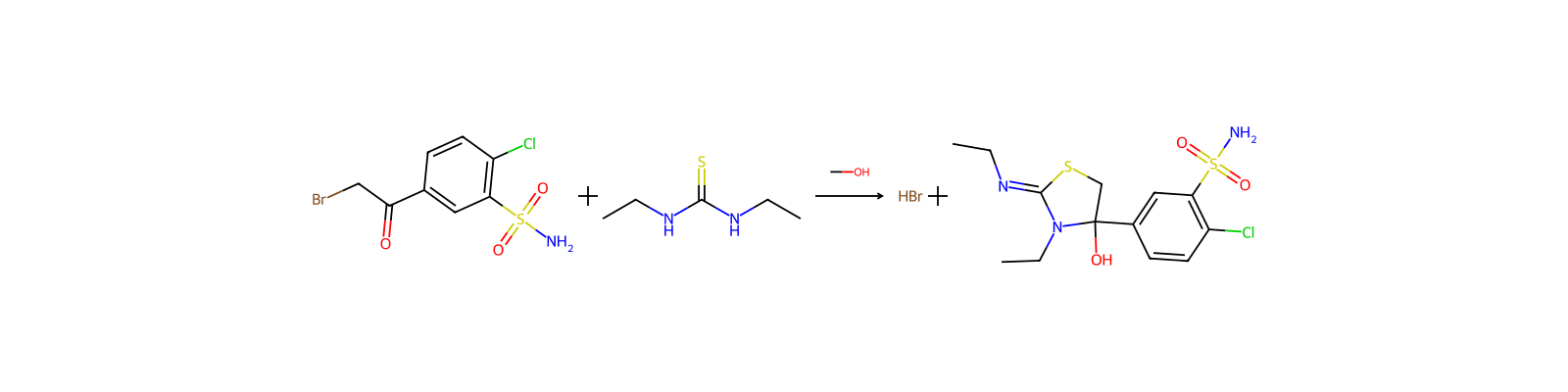
관련 반응
28건




연결된 노트
불러오는 중…