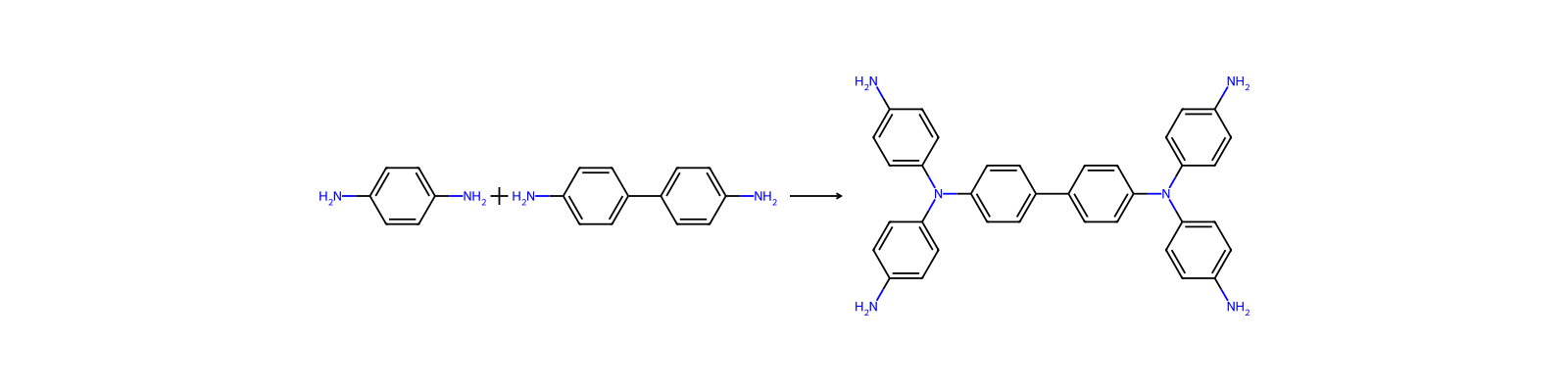
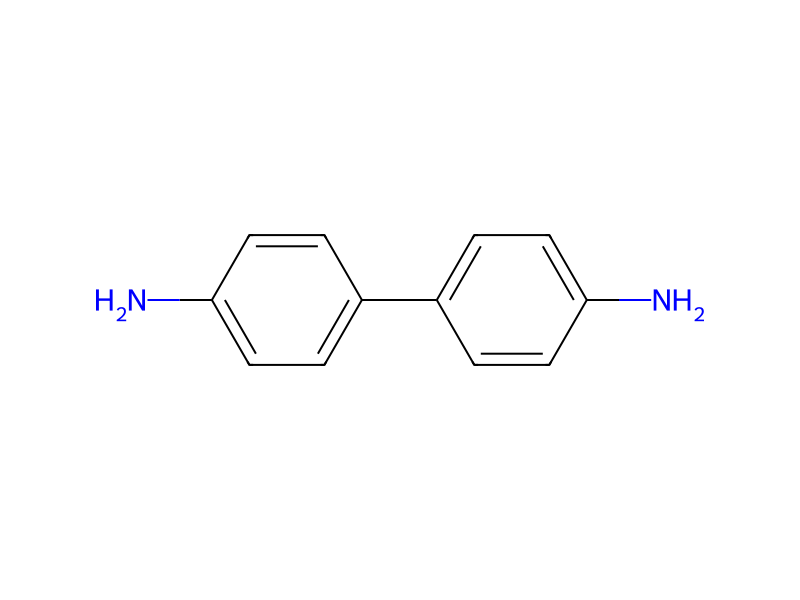
기본 정보
- 표준 SMILES
Nc1ccc(-c2ccc(N)cc2)cc1- InChIKey
HFACYLZERDEVSX-UHFFFAOYSA-N- 분자식
- C12H12N2
- 평균 분자량
- 184.24 g/mol
- 단동위원소 질량
- 184.10004838
개요
Benzidine is a manufactured chemical that does not occur naturally. It is a crystalline solid that may be grayish-yellow, white, or reddish-gray. In the environment, benzidine is found in either its "free" state (as an organic base), or as a salt. Benzidine was used to produce dyes for cloth, paper, and leather. It is no longer produced or used commerically in the U.S.
이름 및 식별자
- 우선 이름
- Benzidine
- IUPAC
- 4-(4-aminophenyl)aniline
- 현지명
- 벤지딘
- 영어명
- Benzidine
- 분자식
- C12H12N2
- 분자량
- 184.24
이름 및 동의어
BENZIDINE92-87-5[1,1'-Biphenyl]-4,4'-diamine4,4'-Diaminobiphenylp-Diaminodiphenyl4,4'-Bianiline4,4'-Biphenyldiaminebiphenyl-4,4'-diaminep,p'-Diaminobiphenyl4,4'-Diaminodiphenyl4-(4-aminophenyl)anilinep,p-Bianiline
이름 더 보기
벤지딘(1,1'-바이페닐)-4,4'-다이아민(1,1'-이페닐)-4,4'-디아민[1,1'-바이페닐]-4,4'-다이아민4,4'-다이아미노바이페닐4,4'-디아미노디페닐4,4'-디페닐렌디아민4,4'-바이페닐다이아민4,4'-이페닐디아민4'-아미노-[1,1'-바이페닐]-4-일아민p-다이아미노다이페닐p-디아미노디페닐BENZIDINE-D8benzidine solutionBENZIDINE-RINGS-D8biphenyl-4,4’-diamine4,4’-biphenylenediamineBENZIDINE-D8 (RINGS-D8)ai3-00140
4,4'-Biphenylenediamine4,4'-DiphenylenediamineFast Corinth Base Bp,p'-DianilineBenzidinBenzidinaBenzydynap,p'-Bianiline
데이터베이스 식별자
- CAS
92-87-5- PubChem CID
- 7111
- DTXSID
DTXSID2020137- ChEMBL
CHEMBL15901- ChEBI
CHEBI:80495- UNII
- 2X02101HVF
- EC Number
- 202-199-1
- Nikkaji
- J3.933K
물성
구조 계산 물성
- XLogP
- 1.3
- 극성 표면적
- 52 Ų
- 수소 결합 공여자 수
- 2
- 수소 결합 수용자 수
- 2
- 회전 가능 결합 수
- 1
- 무거운 원자 수
- 14
- 형식 전하
- 0
- 복잡도
- 145
실험 및 물리화학적 성질
Chemical Classes
Hazardous Air Pollutants (HAPs)
Nitrogen Compounds -> Benzidine and Derivatives
Carcinogens
Semi-Volatile Organic Compound (SVOC)
SpringerMaterials PropertiesChemical structure
PesticidesPesticide -> EPA IRIS
LogP
log Kow= 1.34
1.34
1.34
1.53
Density
2.15 at 68 °F (USCG, 1999) - Denser than water; will sink
1.250 @ 20 °C/4 °C
1.3 g/cm³
1.25 @ 20°C
1.25
Color/Form
White or slightly-reddish, crystalline powder
Grayish-yellow, reddish-gray, or white crystalline powder [Note: Darkens on exposure to air and light].
Solubility
less than 1 mg/mL at 72 °F (NTP, 1992)
1 g dissolves in 2500 ml cold water; 1 g dissolves in 107 ml boiling water; 1 g dissolves in 5 ml boiling alcohol; 1 g dissolves in 50 ml ether
In water, 322 mg/l @ 25 °C
0.322 mg/mL at 25 °C
Solubility in water, g/100ml at 25 °C:
(54 °F): 0.04%
Boiling Point
752 °F at 740 mmHg (NTP, 1992)
401 °C
401 °C
401 °C @760 [mm Hg]
752 °F
DecompositionWhen heated to decomp it emits highly toxic fumes of /nitrogen oxides/.
Melting Point
262 °F (NTP, 1992)
120 °C
120 °C
120 °C
127 °C
239 °F
Vapor Density
6.36 (NTP, 1992) - Heavier than air; will sink (Relative to Air)
6.36 (Air = 1)
Relative vapor density (air = 1): 6.4
Vapor Pressure
Low (NIOSH, 2024)
0.0000009 [mmHg]
Low
물리화학적 성질
- 녹는점
- 127 · 127-128 °C
- 끓는 점
- 402 °C · 402°C
- 밀도
- 1.25 · 1.25
- 증기압
- 6.36 · Based on the specific vapor density value of 6.36 (Sims et al., 1988), the vapor pressure wascalculated to be 0.83 at 20 °C.
- 굴절률
- 1.6266 · 1.6266 (estimate)
- 인화점
- 11 °C · 11 °C
- 저장 조건
- 2 · 2-8°C
- 용해도
- 에탄올(US EPA, 1985) 및 에테르(1g/50mL)에 용해됨(Windholz et al., 1983)
- 산도 계수 (pKa)
- 4.66 · 4.66(at 30℃)
- 색상
- 회황색의 결정성 분말; 흰색 또는 약간 붉은빛을 띠는 결정, 분말
- 수용성
- 22 · 거의 용해되지 않음. 22&C에서 <0.1g/100mL
- Merck
- 13 · 13,1077
- BRN
- 742770 · 742770
- Henry's Law Constant
- (x 10-11 atmm3/mol): 3.88 at 25 °C (estimated, Howard, 1989)
- 안정성
- 안정적인. 타기 쉬운. 강한 산화제와 호환되지 않습니다.
- InChIKey
- HFACYLZERDEVSX-UHFFFAOYSA-N
- NIST
- Benzidine(92-87-5)
- EPA
- Benzidine (92-87-5)
화학적 성질
Benzidine is a white, grayish-yellow, or slightly reddish crystalline solid or powder. The major use for benzidine is in the production of dyes, especially azo dyes in the leather, textile, and paper industries, as a synthetic precursor in the preparation and manufacture of dyestuffs. It is also used in the manufacture of dyes and rubber, as a reagent, and as a stain in microscopy. It is slightly soluble and slowly changes from a solid to a gas.
안전 및 규제
GHS 분류
GHS Classification
Danger
H302: Harmful if swallowed [Warning Acute toxicity, oral]
P203, P264, P270, P273, P280, P301+P317, P318, P330, P391, P405, and P501 (click each P-code to see the statement)
Danger
H302 (100%): Harmful if swallowed [Warning Acute toxicity, oral]
P203, P264, P270, P273, P280, P301+P317, P318, P330, P391, P405, and P501 (click each P-code to see the statement)
유해성 정보
Regulatory Information
Chemical: [1,1'-Biphenyl]-4,4'-diamine
S - indicates a substance that is identified in a final Significant New Use Rule.
Restricted substance: Benzidine
[1,1'-Biphenyl]-4,4'-diamine: Does not have an individual approval but may be used as a component in a product covered by a group standard. It is not approved for use as a chemical in its own right.
The New Jersey Worker and Community Right to Know Act requires public and private employers to provide information about hazardous substances at their workplaces. (N.J.S.A. 34:5A-1 et. seq.)
Other Safety InformationIMAP assessments - [1,1'-Biphenyl]-4,4'-diamine: Environment tier I assessment
DOT LabelPoison
Fire Hazards
Special Hazards of Combustion Products: Contain highly toxic NOx fumes.
· Combustible material: may burn but does not ignite readily.
Combustible. Gives off irritating or toxic fumes (or gases) in a fire.
Fire PotentialBenzidine itself does not burn or burns with difficulty.
Health Hazards
Poisonous if inhaled, swallowed or absorbed through skin. May cause contact dermatitis, irritation or sensitization. Ingestion may cause nausea and vomiting. (USCG, 1999)
· TOXIC and/or CORROSIVE; inhalation, ingestion or skin contact with material may cause severe injury or death.
Hazards Summary
Benzidine is a manufactured chemical that does not occur naturally. It is a crystalline solid that may be grayish-yellow, white, or reddish-gray. In the environment, benzidine is found in either its "free" state (as an organic base), or as a salt. Benzidine was used to produce dyes for cloth, paper, and leather. It is no longer produced or used commerically in the U.S.
Benzidine is no longer produced in the United States, although benzidine-based dyes may be imported into this country. No information is available on the acute (short-term) effects of benzidine in humans by inhalation exposure but benzidine is considered to be very acutely toxic to humans by ingestion. Chronic (long-term) exposure to benzidine in humans may result in injury to the bladder. Epidemiological studies have shown occupational exposure to benzidine to result in an increased risk of bladder cancer. Animal studies have reported various tumor types at multiple sites from benzidine exposure via oral, inhalation, and injection exposure. EPA has classified benzidine as a Group A, known human carcinogen.
Caused bladder cancer to workers in the past; both the inhalation and skin routes are significant; [ACGIH]; A liver toxin and carcinogen in experimental animals; health effects after acute exposure in the workplace have not been reported; [NIOSH Guidelines for Chemical Hazards] May cause methemoglobinemia; [HSDB] Known human carcinogen, including dyes metabolized to benzidine; [IARC]
DOT ID and Guide
1885 153
1885 153
Reactive GroupAmines, Aromatic
EC ClassificationSymbol: T, N; R: 45-22-50/53; S: 53-45-60-61; Note: E
UN ClassificationUN Hazard Class: 6.1; UN Pack Group: II
Special Reports
HEALTH HAZARD ALERT: BENZIDINE-, O-TOLIDINE-, & O-DIANISIDINE-BASED DYES; DHHS (NIOSH) PUBL US (81-106) 39 PP (1980). A REVIEW WITH 42 REFERENCES ON THE HEALTH HAZARD OF BENZIDINE, O-TOLIDINE, & O-DIANISIDINE DYES & 118 DYES BASED ON THESE CMPD.
SHRINER CR ET AL; REVIEWS OF THE ENVIRONMENTAL EFFECTS OF POLLUTANTS: II. BENZIDINE; REPORT ORNL/EIS-86, EPA-600/1-78-024 157 PP (1978). A REVIEW WITH 200 REFERENCES ON THE BIOLOGICAL AND ENVIRONMENTAL EFFECTS OF BENZIDINE.
USEPA; Health Effects Review: Benzidine and Benzidine Based Dyes (1980) EPA 68-01-05861.
U.S. Dept Health & Human Services/Agency for Toxic Substances Disease Registry; Toxicological Profile for Benzidine (Update) (1995) NTIS # PB/95/264313
For more Special Reports (Complete) data for BENZIDINE (6 total), please visit the HSDB record page.
안전 및 보호
Fire Fighting
Excerpt from ERG Guide 153 [Substances - Toxic and/or Corrosive (Combustible)]:
Use water spray, foam, powder, carbon dioxide.
First Aid Measures
Fresh air, rest.
Remove contaminated clothes. Rinse and then wash skin with water and soap. Wear protective gloves when administering first aid.
Rinse with plenty of water (remove contact lenses if easily possible).
Rinse mouth.
Accidental Release Measures
· CALL 911. Then call emergency response telephone number on shipping paper. If shipping paper not available or no answer, refer to appropriate telephone number listed on the inside back cover.
· ELIMINATE all ignition sources (no smoking, flares, sparks or flames) from immediate area.
First Aid
EYES: First check the victim for contact lenses and remove if present. Flush victim's eyes with water or normal saline solution for 20 to 30 minutes while simultaneously calling a hospital or poison control center. Do not put any ointments, oils, or medication in the victim's eyes without specific instructions from a physician. IMMEDIATELY transport the victim after flushing eyes to a hospital even if no symptoms (such as redness or irritation) develop.
General First Aid:
(General first aid procedures)
Safe StorageProvision to contain effluent from fire extinguishing. Separated from strong oxidants and food and feedstuffs. Keep in the dark. Well closed. Store in an area without drain or sewer access.
Exposure Control and Personal Protection· Wear positive pressure self-contained breathing apparatus (SCBA).
Fire Fighting Procedures
If material on fire or involved in fire: Extinguish fire using agent suitable for type of surrounding fire. (Material itself does not burn or burns with difficulty.) Use water in flooding quantities as fog. Use foam, dry chemical, or carbon dioxide.
Storage Conditions
KEEP WELL CLOSED & PROTECTED FROM LIGHT.
PRECAUTIONS FOR "CARCINOGENS": Storage site should be as close as practical to lab in which carcinogens are to be used, so that only small quantities required for ... expt need to be carried. Carcinogens should be kept in only one section of cupboard, an explosion-proof refrigerator or freezer (depending on chemicophysical properties ...) that bears appropriate label. An inventory ... should be kept, showing quantity of carcinogen & date it was acquired ... Facilities for dispensing ... should be contiguous to storage area. /Chemical Carcinogens/
Cleanup Methods
Cover the spill with a 9:1 mixture of sand and soda ash.
PRECAUTIONS FOR "CARCINOGENS": A high-efficiency particulate arrestor (HEPA) or charcoal filters can be used to minimize amt of carcinogen in exhausted air ventilated safety cabinets, lab hoods, glove boxes or animal rooms ... Filter housing that is designed so that used filters can be transferred into plastic bag without contaminating maintenance staff is avail commercially. Filters should be placed in plastic bags immediately after removal ... The plastic bag should be sealed immediately ... The sealed bag should be labelled properly ... Waste liquids ... should be placed or collected in proper containers for disposal. The lid should be secured & the bottles properly labelled. Once filled, bottles should be placed in plastic bag, so that outer surface ... is not contaminated ... The plastic bag should also be sealed & labelled. ... Broken glassware ... should be decontaminated by solvent extraction, by chemical destruction, or in specially designed incinerators. /Chemical Carcinogens/
Nonfire Spill ResponseExcerpt from ERG Guide 153 [Substances - Toxic and/or Corrosive (Combustible)]:
Disposal Methods
Generators of waste (equal to or greater than 100 kg/mo) containing this contaminant, EPA hazardous waste number U021, must conform with USEPA regulations in storage, transportation, treatment and disposal of waste.
A potential candidate for rotary kiln incineration at a temperature range of 820 to 1,600 °C and residence times of seconds for liquids and gases, and hours for solids. A potential candidate for fluidized bed incineration at a temperature range of 450 to 980 °C and residence times of seconds for liquids and gases, and longer for solids.
The following wastewater treatment technologies have been investigated for benzidine: Concentration process: Biological treatment.
This compound should be susceptible to removal from waste water by air stripping.
For more Disposal Methods (Complete) data for BENZIDINE (12 total), please visit the HSDB record page.
Spillage Disposal
Personal protection: chemical protection suit including self-contained breathing apparatus. Do NOT let this chemical enter the environment. Sweep spilled substance into sealable containers. If appropriate, moisten first to prevent dusting. Carefully collect remainder. Then store and dispose of according to local regulations.
독성 정보
Toxicological InformationCDC-ATSDR Toxicological Profile
Body BurdenBenzidine was detected in the urine of workers in India exposed to Direct Black 38 at concentrations of 2.4-362.5 ug/l(1,2).
Cancer Sites
Urinary
[liver, kidney & bladder cancer]
Interactions
Continuous administration of neozone D to dogs and rats failed to reveal its carcinogenicity. Nor did the agent potentiate the carcinogenic effect of benzidine in rats. Conversely, neozone D was found to inhibit benzidine induced carcinogenesis in female rats.
In an in vitro study designed to assess the percutaneous absorption and penetration of (14)C-benzidine in combination with various other chemical mixtures which might be found in occupational settings, isolated perfused porcine skin flaps were topically treated with benzidine + solvent (acetone or DMSO), benzidine + surfactant (sodium lauryl sulfate), benzidine + vasodilator (methyl nicotinate), benzidine + reducing agent (SnCl2), or various combinations of these mixtures ... . Flow-through diffusion call systems were also utilized. Absorption was defined as the total amt of radioactivity detected in the perfusate for the entire 8-hr perfusion period. Skin penetration was defined as the sum of total absorption and total radioactivity in the skin. Maximum absorption and maximum penetration over an 8-hr exposure period were approx 3 and 22%, respectively, for a mixture of benzidine + DMSO + surfactant + vasodilator. It was noted that DMSO enhanced absorption more than acetone, and that the reducing agent inhibited benzidine absorption. It was suggested that chemical-biological interactions between the surfactant and vasodilator might enhance benzidine absorption while chemical-chemical interactions between benzidine and SnCl2 might inhibit benzidine absorption.
Though not universally found, synergistically elevated rates of bladder cancer in workers exposed to benzidine who also smoked were reported in several epidemiology studies ... . These findings suggest interactions between benzidine and the carcinogenic or enzyme-inducing cmpd found in cigarette smoke.
It is also possible that alcohol might potentiate the toxicity of benzidine, probably by altering its metabolism. Exposing rats to 15% (v/v) ethanol in drinking water for 6 wk resulted in incr cytochrome P-450 content and enhanced N-acetylation capacity of isolated hepatocytes ... . Further, relative to the mutagenicity meditated by control hepatocytes, the in vitro mutagenicity of benzidine to bacteria was incr following metabolic activation by hepatocytes isolated from the ethanol-treated rats. Again, the relevance of these findings to humans is unclear, given that the bladder appears to be the principal human target organ, and that noncytochrome P-450 pathways may be significant in the human metabolism of benzidine.
Target Organs
Cancer, Gastrointestinal (Stomach and Intestines, part of the digestive system), Hepatic (Liver), Renal (Urinary System or Kidneys)
Hepatic
Bladder, skin, kidneys, liver, blood
Health Effects
Benzidine is a known human carcinogen, most often associated with cancer of the urinary bladder. If benzidine comes in contact with skin it may cause a skin allergy. Liver, kidney, immune, and neurological effects have also been observed in animals exposed to benzidine. (L95)
Ecotoxicity Values
LC50 Gammarus pseudolimnaeus (scud) > 20,000 ug/l/96 hr /Conditions of bioassay not specified/
Pimephales promelas (fathead minnow) > 20,000 ug/l/96 hr /Conditions of bioassay not specified/
LC50 Salmo gairdneri (rainbow trout) 7400 ug/l/96 hr in a static unmeasured bioassay
LC50 Salvelinus namaycush 4350 ug/l/96 hr in a static unmeasured bioassay
For more Ecotoxicity Values (Complete) data for BENZIDINE (6 total), please visit the HSDB record page.
Environmental Fate
TERRESTRIAL FATE: Based on a classification scheme(1), Koc values in the range of 227,000 to 882,000, measured in 4 soils(2), indicate that benzidine is expected to be essentiallyo immobile in soil(SRC). Benzidine is a weak base with 2 amine functional groups having pKa values of 4.3 and 3.3(3). These values indicate that benzidine can partially exist in the protonated form under acidic conditions(SRC). Volatilization of the neutral species of benzidine from moist soil surfaces is not expected to be an important fate process(SRC) given an estimated Henry's Law constant of 5.2X10⁻¹¹ atm-cu m/mole(SRC), developed using a fragment constant estimation method(4). The conjugate acid will not volatilize since cations are non-volatile(SRC). Benzidine is not expected to volatilize from dry soil surfaces(SRC) based upon an estimated vapor pressure of 7X10⁻⁷ mm Hg(SRC), determined from a fragment constant method(5). Benzidine is generally resistant to biodegradation in soil at high concentrations, but may biodegrade at lower concentrations(SRC). Aqueous solutions of benzidine (0.01%) were reported to be stable for 9 weeks to degradation by soil/river water inoculum(6). In Drummer silty clay loam, benzidine applied at a concn of 10 ppb was degraded 79% after 4 weeks(7). Benzidine is rapidly oxidized by Fe(III) and other cations which are frequently found in soils and clay(8).
AQUATIC FATE: Based on a classification scheme(1), Koc values of benzidine adsorbed to 3 estuarine sediments in the range of 462-4,899(2), indicate that benzidine is expected to adsorb to suspended solids and sediment(SRC). Benzidine is a weak base with 2 amine functional groups with pKa values of 4.3 and 3.3(3). These values indicate that benzidine can partially exist in the protonated form under acidic conditions(SRC). Volatilization of the free base from water surfaces is not expected(4) based upon an estimated Henry's Law constant of 5.2X10⁻¹¹ atm-cu m/mole(SRC), developed using a fragment constant estimation method(5). The conjugate acid will not volatilize since cations are non-volatile(SRC). According to a classification scheme(6), BCF values of 40 and 55 measured in fish(7,8), suggest bioconcentration in aquatic organisms is moderate(SRC). When aerated solutions of benzidine (100 ppb) were exposed to light from a xenon lamp (300-400 nm), complete degradation was observed in 12 hrs(9). Benzidine is rapidly oxidized by Fe(III) and other cations which are frequently found in environmental waters(10). Aqueous solutions of benzidine (0.01%) were reported to be stable for 9 weeks to degradation by soil/river water inoculum(11).
ATMOSPHERIC FATE: According to a model of gas/particle partitioning of semivolatile organic compounds in the atmosphere(1), benzidine, which has an estimated vapor pressure of 7X10⁻⁷ mm Hg at 25 °C(SRC), determined from a fragment constant method(2), is expected to exist in both the vapor and particulate phases in the ambient atmosphere. Vapor-phase benzidine is degraded in the atmosphere by reaction with photochemically-produced hydroxyl radicals(SRC); the half-life for this reaction in air is estimated to be 2 hours(SRC), calculated from its rate constant of 1.5X10⁻¹⁰ cu cm/molecule-sec at 25 °C(SRC) determined using a structure estimation method(3). Benzidine also absorbs light greater than 290 nm and may undergo direct photolysis(4). Over 40% photodegradation was observed when benzidine adsorbed to silica gel plates was irradiated with UV light > 290 nm for 17 hours(5). Particulate- phase benzidine may be removed from the air by wet and dry deposition(SRC).
Adverse EffectsOccupational hepatotoxin - Secondary hepatotoxins: the potential for toxic effect in the occupational setting is based on cases of poisoning by human ingestion or animal experimentation.
Exposure Routes
The substance can be absorbed into the body by inhalation of its aerosol, through the skin and by ingestion.
inhalation, skin absorption, ingestion, skin and/or eye contact
Oral (L95) ; inhalation (L95) ; dermal (L95)
Toxicity Summary
N-acetylated benzidine metabolites are believed to form adducts with nucleic acids. Carcinogenesis is initiated when they are activated by peroxidation by prostaglandin H synthetase, oxidation by cytochrome P-450, or O-esterification by O-acetyltransferase or N,O-acetyltransferase. Benzidine has also been shown to bind to RNA and hemoglobin. (L95, A55)
Signs and Symptoms
MAY BE ABSORBED!
hematuria (blood in the urine); secondary anemia from hemolysis; acute cystitis; acute liver disorders; dermatitis; painful, irreg urination; [potential occupational carcinogen]
규제 정보
RCRA Requirements
U021; As stipulated in 40 CFR 261.33, when benzidine, as a commercial chemical product or manufacturing chemical intermediate or an off-specification commercial chemical product or a manufacturing chemical intermediate, becomes a waste, it must be managed according to Federal and/or State hazardous waste regulations. Also defined as a hazardous waste is any residue, contaminated soil, water, or other debris resulting from the cleanup of a spill, into water or on dry land, of this waste. Generators of small quantities of this waste may qualify for partial exclusion from hazardous waste regulations (40 CFR 261.5).
TSCA Requirements
Pursuant to section 8(d) of TSCA, EPA promulgated a model Health and Safety Data Reporting Rule. The section 8(d) model rule requires manufacturers, importers, and processors of listed chemical substances and mixtures to submit to EPA copies and lists of unpublished health and safety studies. 1,1'-Biphenyl-4,4'-diamine is included on this list.
Atmospheric Standards
Listed as a hazardous air pollutant (HAP) generally known or suspected to cause serious health problems. The Clean Air Act, as amended in 1990, directs EPA to set standards requiring major sources to sharply reduce routine emissions of toxic pollutants. EPA is required to establish and phase in specific performance based standards for all air emission sources that emit one or more of the listed pollutants. Benzidine is included on this list.
CERCLA Reportable Quantities
Persons in charge of vessels or facilities are required to notify the National Response Center (NRC) immediately, when there is a release of this designated hazardous substance, in an amount equal to or greater than its reportable quantity of 1 lb or 0.454 kg. The toll free number of the NRC is (800) 424-8802; In the Washington D.C. metropolitan area (202) 426-2675. The rule for determining when notification is required is stated in 40 CFR 302.4 (section IV. D.3.b).
Clean Water Act Requirements
Toxic pollutant designated pursuant to section 307(a)(1) of the Federal Water Pollution Control Act and is subject to effluent limitations.
The levels which may result in incremental increase of cancer risk over the lifetime are estimated at 1X10⁻⁵, 1X10⁻⁶, and 1X10⁻⁷. The corresponding recommended criteria are 1.2 ng/l, 0.12 ng/l, and 0.01 ng/l, respectively.
State Drinking Water Guidelines
(AZ) ARIZONA 0.0001 ug/l
(FL) FLORIDA 250 ug/l
(NH) NEW HAMPSHIRE 0.0002 ug/l
안전 데이터
- wgk
- 3
- tsca
- TSCA listed
- rtecs
- DC9625000
- ridadr
- UN 1885
- 독성
- Acute oral LD50 for mice 214 mg/kg, rats 309 mg/kg (quoted, RTECS, 1985).
- HS 번호
- 29215900
- risk_code
- 45-22-50/53-52/53-39/23/24/25-23/24/25-11-36/37/38-20/21/22-51/53-67
- hazard_code
- T,N,F,Xn
- safety_code
- 53-45-60-61-36/37-16-7-36-26
- 포장분류
- II
- 위험 등급
- 6.1
- F 고인화성물질
- 8
- 유해 물질 데이터
- 92-87-5(Hazardous Substances Data)
- 함량 및 규제정보
- 물질구분: 유독물질; 혼합물(제품)함량정보: 벤지딘과 그 염류 및 그 중 하나를 0.1% 이상 함유한 혼합물
- 유해화학물질 필터링
- 97-1-102;06-4-13
화학 및 산업
약리 정보
Mechanism of Action
/Benzidine/ inhibits DNA synthesis ... and induces unscheduled DNA synthesis in Hela cells.
Although benzidine (Bz), 4-aminobiphenyl (ABP), 3,3'-dichlorobenzidine HCl (DCBz), 3,3'-dimethylbenzidine (DMBz), 3,3'-dimethoxybenzidine (DMOBz) and the benzidine congener-based dye trypan blue (TB) produce primarily frameshift mutations in Salmonella typhimurium, the base-substitution strain TA100 also responds to these compounds when S9 is present. Performing DNA sequence analysis, other investigators have shown that ABP induces frameshift, base-pair and complex mutations. Also, it was found that an uninduced hamster liver S9 preparation with glucose-6-phosphate dehydrogenase, FMN, NADH and four times glucose 6-phosphate gave a stronger mutagenic response than the conventional plate incorporation with rat S9 activation mixture for all the compounds tested. Using the base-specific tester strains of S. typhimurium (TA7001-TA7006) with the above reductive metabolic activation system, we surveyed these compounds for the ability to produce specific base-pair substitutions after reductive metabolism. Bz was weakly mutagenic in TA7005 (0.04 revertants/ug). ABP was mutagenic in TA7002 (1.4 revertants/ug), TA7004 (0.6 revertants/ug), TA7005 (2.98 revertants/microg) and TA7006 (0.4 revertants/ug). DCBz was weakly mutagenic in TA7004 (0.01 revertants/ug). It was concluded that benzidine induced some CG->AT transversions in addition to frameshift mutations. ABP induced TA->AT, CG->AT, and CG->GC transversions as well as GC->AT transitions. DCBz induced only GC->AT transitions. Because DMBz, DMOBz and TB were not mutagenic in this base-substitution mutagen detection system, their mutagenic activity was attributed strictly to frameshift mechanisms.
Little work has been done on the topical absorption of the bladder carcinogen benzidine. Since humans are more likely to be exposed to chemical mixtures than to a single chemical, a program was developed in these laboratories to examine the cumulative effect of complex mixtures on percutaneous absorption of important toxicants such as benzidine. In this investigation, a mixture is defined as a physical combination consisting of a marker chemical and several other chemicals, each of which can have independent and/or synergistic effects on dermal penetration and absorption of the marker chemical. Ten mixtures, consisting of a marker chemical (benzidine, B), a solvent (acetone, A or DMSO, D), a surfactant (0 or 10% sodium lauryl sulfate, SL), a vasodilator (0 or 180 microg methyl nicotinate, M), and a reducing agent (0 or 2% SnCl2, s) were employed in this study. Isolated perfused porcine skin flaps (IPPSFs), which have proven to be a suitable in vitro model for assessing dermal absorption and toxicity, and flow-through diffusion cell systems were utilized. The extent of benzidine absorption in skin sections dosed with either B + A (0.94% dose) or B + D (1.01% dose) was similar to that when IPPSFs were dosed with either B + A (0.54% dose) or B + D (1.31% dose). However, flux vs time profiles were different when the two in vitro methods were compared. For mixtures containing (1) DMSO only or acetone only or (2) solvents containing SL + M, benzidine absorption was enhanced when compared with other mixtures. Compared to acetone, DMSO appears to enhance dermal penetration of benzidine in most of the mixtures. Compared to other mixtures evaluated, SnCl2 inhibited benzidine absorption irrespective of solvent present. SnCl2 also appears to inhibit benzidine penetration in DMSO mixtures containing SL only, but not in acetone mixtures. It is proposed that chemical-chemical interactions between benzidine and SnCl2 may be inhibiting benzidine absorption and chemical-biological interactions between M + SL and skin may be enhancing benzidine absorption. Across all mixtures, maximum observed benzidine absorption was almost 3% of the topical dose over 8 hr, but maximum penetration was 22% over the same time period which would suggest a potential for greater systemic exposure over longer time frames. This work underscores the need to study potentially toxic chemicals in mixture exposure scenarios since the interactions observed would confound risk assessment based on single chemical data.
The formation of thioether conjugates is an important mechanism for inactivation of carcinogens. 3-(Glutathion-S-yl)-benzidine (BZ-SG) formation prevents benzidinediimine and peroxidase-mediated benzidine binding to DNA. Benzidinediimine is the two-electron oxidized product of benzidine thought to be the reactive intermediate involved in peroxidase-mediated binding of benzidine to DNA. Diimine interacts with benzidine to form a dimeric complex known as the charge-transfer complex. The latter is in equilibrium with the cation radical. This study evaluated the mechanism by which BZ-SG forms. Benzidinediimine was synthesized and used to study the formation of BZ-SG. With 0.05 mM benzidinediimine, BZ-SG formation was optimum at pH 4.5 and with glutathione at 0.05 to 0.1 mM. By monitoring specific absorption spectra, the reduction of benzidinediimine at pH 4.5 was evaluated. The t1/2 for diimine decay (425 nm) and maximum absorbance of the charge-transfer complex (600 nm) were each at approximately 5 min. Within 10 min, the maximum amount of benzidine had formed from diimine. BZ-SG formation followed the decay of diimine. The relationship between benzidinediimine and benzidine, with respect to BZ-SG formation, was assessed at a fixed concentration of glutathione (0.05 mM) and a fixed total concentration of amine and diimine (0.05 mM). In three separate experiments, each of these three components was radiolabeled independent of the other two components. Experiments with [3H]glutathione indicated that conjugate formation was dependent upon diimine, and not benzidine. With [3H]benzidinediimine or [3H]benzidine, two different calculations were necessary to assess conjugate formation. For [3H]benzidinediimine, the calculation considered that only the radiolabeled diimine formed conjugate, while with [3H]benzidine, a specific activity calculation was necessary to demonstrate that conjugate formation was dependent upon diimine. With 0.05 mM [3H]benzidine, horseradish peroxidase-catalyzed formation of BZ-SG was optimum between 0.05 and 0.0625 mM H2O2. The latter is consistent with conversion of benzidine to diimine before formation of BZ-SG. Specific inhibitors and the absence of oxygen uptake indicated the lack of involvement of cation, thiyl, and carbon-centered radicals. The results are consistent with the existence of the charge-transfer complex and with benzidinediimine reacting with glutathione to form BZ-SG.
For more Mechanism of Action (Complete) data for BENZIDINE (12 total), please visit the HSDB record page.
Biological Half-Life
No reports found; [TDR, p. 167]
(14)C Benzidine administered /to dogs iv/ ... the label cleared from the blood faster in the initial periods (half-life 4 hours) than during a later phase of (half-life 8 hours).
Uniformly labelled (14)C benzidine (0.2 mg/kg body wt) admin IV to male Wistar rats and male beagles exhibited multiphasic blood t1/2. The fourth and final phase, predominant within 24 hr after treatment, had an estimated t1/2 of 65 hr in the rat and 88 hr in the dog.
In a study of four dogs over a 5-hr period following iv admin of 1 mg/kg radiolabeled benzidine ... the initial plasma half-life of benzidine was reported to be approx 30 min, while that for total radiolabled (benzidine plus metabolites) was approx 3 hr.
Metabolism and disposition of benzidine in dog was assessed. Dogs were administered a 1 mg/kg iv dose of 3(H) benzidine. The plasma t1/2 of the radiolabeled material (benzidine plus metabolites) was significantly longer (approximately 3 hr) than authentic benzidine (less than 30 min).
Metabolism/Metabolites
WHEN RHESUS MONKEYS WERE FED AZO-DYES DERIVED FROM BENZIDINE, WHICH IS A KNOWN HUMAN CARCINOGEN, A SUBSTANTIAL PROPORTION OF THE DYE THAT WAS FED WAS METABOLIZED INTO FREE BENZIDINE. THESE RESULTS ARE IN AGREEMENT WITH THE KNOWN REDN OF BENZIDINE AZO-DYES TO BENZIDINE BY DUODENAL BACTERIA & BY E COLI, & WITH THE FACT THAT THE REDN OF AZO-COMPOUNDS CAN BE BROUGHT ABOUT BY LIVER AZO-REDUCTASE. HENCE IT WOULD APPEAR PRUDENT TO USE ONLY AZO-DYES WHICH ARE SYNTHESIZED FROM NON-CARCINOGENIC AROMATIC AMINES.
YIELDS IN PIGEON N-ACETYLBENZIDINE ... YIELDS IN DOG 3-HYDROXYBENZIDINE. /FROM TABLE/
URINARY METABOLITES OF BENZIDINE: 4'-ACETAMIDO-4-AMINODIPHENYL, 3-HYDROXYBENZIDINE (ETHER EXTRACTS), 4,4'-DIAMINO-3-DIPHENYLYL HYDROGEN SULFATE, 4'-ACETAMIDO-4-AMINO-3-DIPHENYLYL HYDROGEN SULFATE, 4'-AMINO-4-DIPHENYLYL SULFAMIC ACID, N-GLUCURONIDES, ACID-STABLE UNKNOWNS. /ANIMALS; FROM TABLE/
THE URINARY METABOLITES OF BENZIDINE AFTER ORAL ADMIN TO RATS WERE N-ACETYLBENZIDINE & N,N'-DIACETYLBENZIDINE.
For more Metabolism/Metabolites (Complete) data for BENZIDINE (42 total), please visit the HSDB record page.
Benzidine is absorpted following inhalation, oral, and dermal routes of exposure. Metabolism involves multiple and complex enzymatic pathways, including cytochrome P-450 and flavin monooxygenase systems, peroxidation by prostaglandin H synthase, and oxidation by lipoxygenases. The main reactions involved are N-acetylation, N-oxidation, and N-glucuronidation. Benzidine and its metabolites are excreted in the urine and faeces. (L95)
Absorption, Distribution and Excretion
/INVESTIGATORS/ ... FOUND CONCN OF BENZIDINE AVG 0.024 MG/CU M IN CHEMICAL PLANT. BECAUSE AVG URINARY EXCRETION WAS NEARLY 1.5 MG/L ... .
(14)C LABEL OF 0.2 MG/KG BODY WT BENZIDINE ADMIN IV TO RATS, DOGS, AND MONKEYS WAS RAPIDLY TRANSFERRED TO EXCRETORY ORGANS: LIVER, GI TRACT, KIDNEY & BLADDER; SIGNIFICANT AMOUNTS ... ALSO DISTRIBUTED TO THE LUNG. BY 7 OR 14 DAYS AFTER TREATMENT, RESIDUES OF RADIOACTIVITY WERE DETECTED PRIMARILY IN LIVER, BILE, INTESTINES & KIDNEY.
MAJOR ROUTES OF EXCRETION FOR IP OR IV ADMIN BENZIDINE IN EXPTL ANIMALS ARE URINE & FECES. RATS EXCRETED APPROX 80% OF IV DOSE OF 0.2 MG/KG BODY WT BENZIDINE IN FECES WITHIN 7 DAYS OF TREATMENT, WHILE DOGS & MONKEYS EXCRETED ONLY 30%. URINARY EXCRETION PREDOMINATED IN DOGS & MONKEYS (APPROX 67% & 50% IN URINE, RESPECTIVELY, IN 7 DAYS), WHILE RATS EXCRETED ONLY 17% BY THIS ROUTE.
Rats were given ip injections of benzidine, 100 mg/kg body weight, and measured the and concentrations were measured in various tissues and urine at 4 and 12 hr after injection. Highest concentrations of total /free benzidine/ were found in the stomach, stomach contents, and small intestine at 4 hr and in the small intestine and small intestine contents at 12 hr. Lowest concentrations were found in the red blood cells at both times. The measured, total diazotizable material accounted for 93% of the administered dose at 4 hr and 72% at 12 hr. Conjugated forms of the /free benzidine/ rose from 24% at 4 hr to 53% at 12 hr, indicating the formation of appreciable levels of metabolites. The content of total and free benzidine in urine was considerably higher at 12 hr than at 4 hr, with proportionately higher amounts of conjugated amines present. It was suggested that the difference between the amount of material injected and that measured during the 12 hr period was caused by in vivo oxidation to products not detectable by the method of measurement used. Since there is evidence that benzidine causes tumors in the liver of some animals, it may be of importance that measured concentrations in the liver were relatively high and remained fairly constant over the 12 hr period.
For more Absorption, Distribution and Excretion (Complete) data for BENZIDINE (16 total), please visit the HSDB record page.
용도 및 제조
Uses
The predominant use for benzidine is in the production of dyes, especially azo dyes in the leather, textile, and paper industries.
Benzidine is no longer produced for commercial sale in the United States. In 1973, OSHA regulations effectively banned United States production of benzidine. Any benzidine production must be for captive consumption (in-house use), and it must be maintained in closed systems under stringent workplace controls. . . . The predominant use of benzidine is in the production of dyes, especially azo dyes in the leather, textile, and paper industries. The Color Index lists over 300 colors of benzidine-derived dyes, some 18 of which were found to be commercially available in the United States (AATCC 1984; Gregory 1984). Eleven of these 18 dyes were domestically manufactured. Some of these dyes, especially direct browns, greens, and blacks, were available as consumer products in the 1970s (Jenkins 1978). . . . Access to such dyestuffs for home use is no longer available . . . [ATSDR ToxProfiles]
Not produced for commercial sale in the United States since 1974; however, benzidine can be imported and small amounts are still used to make benzidine-based dyes; [ACGIH] See 29CFR1910.1003;
Pulp and Paper Processing [Category: Industry]
Manufacture of azo dyes, a reagent for the detection of blood, and rubber compounding agent. /Former/
As reagent for hydrogen peroxide in milk ... /Former use/
ImpuritiesSEMIDINES & O,O- & O,P-BENZIDINES ARE PRODUCTS OF ITS MFR FROM HYDRAZOBENZENE.
U.S. Production(1977) Approx 500 lb
Methods of Manufacturing
Produced by reduction of nitrobenzene with zinc and sodium hydroxide; the resultant hydrazobenzene is heated with acid.
... by electrolysis of nitrobenzene, followed by distillation; nitration of diphenyl followed by reduction of the product with zinc dust in alkaline soln, with subsequent distillation.
Formulations/Preparations
Grades: technical (paste; powder 80-85%).
Benzidine is isolated commercially as crystalline benzidine dihydrochloride, or as sparingly soluble benzidine monosulfate.
Use ClassificationChemical Classes -> Benzidines/Aromatic amines
General Manufacturing Information
[1,1'-Biphenyl]-4,4'-diamine: ACTIVE
In 1976, all large-scale production of benzidine salts in the USA was discontinued. ... Relatively small quantities of benzidines remain available for diagnostic testing.
SEVERAL DERIVATIVES OF BENZIDINE SUCH AS O-TOLIDINE, 3,3'-DICHLOROBENZIDINE, & O-DIANISIDINE ... ARE ... PRODUCED IN BATCHES IN BENZIDINE PLANTS & MAY CONTRIBUTE TO ENVIRONMENTAL CARCINOGENIC LOAD ASSOCIATED WITH BENZIDINE IN MAN.
응용 분야
용도물감의 중간체, 화학 분석의 검출액 따위로 쓴다.
개요Benzidine is a white, greyish-yellow, or slightly reddish crystalline solid or powder. The major use for benzidine is in the production of dyes, especially azo dyes in the leather, textile, and paper industries and as a synthetic precursor in the preparation and manufacture of dyestuffs. It is also used in the manufacture of rubber, as a reagent, and as a stain in microscopy. It is slightly soluble and slowly changes from a solid to a gas.
용도Benzidine was used extensively in the manu facture of dyes. Because of its cancer-causingeffects in humans, its application in dyes hasbeen curtailed. Other uses of this compoundare in chemical analysis: as a reagent for thedetermination of hydrogen peroxide in milkand in the analysis of nicotine. Its hydrochlo ride is used as a reagent to analyze metalsand sulfate.
일반 설명A grayish-yellow to grayish-red, crystalline solid. Toxic by ingestion, inhalation, and skin absorption. Combustion produces toxic oxides of nitrogen. Used to make other chemicals and in chemical and biological analysis.
제조 방법
1-Nitrobenzene restore 1,2-Diphenylhydrazineturn with acid rearrangement.
생산 방법Benzidine production is now exclusively for captive consumption and must be carried out in closed systems under stringent workplace controls. Benzidine is used in the synthesisofdyesanddyeintermediates,asahardenerforrubber, and as a laboratory reagent. The rst successful synthetic direct dye was Congo Red, a diazo derivative prepared from benzidinebyBoettigerin1884.Nearlyalldirectdyesareazo products. Congo Red is used in humans intravenously for the medical diagnosis of amyloidosis. The basis for its use is an unexplained afnity for amyloid, which rapidly removes the dye from the blood. It is used medically for the management of profuse capillary hemorrhage such as the one occurring in septicemias and in the terminal phases of leukemia.
상·하류 제품 정보
상류 원료
하류 제품
공급사50 곳
北京华美互利生物化工010-56205725 · [email protected]
阿诺西(上海)生物技术有限公司400-1107768 15058188853 · [email protected]
衢州润东化工有限公司0570-8789886 18892685668 · [email protected]
上海阿拉丁生化科技股份有限公司400-6206333 13167063860 · [email protected]
Career Henan Chemica Co+86-0371-86658258 +86-13203830695 · [email protected]
艾吉析科技(上海)有限公司17717235263 · [email protected]
杭州研富贸易有限公司15990061515
江苏星科元信息科技有限公司400-605-7200 15335295587
上海如吉生物科技发展有限公司+86-21-65211385-8001 36031160 · [email protected]
山东前元高分子材料有限公司18678041314 18765609661 · [email protected]
Syntechem Co.,Ltd[email protected]
广东云星生物技术有限公司0751-18902340975/189023400307 18902340307 · [email protected]
上海瀚鸿科技股份有限公司021-54306202 13764082696 · [email protected]
山东洛克化工有限公司17653113209 13065062079 · [email protected]
山东沃德森生物科技有限公司0531-88723173 18596073690 · [email protected]
上海稳同科技有限公司02151600108 13062666369 · [email protected]
上海毕楷科技有限公司18516304666
天津希恩思生化科技有限公司400 638 7771 · [email protected]
南京维奥化工有限公司Please Send Email 18652950785 · [email protected]
常州创视电子科技有限公司+86 (519) 8829-2061 · [email protected]
斯百全化学(上海)有限公司021-021-021-67601398-809-809-809 15221380277 · [email protected]
艾科试剂4008-755-333 18080918076 · [email protected]
上海贤鼎生物科技有限公司4009209199 · [email protected]
武汉卡诺斯科技有限公司153-37111468 15337111468 · [email protected]
安徽科迪达化工有限公司0554-2106669 · [email protected]
天津阿尔塔科技有限公司022-65378550-8551 · [email protected]
HBCChem, Inc.+1-510-219-6317 · [email protected]
成都零六生物科技有限公司400-1166-196 13458535857 · [email protected]
天津普西唐生物医药科技有限公司010-60605840 · [email protected]
上海麦克林生化科技股份有限公司15221275939 15221275939 · [email protected]
杭州杰恒化工有限公司0571-87396432 · [email protected]
康迪斯化工(湖北)有限公司13125172151 · [email protected]
上海有朋化工有限公司021-69005955 13701776567 · [email protected]
上海凯赛化工有限公司021-33516722 13701817765 · [email protected]
上海彤源化工有限公司021-021-69182866 13701855675 · [email protected]
成都润泽本土化工有限公司13096311329 028-88469284 616445927 · [email protected]
凯试(上海)科技有限公司021-50135380 · [email protected]
上海蓝润化学有限公司021-69515658 ; 69515628 13701998368 · [email protected]
上海容立化学科技有限公司021-69992220 13701886816 · [email protected]
上海康拓化工有限公司021-69185552 13701777608 · [email protected]
池州凯隆进出口贸易有限公司[email protected]
Sigma-Aldrich西格玛奥德里奇(上海)贸易有限公司021-61415566 800-8193336 · [email protected]
深圳振强药物研发有限公司+86-0755-66853366 +86-13670046396 · [email protected]
珠海安哲生物科技有限公司13169972583 · [email protected]
北京诺其雅盛生物科技有限公司4000-819-385 010-62329685 13718666987
武汉峰耀同辉化学制品有限公司027-87466205 15377579727 · [email protected]
山东智尚新材料有限公司+8617653113209 · [email protected]
上海大然化学有限公司021-64478606 15900664856 · [email protected]
陕西缔都医药化工有限公司029-029-81120477 17792793610 · [email protected]
启源(广东)医药化工有限公司18026564465 · [email protected]
추가 설명
정의ChEBI: A member of the class of biphenyls that is 1,1'-biphenyl in which the hydrogen at the para-position of each phenyl group has been replaced by an amino group.
관련 반응
15건


연결된 노트
불러오는 중…