홈MCP워크벤치Skills
홈워크벤치알림마이페이지
llms.txt · MCP 가이드개인정보처리방침 · 이용약관 · 지원v1.8.0
  1. 홈
  2. /화합물

p-아미노아세트페논

p-Aminoacetophenone
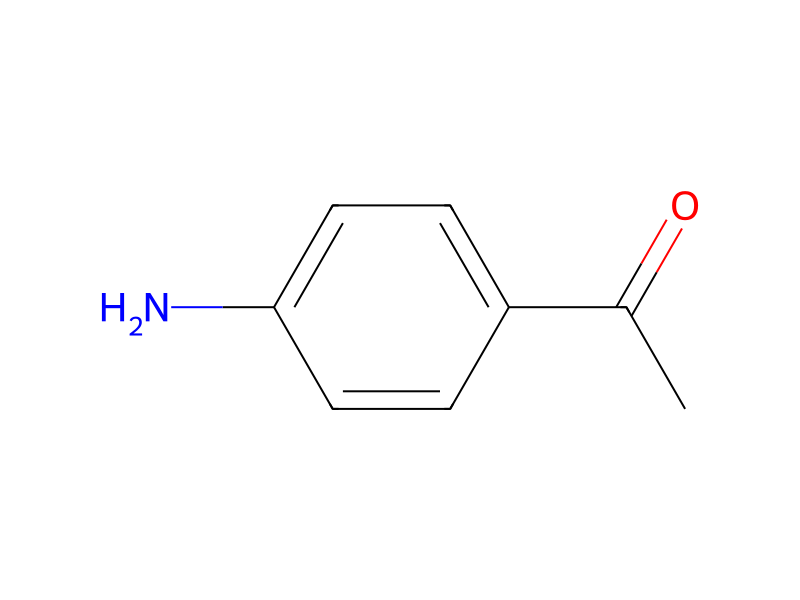
HCID 7468
새 노트새 반응견적 요청하기
인쇄 미리보기
기본 정보이름 및 식별자물성안전 및 규제화학 및 산업관련 반응화합물 노트
부분 구조 검색유사 구조 찾기

기본 정보

CAS
99-92-3
표준 SMILES
CC(=O)c1ccc(N)cc1
InChIKey
GPRYKVSEZCQIHD-UHFFFAOYSA-N
분자식
C8H9NO
평균 분자량
135.16 g/mol
단동위원소 질량
135.06841391

이름 및 식별자

우선 이름
p-Aminoacetophenone
IUPAC
1-(4-aminophenyl)ethanone
현지명
p-아미노아세트페논
영어명
4-Aminoacetophenone
분자식
C8H9NO
분자량
135.16

이름 및 동의어

4'-Aminoacetophenone99-92-31-(4-Aminophenyl)ethanone4-Aminoacetophenonep-Aminoacetophenone4-ACETYLANILINEp-AcetylanilineEthanone, 1-(4-aminophenyl)-p-AminoacetylbenzeneAcetophenone, p-amino-Acetophenone, 4-amino-USAF EK-631
이름 더 보기
1-아세틸-4-아미노벤젠4-아미노아세트페논p-아미노아세트페논4-아미노아세토페논Clenbuterol EP Impurity D1-(4-aminophenyl)-ethanonNSC 3242usafek-631
para-aminoacetophenone1S58KH902INSC-3242DTXSID6052669RefChem:97827DTXCID7031242202-801-21-(4-Aminophenyl)Ethan-1-One

데이터베이스 식별자

CAS
99-92-3
PubChem CID
7468
DTXSID
DTXSID6052669
ChEMBL
CHEMBL3278329
UNII
1S58KH902I
EC Number
202-801-2
Nikkaji
J3.228J

물성

구조 계산 물성

XLogP
0.8
극성 표면적
43.1 Ų
수소 결합 공여자 수
1
수소 결합 수용자 수
2
회전 가능 결합 수
1
무거운 원자 수
10
형식 전하
0
복잡도
125

실험 및 물리화학적 성질

Chemical ClassesNitrogen Compounds -> Amines, Aromatic
SpringerMaterials Properties13C nuclear magnetic resonance spectrum
LogP · 2건

log Kow = 0.83

0.83

OdorPleasant, characteristic odor
Color/Form · 2건

Yellow monoclinic prisms from alcohol

Yellow needles

Solubility · 3건

Soluble in hydrochloric acid

Very soluble in ether and ethanol

In water, 3.35X10+3 mg/L at 37 °C

Boiling Point294 °C; 195 °C at 15 mm Hg
Melting Point106 °C
Vapor Pressure0.00989 [mmHg]
Physical DescriptionYellow solid with a pleasant odor; [HSDB] Tan crystalline solid; [MSDSonline]
Dissociation ConstantspKa = 2.76 (conjugate acid)

안전 및 규제

안전 정보는 참고용이며, 공급업체의 물질안전보건자료(SDS), 관련 법규 및 전문가 평가를 대체하지 않습니다.

GHS 분류

GHS Classification · 4건

Warning

H302 (100%): Harmful if swallowed [Warning Acute toxicity, oral]

P261, P264, P264+P265, P270, P271, P280, P301+P317, P302+P352, P304+P340, P305+P351+P338, P317, P319, P321, P330, P332+P317, P337+P317, P362+P364, P403+P233, P405, and P501 (click each P-code to see the statement)

Aggregated GHS information provided per 155 reports by companies from 8 notifications to the ECHA C&L Inventory. Each notification may be associated with multiple companies.

유해성 정보

Regulatory InformationChemical: Ethanone, 1-(4-aminophenyl)-
Hazards Summary · 1건

A strong inducer of methemoglobin in vivo; Emergency treatment: Aniline; [HSDB] Methemoglobinemia observed in oral lethal-dose study of dogs; [RTECS] An irritant; Toxic if swallowed; May be harmful by inhalation or skin absorption; [Aldrich MSDS] See Aniline.

Special ReportsMilman HA, Peterson C; Apparent Correlation Between Structure and Carcinogenicity of Phenylenediamines and Related Cmpds; Environ Health Perspectives 56: 261-73 (1984).
Hazard Classes and CategoriesAcute Tox. 4 (100%)

안전 및 보호

Disposal Methods · 3건

SRP: The most favorable course of action is to use an alternative chemical product with less inherent propensity for occupational harm/injury/toxicity or environmental contamination. Recycle any unused portion of the material for its approved use or return it to the manufacturer or supplier. Ultimate disposal of the chemical must consider: the material's impact on air quality; potential migration in soil or water; effects on animal and plant life; and conformance with environmental and public health regulations.

화학 및 산업

약리 정보

Mechanism of ActionP-AMINOACETOPHENONE IS KNOWN TO BE A POWERFUL METHEMOGLOBIN-FORMER IN VIVO.

용도 및 제조

Uses · 4건

Used as intermediate for flavaniline (basic dye), acetohexamide, and an oral hypoglycemic drug; [HSDB]

Laboratory reagent

... for treating intoxication with cyanogenic toxic substances

CHEMICAL INTERMEDIATE FOR FLAVANILINE (BASIC DYE), ACETOHEXAMIDE, AND AN ORAL HYPOGLYCEMIC DRUG.

Methods of ManufacturingTRANSFER HYDROGENATION OF P-NITROACETOPHENONE WITH PALLADIUM CATALYST AND CYCLOHEXENE HYDROGEN DONOR
General Manufacturing InformationEthanone, 1-(4-aminophenyl)-: ACTIVE
응용 분야 · 2건

용도4-Aminoacetophenone can be used as an organic reagent to synthesize a variety of organic substances, which is used in the field of anticancer drug preparation and analytical detection. Using it as a raw material, Schiff alkali palladium(II) complexes (cyclopalladiumated compounds) are synthesized by combining metals with carbon atoms. The drug inhibits and kills invasive melanoma cancer cell line (MDA-MB-435)[1]. Hydroxylamine hydrochloride and 4-aminoacetophenone synthesize 4-aminoacetophenone oxime (APO) by oximation reaction, which has a high sensitivity to Organophosphorus (OP)nerve agent mimic-diethylcyanophosphonate. APO can be used to prepare electrochemical sensors with high sensitivity and selectivity to detect OPs[2].

일반 설명4′-Aminoacetophenone, commonly known as Clenbuterol Impurity D, is a related compound of sympathomimetic amine drug clenbuterol. Clenbuterol belongs to a group of compounds referred to as β-2-agonists and is generally used in the treatment of asthma.Pharmaceutical secondary standards for application in quality control, provide pharma laboratories and manufacturers with a convenient and cost-effective alternative to the preparation of in-house working standards.

관련 반응

2,313건
반응 기록 만들기
HRID 6352 반응식
HRID 6352반응물로uspto-grants-1993_09
HRID 10720 반응식
HRID 10720반응물로uspto-grants-2006_08
HRID 10724 반응식
HRID 10724반응물로uspto-grants-2006_08
HRID 18204 반응식
HRID 18204반응물로uspto-grants-2010_06
HRID 23044 반응식
HRID 23044반응물로uspto-grants-2005_02
HRID 24785 반응식
HRID 24785반응물로uspto-grants-2005_02
HRID 28616 반응식
HRID 28616반응물로uspto-grants-2008_09
HRID 45664 반응식
HRID 45664생성물로uspto-grants-2013_09
1 / 290 페이지

화합물 노트

불러오는 중…

이 페이지에서기본 정보이름 및 식별자물성안전 및 규제화학 및 산업관련 반응화합물 노트
더보기
새 노트새 반응견적 요청하기
Collision Cross Section125.0 Ų [M-H]- [CCS Type: DT; Buffer gas: N2; Ionization: ESI-; Dataset: TOXCAST; Source Identifier: DTXSID6052669]

물리화학적 성질

녹는점
103 · 103-107 °C(lit.)
끓는 점
293 °C · 293 °C(lit.)
밀도
0 · 0,77 g/cm
굴절률
1.57 · 1.5700 (estimate)
인화점
292 · 292-294°C
저장 조건
30 °C · Store below +30°C.
용해도
6.5 g/L · 6.5g/L
물리적 상태
결정성 분말
산도 계수 (pKa)
2.17 · 2.17±0.10(Predicted)
Specific Gravity
0.77 · 0.77
색상
약간 노란색~갈색
수용성
뜨거운 물, 에탄올, 에테르에 용해됩니다.
Merck
14 · 14,413
BRN
471493 · 471493
Henry's Law Constant
2.2 · 2.2×103 mol/(m3Pa) at 25℃, HSDB (2015)
InChI
1S/C8H9NO/c1-6(10)7-2-4-8(9)5-3-7/h2-5H,9H2,1H3
InChIKey
GPRYKVSEZCQIHD-UHFFFAOYSA-N
SMILES
CC(=O)c1ccc(N)cc1
LogP
0.83 · 0.830
NIST
4 · Acetophenone, 4'-amino-(99-92-3)
EPA
4 · 4'-Aminoacetophenone (99-92-3)

화학적 성질

slightly yellow to brown crystalline powder

The following wastewater treatment technologies have been investigated for acetophenone: concentration process: activated carbon. /Acetophenone/

The following wastewater treatment technologies have been investigated for acetophone: concentration process: resin adsorption. /Acetophenone/

독성 정보

Ecotoxicity Values · 2건

LD50; Species: Peromyscus maniculatus (Deer Mouse) wild, oral via capsule 1600 mg/kg

EC50; Species: Daphnia magna (Water flea) age 6-24 hr; Conditions: freshwater, static, 20 °C, pH > or =7.0; Concentration: 5000 ug/L for 48 hr (95% confidence interval: 2200-12000 ug/L); Effect: intoxication, immobilization /formulation/

Environmental Fate · 3건

TERRESTRIAL FATE: Based on a classification scheme(1), an estimated Koc value of 25(SRC), determined from a log Kow of 0.83(2) and a regression-derived equation(3), indicates that 4-acetylaniline is expected to have very high mobility in soil(SRC). However, aromatic amines are expected to bind strongly to humus or organic matter in soils due to the high reactivity of the aromatic amino group(4,5), suggesting that mobility may be much lower in some soils(SRC). Volatilization of 4-acetylaniline from moist soil surfaces is not expected to be an important fate process(SRC) given an estimated Henry's Law constant of 4.4X10⁻⁹ atm-cu m/mole(SRC), using a fragment constant estimation method(6). 4-Acetylaniline is not expected to volatilize from dry soil surfaces(SRC) based upon an estimated vapor pressure of 4.3X10⁻⁴ mm Hg at 25 °C(SRC), determined from a fragment constant method(7). Aerobic biodegradation data were not available(SRC, 2011). No biodegradation was observed when incubated in digester sludge under anaerobic conditions for 8 weeks(8).

AQUATIC FATE: Based on a classification scheme(1), an estimated Koc value of 25(SRC), determined from a log Kow of 0.83(2) and a regression-derived equation(3), indicates that 4-acetylaniline is not expected to adsorb to suspended solids and sediment(SRC). Volatilization from water surfaces is not expected(4) based upon an estimated Henry's Law constant of 4.4X10⁻⁹ atm-cu m/mole(SRC), developed using a fragment constant estimation method(5). According to a classification scheme(6), an estimated BCF of 3(SRC), from its log Kow(2) and a regression-derived equation(7), suggests the potential for bioconcentration in aquatic organisms is low(SRC). Aerobic biodegradation data were not available(SRC, 2011). No biodegradation was observed when incubated in digester sludge under anaerobic conditions for 8 weeks(8).

ATMOSPHERIC FATE: According to a model of gas/particle partitioning of semivolatile organic compounds in the atmosphere(1), 4-acetylaniline, which has an estimated vapor pressure of 4.3X10⁻⁴ mm Hg at 25 °C(SRC), determined from a fragment constant method(2), will exist in both the vapor and particulate phases in the ambient atmosphere. Vapor-phase 4-acetylaniline is degraded in the atmosphere by reaction with photochemically-produced hydroxyl radicals(SRC); the half-life for this reaction in air is estimated to be 3.6 hours(SRC), calculated from its estimated rate constant of 1.05X10⁻¹⁰ cu cm/molecule-sec at 25 °C(3). Particulate-phase 4-acetylaniline may be removed from the air by wet or dry deposition(SRC). 4-Acetylaniline (in alcohol solution) has UV absorption maximum at 316 nm(4) and therefore may be susceptible to direct photolysis by sunlight(SRC).

Adverse EffectsMethemoglobinemia - The presence of increased methemoglobin in the blood; the compound is classified as secondary toxic effect
Effluent Concentrations · 1건

4-Acetylaniline was detected in the effluent from a chemical manufacturing plant (sampling date in June 1973) in Newport, TN(1). The compound was detected not quantified in a raw sewage sample as part of an evaluation of the municipal sewage treatment systems in a treatment plant Harbin, China, May 2007(2).

Soil Adsorption/Mobility · 1건

The Koc of 4-acetylaniline is estimated as 25(SRC), using a log Kow of 0.83(1) and a regression-derived equation(2). According to a classification scheme(3), this estimated Koc value suggests that 4-acetylaniline is expected to have very high mobility in soil. However, aromatic amines are expected to bind strongly to humus or organic matter in soils due to the high reactivity of the aromatic amino group(4,5), suggesting that mobility may be much lower in some soils(SRC). The initial bonding reaction is followed by a slower and much less reversible reaction believed to represent the addition of the amine to quinoidal structures followed by oxidation of the product to give an amino-substituted quinone; these processes represent pathways by which aromatic amines may be converted to latent forms in the biosphere(6).

Artificial Pollution Sources4-Acetylaniline's production and use as a laboratory reagent(1) may result in its release to the environment through various waste streams(SRC).
Environmental BiodegradationANAEROBIC: In anaerobic biodegradation studies using a digester sludge inocula, 4-acetylaniline did not show any evidence of degradation after an 8-week incubation period(1).
Environmental Bioconcentration · 1건

An estimated BCF of 3 was calculated in fish for 4-acetylaniline(SRC), using a log Kow of 0.83(1) and a regression-derived equation(2). According to a classification scheme(3), this BCF suggests the potential for bioconcentration in aquatic organisms is low(SRC).

Volatilization from Water/Soil · 1건

The Henry's Law constant for 4-acetylaniline is estimated as 4.4X10⁻⁹ atm-cu m/mole(SRC) using a fragment constant estimation method(1). This Henry's Law constant indicates that 4-acetylaniline is expected to be essentially nonvolatile from water and moist soil surfaces(2). 4-Acetylaniline is not expected to volatilize from dry soil surfaces(SRC) based upon an estimated vapor pressure of 4.3X10⁻⁴ mm Hg(SRC), determined from a fragment constant method(3).

Non-Human Toxicity Excerpts · 1건

/LABORATORY ANIMALS: Acute Exposure/ P-AMINOACETOPHENONE ... /WAS/ TESTED IN 0.02 MOLAR AQ SOLN @ PH 6.5 BY DROPPING FOR 10 MIN ON RABBIT CORNEAS FROM WHICH EPITHELIUM HAD BEEN REMOVED. NO SIGNIFICANT CORNEAL OPACITY RESULTED & RECOVERY WAS COMPLETE WITHIN 5 DAYS.

Environmental Abiotic Degradation · 1건

The rate constant for the vapor-phase reaction of 4-acetylaniline with photochemically produced hydroxyl radicals has been estimated to be 1.05X10⁻¹⁰ cu cm/molecule-sec at 25 °C(1) which corresponds to an atmospheric half-life of about 3.6 hrs at an atmospheric concentration of 5X10+5 hydroxyl radicals per cu cm(SRC). Aromatic amines and ketones are generally resistant to aqueous environmental hydrolysis(2); therefore, 4-acetylaniline is not expected to hydrolyze in water(SRC). As a class, aromatic amines react relatively rapidly in sunlit natural water via reaction with photochemically produced hydroxyl radicals and peroxy radicals(3); typical half-lives for hydroxyl radical and peroxy radical reaction are on the order of 19-30 sunlight hours(3); however, rate data specific to 4-acetylaniline were not located(SRC). 4-Acetylaniline (in alcohol solution) has UV absorption maximum at 316 nm(4) and therefore is may be susceptible to direct photolysis by sunlight(SRC).

Probable Routes of Human ExposureOccupational exposure to 4-acetylaniline may occur through inhalation and dermal contact with this compound at workplaces where 4-acetylaniline is produced or used. (SRC)

안전 데이터

wgk
3
tsca
TSCA listed
rtecs
AM5500000
독성
LD50 orally in Rabbit: 381 mg/kg
HS 번호
29223900
risk_code
22-36/37/38-20/21/22
hazard_code
Xn,Xi
safety_code
26-36
위험 등급
IRRITANT-HARMFUL
기존화학 물질
KE-00081
Hazard Classifications
Acute Tox. 4 Oral
스토리지 클래스
11 - Combustible Solids
유해 물질 데이터
99-92-3(Hazardous Substances Data)

상·하류 제품 정보

상류 원료

염화 제일석2-벤조일아세트아닐리드에틸알코올염화 아연4-NitroacetophenoneDecolorizing charcoal아닐린아세트아닐리드4',4"'-아조비스아세토페논4-에틸라닐린P-아지도아세토페논에틸아닐린(4-)4-아미노아세토펜온옥심4'-브로모아세토페논P-클로로아세트페논

하류 제품

4-Amino-3,5-dichloroacetophenoneAsthma아세토헥사마이드4'-(이미다졸-1-일)아세토페논3-[(4-(아세틸아미노)페닐)아조]-4-하이드록시-7-[[[[5-하이드록시-6-(페닐아조)-7-설포-2-나프탈레닐]아미노]카보닐]아미노]-2-나프탈렌설포닉애씨드4'-Iodoacetophenone4-(1H-INDOL-2-YL)-페닐라민4'-히드록시아세토페논4-아미노-알파-tert-부틸아민-3,5-디클로로아세토페논1-(4-Amino-3-chloro-phenyl)-ethanoneCarbamic acid, N-(4-acetylphenyl)-, methyl esterNISTC4150372