홈MCP워크벤치Skills
홈워크벤치알림마이페이지
llms.txt · MCP 가이드개인정보처리방침 · 이용약관 · 지원v1.8.0
  1. 홈
  2. /화합물

프로필아민

Propylamine

HCID 7852
새 노트새 반응견적 요청하기
인쇄 미리보기
기본 정보개요이름 및 식별자물성안전 및 규제화학 및 산업관련 반응화합물 노트
부분 구조 검색유사 구조 찾기

기본 정보

CAS
107-10-8
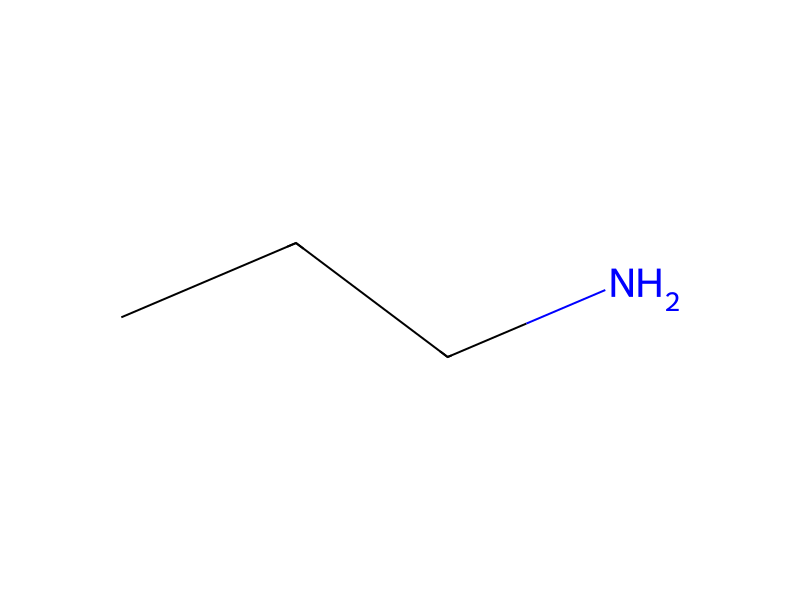
표준 SMILES
CCCN
InChIKey
WGYKZJWCGVVSQN-UHFFFAOYSA-N
분자식
C3H9N
평균 분자량
59.11 g/mol
단동위원소 질량
59.07349929

개요

Propylamine appears as a clear colorless liquid with an ammonia-like odor. Flash point -35 °F. Less dense than water and soluble in water. Vapors are heavier than air. Produces toxic oxides of nitrogen during combustion. Used in chemical analysis and to make other chemicals.

이름 및 식별자

우선 이름
Propylamine
IUPAC
propan-1-amine
현지명
프로필아민
영어명
Propylamine
분자식
C3H9N
분자량
59.11

이름 및 동의어

PropylaminePropan-1-amine107-10-81-PropylaminePropanamine1-AMINOPROPANEMonopropylamineMono-n-propylamineRCRA waste number U194Propan-1-ylamine(n-Propan-1-yl)amineNSC 7490
이름 더 보기
프로필아민n-프로필아민1-프로판아민1-아미노프로판MPA모노프로필아민프로판-1-아민PAN-PROPYLAMINEMNPAPropylamin1-PROPANAMINEn-Propylaminwe
HSDB 5162EINECS 203-462-3UNII-I76F18D635AI3-26456NSC-7490I76F18D635DTXSID6021878FEMA NO. 4237

데이터베이스 식별자

CAS
107-10-8
PubChem CID
7852
DTXSID
DTXSID6021878
ChEMBL
CHEMBL14409
ChEBI
CHEBI:39870
UNII
I76F18D635
EC Number
203-462-3
Nikkaji
J4.052E

물성

구조 계산 물성

XLogP
0.5
극성 표면적
26 Ų
수소 결합 공여자 수
1
수소 결합 수용자 수
1
회전 가능 결합 수
1
무거운 원자 수
4
형식 전하
0
복잡도
7.2

실험 및 물리화학적 성질

Chemical Classes · 2건

Nitrogen Compounds -> Amines, Aliphatic

Flammable agents - 3rd degree

pHAlkaline
SpringerMaterials PropertiesBoiling point
LogP · 4건

log Kow = 0.48

0.48

0.15

0.28

OdorStrong ammonia odor
Food AdditivesFLAVORING AGENT OR ADJUVANT -> FDA Substance added to food
Density · 5건

0.7182 at 68 °F (USCG, 1999) - Less dense than water; will float

0.719 at 20 °C/20 °C

Relative density (water = 1): 0.7.

0.714-0.720

0.7191 @25 °C

Flavoring AgentsEU Flavoring substances
Color/FormColorless liquid
Solubility · 6건

Very soluble in ethanol, acetone; soluble in benzene, chloroform; slightly soluble in carbon tetrachloride

In water, 1X10+6 mg/L at 25 °C

안전 및 규제

안전 정보는 참고용이며, 공급업체의 물질안전보건자료(SDS), 관련 법규 및 전문가 평가를 대체하지 않습니다.

GHS 분류

GHS Classification · 6건

Danger

H225 (99.5%): Highly Flammable liquid and vapor [Danger Flammable liquids]

P210, P233, P234, P240, P241, P242, P243, P260, P261, P262, P264, P264+P265, P270, P271, P273, P280, P301+P317, P301+P330+P331, P302+P352, P302+P361+P354, P303+P361+P353, P304+P340, P305+P354+P338, P316, P317, P319, P321, P330, P361+P364, P363, P370+P378, P390, P403+P233, P403+P235, P405, P406, and P501 (click each P-code to see the statement)

Aggregated GHS information provided per 182 reports by companies from 14 notifications to the ECHA C&L Inventory. Each notification may be associated with multiple companies.

Danger

H225: Highly Flammable liquid and vapor [Danger Flammable liquids]

유해성 정보

Regulatory Information · 6건

Chemical: 1-Propanamine

Commission Regulation (EC) No 1565/2000 (Repealed by Com. Implementing Reg. (EU) No 872/2012)

1-Propanamine is listed on the EPA's Chemical Data Reporting (CDR) system. Manufacturers and importers of 1-Propanamine are required to report information about their production and use of this chemical to the EPA under the Toxic Substances Control Act (TSCA). (40 eCFR Part 711)

REACH registered substance: Propylamine (EC: 203-462-3)

1-Propanamine: HSNO Approval: HSR001261 Approved with controls

The New Jersey Worker and Community Right to Know Act requires public and private employers to provide information about hazardous substances at their workplaces. (N.J.S.A. 34:5A-1 et. seq.)

DOT LabelFlammable Liquid Corrosive
Fire Hazards · 3건

Special Hazards of Combustion Products: Extreme danger, enter with great care. Thermal decomposition may produce nitrogen oxides, CO and/or CO2.

· Flammable/combustible material.

Highly flammable. Gives off irritating or toxic fumes (or gases) in a fire. Vapour/air mixtures are explosive.

Fire Potential

화학 및 산업

약리 정보

Absorption, Distribution and Excretion · 1건

Sprague-Dawley rats were made acidotic or alkalotic. Intraperitoneal injections of free n-propylamine were given. Urine samples were collected and aliphatic amines, excreted chemicals, and urinary creatinine were measured. Excretion of n-propylamine was significantly higher in acidotic rats.

Cellular LocationsCytoplasm

용도 및 제조

Uses · 3건

Used as a chemical intermediate and laboratory reagent; [Hawley]

Intermediate, lab reagent.

Manufacturing rubber chemicals; dyestuffs; pharmaceuticals; agricultural chemicals; corrosion inhibitors; textile and leather finishing resins

U.S. Exports · 2건

(1977) No Data

(1979) No Data

U.S. Imports · 2건

(1977) No Data

(1979) No Data

U.S. Production · 4건

2023: 50,000 - <250,000 lb

(1975) 2.73X10+8 GRAMS

(1979) PROBABLY GREATER THAN 4.54X10+6 GRAMS

Production volumes for non-confidential chemicals reported under the Inventory Update Rule. [Table#5229]

Consumption PatternsESSENTIALLY 100% AS A CHEMICAL INTERMEDIATE
Industry UsesNot Known or Reasonably Ascertainable
Methods of Manufacturing · 3건

REACTION OF AMMONIA AND PROPANOL OVER A DEHYDRATION CATALYST, EG, ALUMINA; REACTION OF AMMONIA, HYDROGEN AND PROPANOL OVER A DEHYDROGENATION CATALYST, EG, METALLIC SILVER; REACTION OF PROPIONALDEHYDE AND AMMONIA WITH NICKEL CATALYST

From propionaldehyde & ammonia with a Raney nickel catalyst: Olin, Schwoegler, US patent 2,373,705 (1945 to Sharples); by low pressure catalytic hydrogenation of nitropropane ... By catalytic hydrogenation of propionitrile: Rylander, Kaplan, US patent 3,117,162 (1964 to Englehard).

관련 반응

1,356건
반응 기록 만들기
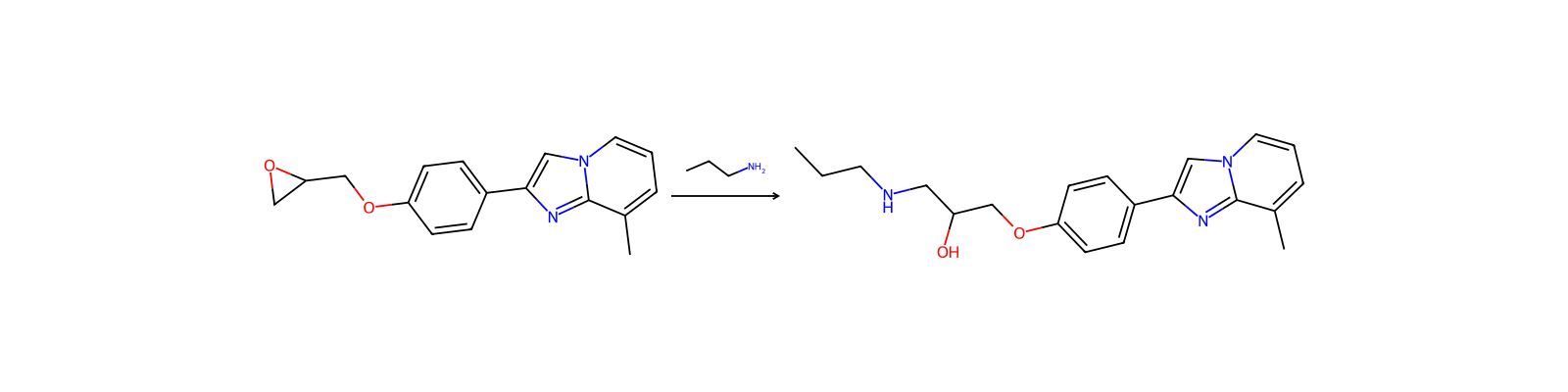
HRID 3644 반응식
HRID 3644반응물로uspto-grants-1998_03
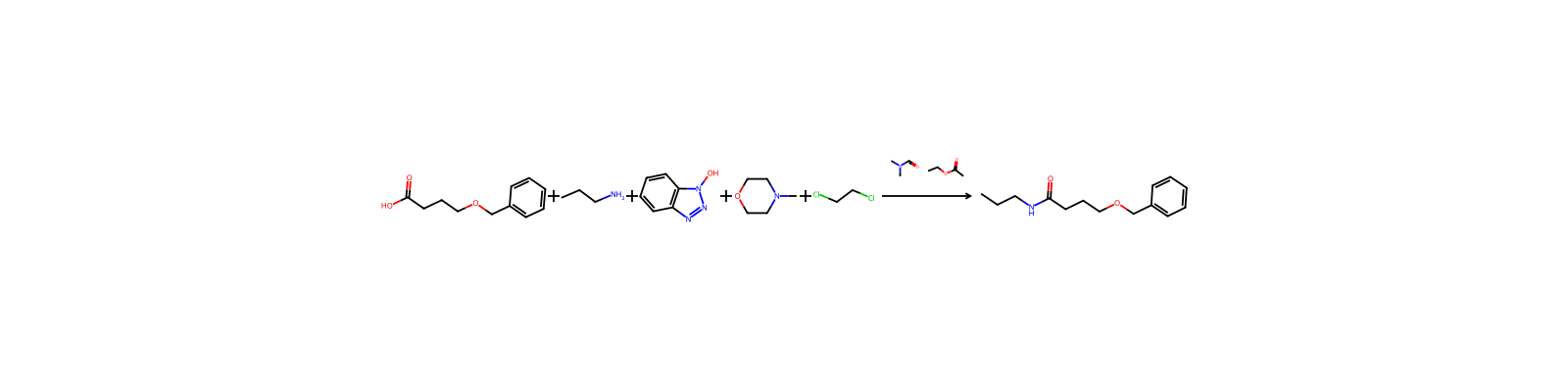
HRID 8055 반응식
HRID 8055반응물로uspto-grants-2006_08
HRID 8386 반응식
HRID 8386용매로uspto-grants-2006_08
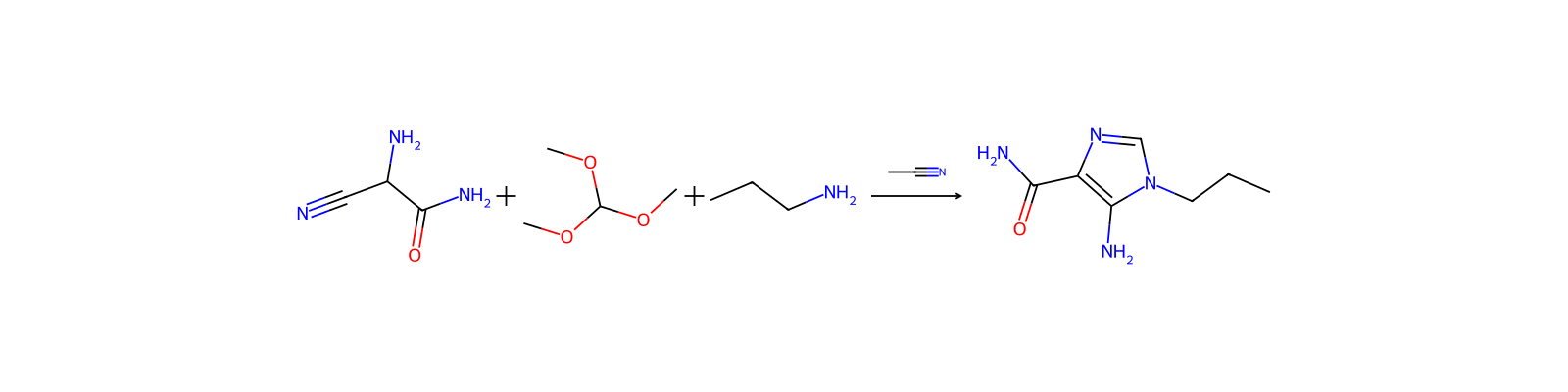
HRID 11441 반응식
HRID 11441반응물로uspto-grants-2006_08
HRID 13831 반응식
HRID 13831반응물로uspto-grants-2010_06
HRID 14041 반응식
HRID 14041반응물로uspto-grants-2010_06
HRID 14256 반응식
HRID 14256용매로uspto-grants-2010_06
HRID 18384 반응식
HRID 18384반응물로uspto-grants-2010_06
1 / 170 페이지

화합물 노트

불러오는 중…

이 페이지에서기본 정보개요이름 및 식별자물성안전 및 규제화학 및 산업관련 반응화합물 노트
더보기
새 노트새 반응견적 요청하기

1000 mg/mL at 20 °C

Solubility in water: miscible

Soluble in water

Soluble (in ethanol)

Flash Point · 2건

-35 °F (USCG, 1999)

BELOW -37 °C (OPEN CUP)

Boiling Point · 5건

119.5 °F at 760 mmHg (USCG, 1999)

48-49 °C

47.00 to 48.00 °C. @ 760.00 mm Hg

48 °C

48 °C

물리화학적 성질

녹는점
-83 °C · -83 °C (lit.)
끓는 점
48 °C · 48 °C (lit.)
밀도
0.719 g/mL · 0.719 g/mL at 25 °C (lit.)
증기 밀도
2 · 2 (vs air)
증기압
4.79 psi · 4.79 psi ( 20 °C)
굴절률
20 · n20/D 1.388(lit.)
FEMA
4237 · 4237 | PROPYLAMINE
인화점
35 °F · −35 °F
저장 조건
30 °C · Store below +30°C.
용해도
0.4 · 물: 용해성0.4부(lit.)
산도 계수 (pKa)
10.6 · 10.6(at 20℃)
물리적 상태
액체
Specific Gravity
0.7173 · 0.7173
색상
무색~담황색 투명
수소이온지수(pH)
12.6 · 12.6 (100g/l, H2O, 20℃)
냄새
암모니아성
냄새 유형
암모니아의
Odor Threshold
0.061 ppm · 0.061ppm
생물학적 소스
human blood
폭발한계
2.1 · 2.1-13.6%(V)
수용성
녹는
비열
2.78 J/ · Cp(liquid): 2.78 J/(g·K); Cp(gas): 1.54 J/(g·K), at 25℃
JECFA Number
1580 · 1580
Merck
14 · 14,7843
BRN
1098243 · 1098243
Henry's Law Constant
6.6 · 6.6×10-1 mol/(m3Pa) at 25℃, Burkholder et al. (2019)
Dielectric constant
3 · 3.0(Ambient)
안정성
안정적인. 가연성이 높습니다. 낮은 인화점을 참고하세요. 공기와 쉽게 폭발성 혼합물을 형성합니다. 산화제, 강산과 호환되지 않습니다. 시원하게 보관하세요.
InChI
1S/C3H9N/c1-2-3-4/h2-4H2,1H3
InChIKey
WGYKZJWCGVVSQN-UHFFFAOYSA-N
SMILES
CCCN
LogP
0.55 · 0.55
NIST
1 · 1-Propanamine(107-10-8)
EPA
Propylamine (107-10-8)
화학적 성질 · 1건

n-Propylamine, also known as propylamine, is a colorless liquid with a pungent odor resembling ammonia. It has strong basic properties, leading to its easy formation of salts when combined with acids. Its reactivity is similar to that described for the other short chain aliphatic amines (Astel 1961).

FLAMMABLE LIQUID.
Health Hazards · 2건

INHALATION: Mucous membrane and respiratory tract irritation. Tracheitis, bronchitis, pneumonitis, and pulmonary edema. EYES: Severe corneal damage or complete eye destruction. SKIN: Single drop-deep necrosis. INGESTION: Corrosive to G.I. tract. (USCG, 1999)

· May cause toxic effects if inhaled or ingested.

Hazards Summary · 1건

Animals exposed to lethal concentrations have dyspnea and hepatitis. [ChemIDplus] Corrosive to the skin, eyes, and respiratory tract; Can cause pulmonary edema at high concentrations; [NJ-HSFS] Liquid may cause second or third degree burns after brief skin contact. [CHRIS] May cause halo vision at lower concentrations; [CHEMINFO]

DOT ID and Guide1277 132
Reactive GroupAmines, Phosphines, and Pyridines
UN ClassificationUN Hazard Class: 3; UN Subsidiary Risks: 8; UN Pack Group: II
RCRA Requirements · 1건

U194; As stipulated in 40 CFR 261.33, when 1-propanamine, as a commercial chemical product or manufacturing chemical intermediate or an off-specification commercial chemical product or a manufacturing chemical intermediate, becomes a waste, it must be managed according to Federal and/or State hazardous waste regulations. Also defined as a hazardous waste is any residue, contaminated soil, water, or other debris resulting from the cleanup of a spill, into water or on dry land, of this waste. Generators of small quantities of this waste may qualify for partial exclusion from hazardous waste regulations (40 CFR 261.5).

TSCA Requirements · 1건

Pursuant to section 8(d) of TSCA, EPA promulgated a model Health and Safety Data Reporting Rule. The section 8(d) model rule requires manufacturers, importers, and processors of listed chemical substances and mixtures to submit to EPA copies and lists of unpublished health and safety studies. 1-Propanamine is included on this list.

Reactivity AlertsHighly Flammable

안전 및 보호

Fire Fighting · 2건

Excerpt from ERG Guide 132 [Flammable Liquids - Corrosive]:

Use powder, alcohol-resistant foam, water in large amounts, carbon dioxide. In case of fire: keep drums, etc., cool by spraying with water.

First Aid Measures · 4건

Fresh air, rest. Half-upright position. Refer immediately for medical attention.

First rinse with plenty of water for at least 15 minutes, then remove contaminated clothes and rinse again. Refer immediately for medical attention.

Rinse with plenty of water (remove contact lenses if easily possible). Refer immediately for medical attention.

Rinse mouth. Do NOT induce vomiting. Refer immediately for medical attention.

Accidental Release Measures · 2건

· CALL 911. Then call emergency response telephone number on shipping paper. If shipping paper not available or no answer, refer to appropriate telephone number listed on the inside back cover.

· ELIMINATE all ignition sources (no smoking, flares, sparks or flames) from immediate area.

First Aid · 2건

Call a physician.

General First Aid:

Safe StorageProvision to contain effluent from fire extinguishing. Fireproof. Separated from strong oxidants, strong acids and food and feedstuffs. Dry. Well closed. Store in an area without drain or sewer access.
Firefighting HazardsVAPOR IS HEAVIER THAN AIR ... & MAY TRAVEL A CONSIDERABLE DISTANCE TO SOURCE OF IGNITION & FLASH BACK.
Exposure Control and Personal Protection· Wear positive pressure self-contained breathing apparatus (SCBA).
Fire Fighting Procedures · 2건

Use water spray, dry chemical, "alcohol resistant" foam, or carbon dioxide. Use water spray to keep fire-exposed containers cool. Solid streams of water may be ineffective and spread material.

If material on fire or involved in fire: Do not extinguish fire unless flow can be stopped. Use water in flooding quantities as fog. Solid streams of water may be ineffective. Cool all affected containers with flooding quantities of water. Apply water from as far a distance as possible. Use "alcohol" foam, dry chemical or carbon dioxide.

Storage Conditions · 2건

Outside or detached storage is prefered. Avoid oxidizing material, acids, and sources of halogen. Store in a cool, dry, well-ventilated location.

Keep Tightly Closed.

Cleanup Methods · 4건

Overspread/spill with/ sufficient sodium bisulfate and sprinkle /with/ water. /Ethylamine/

Environmental considerations-land spill: Dig a pit, pond, lagoon, holding area to contain liquid or solid material. /SRP: If time permits, pits, ponds, lagoons, soak holes, or holding areas should be sealed with an impermeable flexible membrane liner./ Dike surface flow using soil, sand bags, foamed polyurethane, or foamed concrete. Absorb bulk liquid with fly ash, cement powder, or commercial sorbents.

Environmental considerations-water spill: Use natural barriers or oil spill control booms to limit spill travel. Remove trapped material with suction hoses.

Environmental considerations-air spill: Apply water spray or mist to knock down vapors.

Nonfire Spill ResponseExcerpt from ERG Guide 132 [Flammable Liquids - Corrosive]:
Disposal Methods · 4건

[40 CFR 240-280, 300-306, 702-799 (7/1/2006)] Generators of waste (equal to or greater than 100 kg/mo) containing this contaminant, EPA hazardous waste number U194, must conform with USEPA regulations in storage, transportation, treatment and disposal of waste.

Generators of waste (equal to or greater than 100 kg/mo) containing this contaminant, EPA hazardous waste number U194, must conform with USEPA regulations in storage, transportation, treatment and disposal of waste.

A potential candidate for rotary kiln incineration at a temperature range of 820 to 1,600 °C and residence times of seconds for liquids and gases, and hours for solids. A potential candidate for fluidized bed incineration at a temperature range of 450 to 980 °C and residence times of seconds for liquids and gases, and longer for solids.

/Absorb small spills with paper and/ burn the paper in a suitable location away from combustible materials. Large quantities can be reclaimed or collected & atomized in suitable combustion chamber equipped with appropriate effluent gas cleaning device.

독성 정보

Ecotoxicity Values · 5건

EC50; Species: Anabaena subcylindrica (Blue-green algae, axenic, 1-3x 10+7 cells/mL); Conditions: freshwater, static, 25 °C, pH 7.2; Concentration: 0.012 ug/cell for < or = 3 hr; Effect: decreased nitrogen fixation

EC50; Species: Anabaena subcylindrica (Blue-green algae, axenic, 1-3x 10+7 cells/mL); Conditions: freshwater, static, 25 °C, pH 7.2; Concentration: 1.8x10⁻⁸ ug/cell for < or = 3 hr; Effect: photosynthesis, oxygen production

EC50; Species: Chlorella ellipsoidea (Green algae, axenic); Conditions: freshwater, static, 25 °C, pH 7.2; Concentration: 0.4x10⁻⁸ ug/cell for 90 min; Effect: photosynthesis, oxygen production

EC50; Species: Daphnia magna (Water flea, Lake Langedam strain, age <24 hr); Conditions: freshwater, static, 20 °C, pH 7.8-8.0, hardness 250 mg/L CaCO3, dissolved oxygen 94-99%; Concentration: 100 mg/L for 24 hr; Effect: intoxication, immobilization

For more Ecotoxicity Values (Complete) data for PROPYLAMINE (7 total), please visit the HSDB record page.

Environmental Fate · 3건

TERRESTRIAL FATE: Based on a classification scheme(1), an estimated Koc value of 43(SRC), determined from a log Kow of 0.48(2) and a regression-derived equation(3), indicates that propylamine is expected to have very high mobility in soil(SRC). The pKa of propylamine is 10.71(4), indicating that this compound will exist almost entirely in the cation form in the environment and cations generally adsorb more strongly to soils containing organic carbon and clay than their neutral counterparts(5). Volatilization of propylamine from moist soil surfaces is not expected to be an important fate process given its cationic state(SRC). Propylamine is expected to volatilize from dry soil surfaces(SRC) based upon a vapor pressure of 310 mm Hg(6). Biodegradation of propylamine is expected to occur(7-9); a 102% theoretical BOD was measured after 13 days using a non-activated sludge inoculum(7).

AQUATIC FATE: Based on a classification scheme(1), an estimated Koc value of 43(SRC), determined from a log Kow of 0.48(2) and a regression-derived equation(3), indicates that propylamine is not expected to adsorb to suspended solids and sediment(SRC). A pKa of 10.71(4) indicates propylamine will exist almost entirely in the cation form at pH values of 5 to 9 and therefore volatilization from water surfaces is not expected to be an important fate process(5). According to a classification scheme(6), an estimated BCF of 3(SRC), from its log Kow(2) and a regression-derived equation(7), suggests the potential for bioconcentration in aquatic organisms is low(SRC). Biodegradation of propylamine is expected to occur(8-10); a 102% of theoretical BOD was measured after 13 days using a non-activated sludge inoculum(8).

ATMOSPHERIC FATE: According to a model of gas/particle partitioning of semivolatile organic compounds in the atmosphere(1), propylamine, which has a vapor pressure of 310 mm Hg at 25 °C(2), is expected to exist solely as a vapor in the ambient atmosphere. Vapor-phase propylamine is degraded in the atmosphere by reaction with photochemically-produced hydroxyl radicals(SRC); the half-life for this reaction in air is estimated to be 12 hours(SRC), calculated from its rate constant of 3.3X10⁻¹¹ cu cm/molecule-sec at 25 °C(SRC) that was derived using a structure estimation method(3). Propylamine does not contain chromophores that absorb at wavelengths >290 nm(4) and therefore is not expected to be susceptible to direct photolysis by sunlight(SRC).

Food Survey Values · 1건

The following naturally occuring concns of propylamine (in mg/kg) were detected in various food products from W Germany: fresh rutabaga, 5.0; paprika, 2.3; paprika brine, 10.6; cucumber, 0.1-7.5; pepperoni, 1.4; pickled onions, 1.8; celery, 2.7; cheese, 2-8.7; brown bread, 1.6; freeze-dried coffee and coffee extract, trace-0.5(1). Propylamine has been qualitatively detected in wine, beer, rice, barley, malt, and corn(2,3).

Adverse EffectsOccupational hepatotoxin - Secondary hepatotoxins: the potential for toxic effect in the occupational setting is based on cases of poisoning by human ingestion or animal experimentation.
Exposure RoutesThe substance can be absorbed into the body by inhalation of its vapour, through the skin and by ingestion. Serious local effects by all routes of exposure.
Milk Concentrations · 1건

... The presence of volatile aliphatic amines ... in human breast milk and amniotic fluid /was measured/ to assess their role in neonatal hypergastrinemia. These volatile nitrogenous amino acid metabolites have been previously demonstrated to stimulate gastrin release in in vivo and in vitro laboratory preparations. ... The present study ... demonstrated that these gastrin-stimulatory volatile amines were present in significant concentrations in breast milk during the first several weeks after parturition and in amniotic fluid. The individual amines that were identified in both human milk and amniotic fluid samples were methylamine, dimethylamine, ethylamine, trimethylamine, propylamine, isobutylamine, and butylamine. This study provides indirect evidence to support the possibility that the hypergastrinemia measured in the fetus/neonate during the period immediately before and after birth may be attributable, in part, to the ingestion of fluid containing high concentrations of gastrin-stimulating amines.

Ecotoxicity Excerpts · 1건

/OTHER TERRESTRIAL SPECIES/ ... This research compared the toxicity and inhibition caused by three aliphatic amines (n-propylamine, ethylmethylamine, and trimethylamine) and their chlorinated derivatives. ... Acute toxicity assays were conducted by using a Microtox system with Phosphobacterium phosphoreum (also known as Vibrio fischeri) for the aliphatic amine compounds and their corresponding chlorinated derivatives, as identified by membrane introduction mass spectrometry (MIMS). Inhibition tests were conducted by using the oxygen utilization rate test with an enhanced nitrifier culture. ... Trimethylamine and n-propylamine caused greater inhibition to nitrifiers than did ethylmethylamine under similar concentrations. Nitrifier inhibition from these amines increased after chlorination.

Plant Concentrations · 1건

Propylamine has been identified in rice, corn, and barley(1) and occurs naturally in various species of marine algae(2). Latakia tobacco leaf has been found to contain propylamine(3). Propylamine has been detected in medicinal plant root samples collected from Nigeria, Africa, concn not specified(4).

Signs and Symptoms · 4건

Cough. Sore throat. Laboured breathing. Shortness of breath. Symptoms may be delayed.

Redness. Pain. Serious skin burns.

Watering of the eyes. Redness. Pain. Blurred vision. Severe burns. Loss of vision.

Burns in mouth and throat. Burning sensation in the throat and chest. Abdominal pain. Vomiting. Diarrhoea. Shock or collapse.

Effluent Concentrations · 1건

A propylamine concn of 400 ppm was detected in a 1980 waste sample which was discharged into the ocean 74 km north of Arebico, Puerto Rico from a pharmaceutical manufacturer(1). In a laboratory study, propylamine was detected in the automobile exhaust of two gasoline fueled vehicles, concn not specified(2). An estimated 600 tons of propylamine are annually released in industrial effluents from industrial manufacturers (rubber chemicals, dyestuffs, pharmaceuticals, agricultural chemicals, corrosion inhibitors, textile and leather finishing resins) and users of the compound(3).

ICSC Environmental DataThe substance is harmful to aquatic organisms.
Soil Adsorption/Mobility · 1건

The Koc of propylamine is estimated as 43(SRC), using a log Kow of 0.48(1) and a regression-derived equation(2). According to a classification scheme(3), this estimated Koc value suggests that propylamine is expected to have very high mobility in soil. The pKa of propylamine is 10.71(4), indicating that this compound will exist almost entirely in the cation form in the environment and cations generally adsorb more strongly to soils containing organic carbon and clay than their neutral counterparts(5).

규제 정보

RCRA Requirements · 1건

U194; As stipulated in 40 CFR 261.33, when 1-propanamine, as a commercial chemical product or manufacturing chemical intermediate or an off-specification commercial chemical product or a manufacturing chemical intermediate, becomes a waste, it must be managed according to Federal and/or State hazardous waste regulations. Also defined as a hazardous waste is any residue, contaminated soil, water, or other debris resulting from the cleanup of a spill, into water or on dry land, of this waste. Generators of small quantities of this waste may qualify for partial exclusion from hazardous waste regulations (40 CFR 261.5).

TSCA Requirements · 1건

Pursuant to section 8(d) of TSCA, EPA promulgated a model Health and Safety Data Reporting Rule. The section 8(d) model rule requires manufacturers, importers, and processors of listed chemical substances and mixtures to submit to EPA copies and lists of unpublished health and safety studies. 1-Propanamine is included on this list.

Atmospheric Standards · 1건

This action promulgates standards of performance for equipment leaks of Volatile Organic Compounds (VOC) in the Synthetic Organic Chemical Manufacturing Industry (SOCMI). The intended effect of these standards is to require all newly constructed, modified, and reconstructed SOCMI process units to use the best demonstrated system of continuous emission reduction for equipment leaks of VOC, considering costs, non air quality health and environmental impact and energy requirements. Propylamine is produced, as an intermediate or a final product, by process units covered under this subpart.

CERCLA Reportable Quantities · 1건

Persons in charge of vessels or facilities are required to notify the National Response Center (NRC) immediately, when there is a release of this designated hazardous substance, in an amount equal to or greater than its reportable quantity of 5000 lb or 2270 kg. The toll free number of the NRC is (800) 424-8802. The rule for determining when notification is required is stated in 40 CFR 302.4 (section IV. D.3.b).

안전 데이터

wgk
1
tsca
TSCA listed
rtecs
UH9100000
ridadr
UN 1277
독성
LD50 orally in rats: 0.57 g/kg (Smyth)
HS 번호
2921 19 99
risk_code
11-20/21/22-34-35-52/53
hazard_code
F,C
safety_code
26-36/37/39-45-16-7/9-36-61
포장분류
II
위험 등급
3
기존화학 물질
KE-29256
F 고인화성물질
34
자연 발화 온도
604 °F
Hazard Classifications
Acute Tox. 3 DermalAcute Tox. 3 InhalationAcute Tox. 4 OralEye Dam. 1Flam. Liq. 2Met. Corr. 1Skin Corr. 1BSTOT SE 3
스토리지 클래스
3 - Flammable liquids
유해 물질 데이터
107-10-8(Hazardous Substances Data)

... BY REDUCING ETHYL CYANIDE WITH SODIUM IN ETHYL ALCOHOL ...

Use Classification · 3건

Flavouring Agent -> FLAVOURING_AGENT -> JECFA Functional Classes

Flavoring Agents -> JECFA Flavorings Index

Flavouring Agent -> FLAVOURING_AGENT -> JECFA Functional Classes

General Manufacturing Information · 3건

All Other Basic Organic Chemical Manufacturing

1-Propanamine: ACTIVE

Aziridines are hydrogenated in the presence of typical hydrogenation catalysts to give alkyl amines.

응용 분야 · 2건

용도n-Propylamine is used as an intermediate inmany organic reactions. It has been used in the synthesis of single crystals of siliceous ferrierite.

일반 설명A clear colorless liquid with an ammonia-like odor. Flash point -35°F. Less dense than water and soluble in water. Vapors are heavier than air. Produces toxic oxides of nitrogen during combustion. Used in chemical analysis and to make other chemicals.

제조 방법 · 1건

생산 방법There are several methods employed in the manufacture of propylamine. Typically, ammonia and propanol are reacted over a dehydration catalyst at high temperature and pressure. Ammonia, propanol, and hydrogen can also be reacted over a dehydrogenation catalyst such as metallic silver. Propylamine can also be synthesized from propionaldehyde and ammonia with a Raney nickel catalyst (Schweizer et al 1978).

상·하류 제품 정보

상류 원료

디프로필아민프로피온알데히드2-니트로프로판트리프로필아민아크릴로나이트릴산화알루미늄1-프로판올알파-디메틸아미노프로피오니트릴테트라메틸-1,3-디아미노프로판N""-[3-(디메틸아미노)프로필]-N,N-디메틸프로판-1,3-디아민

하류 제품

Molosultap디프로필아민adhesive FWRpalladium catalyst supported by poly (2, 6-dimethyl-1, 4-phenylene oxide)dimethyl dodecyl thioic propylene betainetrimethyl lauroylaminopropyl ammonium methylsulfateTC-1 filler for leather surfacecocoamide propyl amine oxide트리프로필아민zeolite type ZSM-48Roxatidine acetate4-Amino-3-pyridinecarboxylic acidN-[2-(2,4,6-trichlorophenoxy)ethyl]propylaminePrilocaineN-Methylpropylamine