홈MCP워크벤치Skills
홈워크벤치알림마이페이지
llms.txt · MCP 가이드개인정보처리방침 · 이용약관 · 지원v1.8.0
  1. 홈
  2. /화합물

이소아밀브로마이드

1-Bromo-3-methylbutane
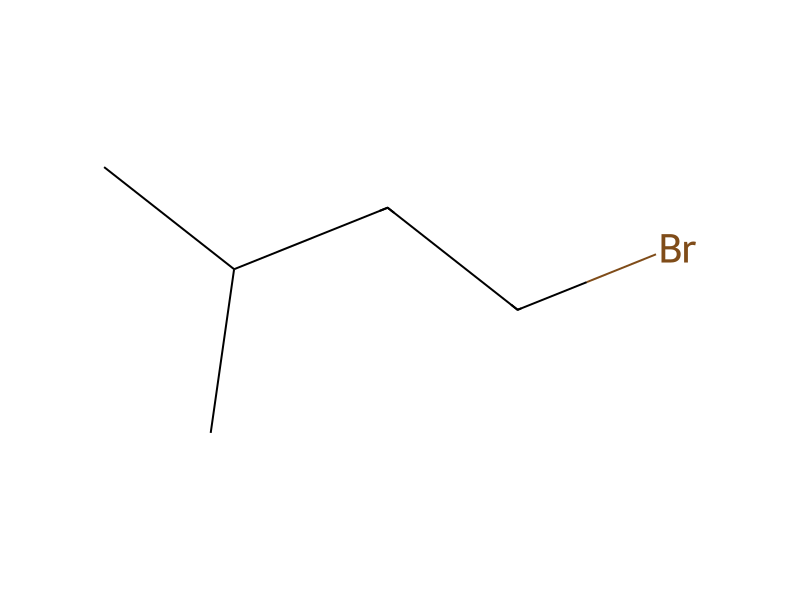
HCID 7891
새 노트새 반응견적 요청하기
인쇄 미리보기
기본 정보개요이름 및 식별자물성안전 및 규제화학 및 산업관련 반응화합물 노트
부분 구조 검색유사 구조 찾기

기본 정보

CAS
107-82-4
표준 SMILES
CC(C)CCBr
InChIKey
YXZFFTJAHVMMLF-UHFFFAOYSA-N
분자식
C5H11Br
평균 분자량
151.04 g/mol
단동위원소 질량
150.00441

개요

1-bromo-3-methylbutane appears as a colorless liquid. Slightly soluble in water and denser than water. Vapors are heavier than air.

이름 및 식별자

우선 이름
1-Bromo-3-methylbutane
IUPAC
1-bromo-3-methylbutane
현지명
이소아밀브로마이드
영어명
1-Bromo-3-methylbutane
분자식
C5H11Br
분자량
151.04

이름 및 동의어

1-BROMO-3-METHYLBUTANE107-82-4Isoamyl bromideIsopentyl bromide3-Methylbutyl bromideButane, 1-bromo-3-methyl-4-Bromo-2-methylbutaneIsobutylmethyl bromide3-methyl-1-bromobutaneUN2341HSDB 7381NSC 9240
이름 더 보기
1-브로모-3-메틸뷰테인이소아밀브로마이드3-Bromo-2-methylbutane1soamyl Bromideiso-BromopentaneBrCH2CH2CH(CH3)21-Bromo-3-methyLISO-PENTYL BROMIDE3-Methylbutylbromid3-METHYL BROMO BUTANE
EINECS 203-522-9CZM50594QANSC-92401-Bromo-3-methyl butaneISOAMYL BROMIDE [MI]DTXSID7059353UN-23414Bromo2methylbutane

데이터베이스 식별자

CAS
107-82-4
PubChem CID
7891
DTXSID
DTXSID7059353
ChEMBL
CHEMBL158800
UNII
CZM50594QA
EC Number
203-522-9
Nikkaji
J5.063F

물성

구조 계산 물성

XLogP
2.7
극성 표면적
0 Ų
수소 결합 공여자 수
0
수소 결합 수용자 수
0
회전 가능 결합 수
2
무거운 원자 수
6
형식 전하
0
복잡도
25.1

실험 및 물리화학적 성질

Chemical Classes · 2건

Other Classes -> Halogenated Aliphatics, Saturated

Flammable agents - 3rd degree

SpringerMaterials PropertiesBoiling point
Density · 2건

1.210 g/cu cm at 15 °C

1.207 @25 °C

Color/FormColorless liquid
Solubility · 2건

Miscible with alcohol and ether

In water, 196 mg/L at 16.5 °C

Flash Point-6 °C
Boiling Point120-121 °C
DecompositionWhen heated to decomposition it emits toxic fumes of /hydrogen bromide/.
Melting Point · 2건

-112 °C

-112 °C

Vapor Pressure · 2건

34.6 [mmHg]

34.6 mm Hg at 25 °C

Refractive IndexIndex of refractive = 1.4433 at 15 °C

안전 및 규제

안전 정보는 참고용이며, 공급업체의 물질안전보건자료(SDS), 관련 법규 및 전문가 평가를 대체하지 않습니다.

GHS 분류

GHS Classification · 6건

Danger

H225 (84.6%): Highly Flammable liquid and vapor [Danger Flammable liquids]

P210, P233, P240, P241, P242, P243, P261, P264, P264+P265, P270, P271, P273, P280, P301+P317, P302+P352, P303+P361+P353, P304+P340, P305+P351+P338, P319, P321, P330, P332+P317, P337+P317, P362+P364, P370+P378, P391, P403+P233, P403+P235, P405, and P501 (click each P-code to see the statement)

Aggregated GHS information provided per 52 reports by companies from 10 notifications to the ECHA C&L Inventory. Each notification may be associated with multiple companies.

Danger

H225: Highly Flammable liquid and vapor [Danger Flammable liquids]

유해성 정보

Regulatory Information · 4건

Chemical: Butane, 1-bromo-3-methyl-

REACH registered substance: 1-bromo-3-methylbutane (EC: 203-522-9)

1-Bromo-3-methylbutane: Does not have an individual approval but may be used under an appropriate group standard

The New Jersey Worker and Community Right to Know Act requires public and private employers to provide information about hazardous substances at their workplaces. (N.J.S.A. 34:5A-1 et. seq.)

DOT LabelFlammable Liquid
Fire Hazards · 2건

Excerpt from ERG Guide 130 [Flammable Liquids (Water-Immiscible / Noxious)]:

· HIGHLY FLAMMABLE: Will be easily ignited by heat, sparks or flames.

Fire PotentialDangerous fire hazard when exposed to heat or flame.
Health Hazards · 2건

Excerpt from ERG Guide 130 [Flammable Liquids (Water-Immiscible / Noxious)]:

· May cause toxic effects if inhaled or absorbed through skin.

Hazards SummaryEmergency medical treatment: see 1-Bromopropane. [HSDB] May cause irritation or burns to skin and eyes; [CAMEO]

화학 및 산업

용도 및 제조

Uses · 2건

Used in organic synthesis; [Merck Index]

In organic synthesis.

Methods of ManufacturingPrepared from isoamyl alcohol, bromine and phosphorous or by refluxing isoamyl alcohol with HBr in presence of H2SO4
General Manufacturing InformationButane, 1-bromo-3-methyl-: ACTIVE
응용 분야 · 2건

용도1-Bromo-3-methylbutane was used in the synthesis of 1-(3-methylbutyl)pyrrole and in the production of pentyl peroxy radical by direct photolysis production method. It was also used as extraction solvent for determination of polycyclic aromatic hydrocarbons in water samples using liquid-liquid microextraction combined with gas chromatography-mass spectrometry. It is also used as an alkyl halide and organic synthesis reagent.

일반 설명A colorless liquid. Flash point 21°F. Slightly soluble in water and denser than water. Vapors are heavier than air.

상·하류 제품 정보

상류 원료

브롬아이소아밀 알코올에틸이소아밀에테르이소길초산이소아밀브로모아세트알데히드클로로-3-메틸부탄3-메틸-1-뷰텐

관련 반응

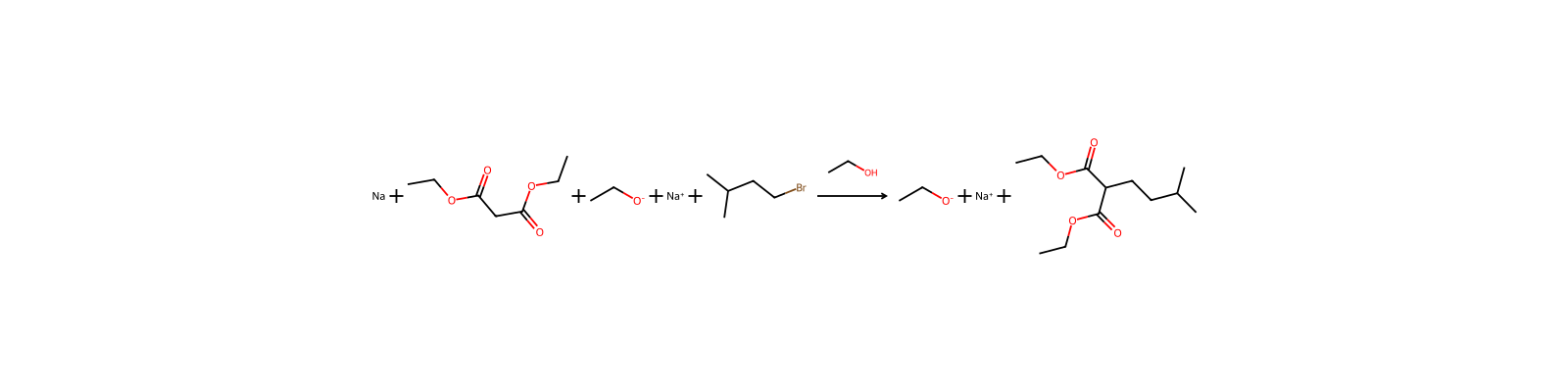
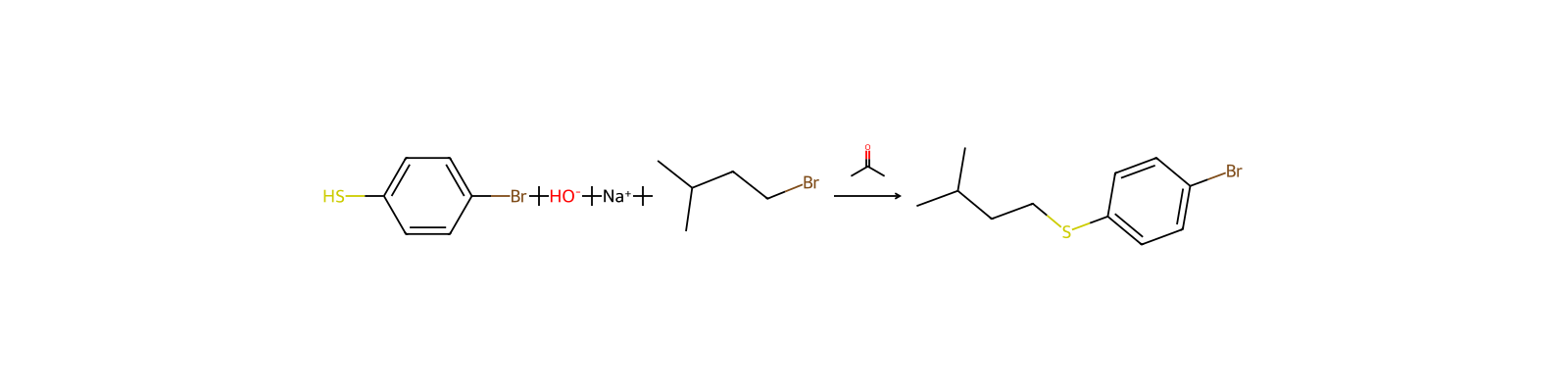
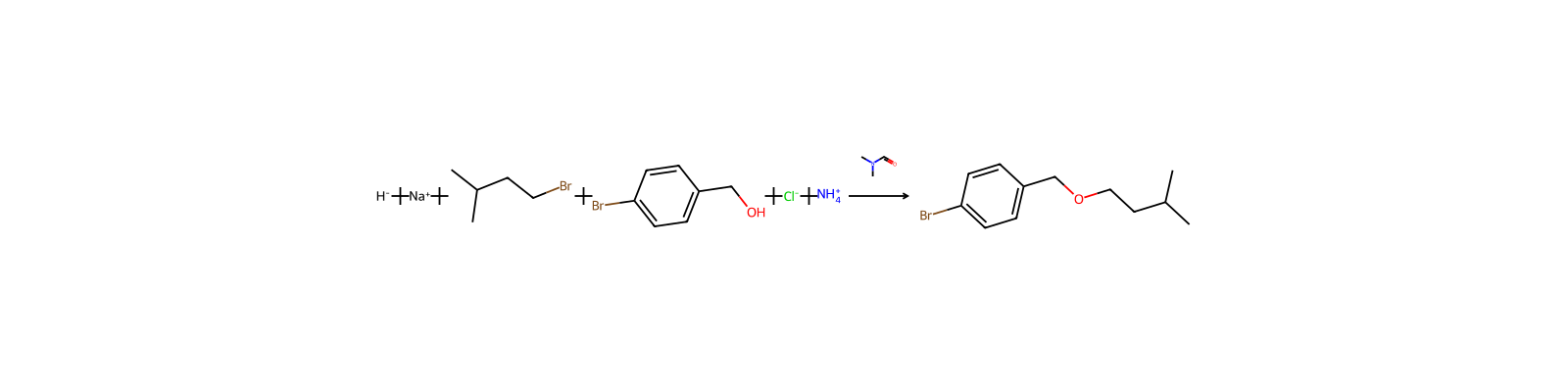
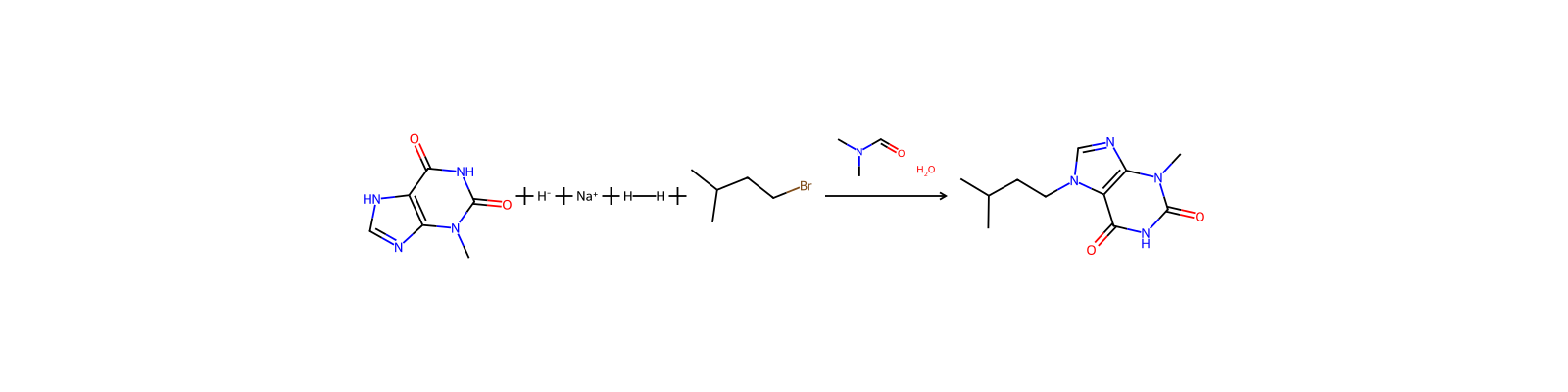
319건
반응 기록 만들기
HRID 2034 반응식
HRID 2034반응물로uspto-grants-1998_03
HRID 22417 반응식
HRID 22417반응물로uspto-grants-1995_06
HRID 23146 반응식
HRID 23146반응물로uspto-grants-2005_02
HRID 28444 반응식
HRID 28444반응물로uspto-grants-2008_09
HRID 36364 반응식
HRID 36364반응물로uspto-grants-1995_05
HRID 70565 반응식
HRID 70565반응물로uspto-grants-2014_09
HRID 77318 반응식
HRID 77318반응물로uspto-grants-2014_09
HRID 86814 반응식
HRID 86814반응물로Training data from https://doi.org/10.1039/C8SC04228D (2/10)
1 / 40 페이지

화합물 노트

불러오는 중…

이 페이지에서기본 정보개요이름 및 식별자물성안전 및 규제화학 및 산업관련 반응화합물 노트
더보기
새 노트새 반응견적 요청하기
Henry's Law ConstantHenry's Law constant = 3.46X10⁻² atm-cu m/mol at 25 °C

물리화학적 성질

녹는점
-112 °C · -112 °C
끓는 점
120 · 120-121 °C(lit.)
밀도
1.261 g/mL · 1.261 g/mL at 25 °C(lit.)
굴절률
20 · n20/D 1.4409(lit.)
인화점
90 °F · 90 °F
저장 조건
2 · 2-8°C
용해도
2 O: · H2O: 16.5°C에서 난용성(0.02g/100ml)
물리적 상태
액체
색상
무색의
수용성
0.2 g/L · 0.2g/L(16℃)
Merck
14 · 14,5114
BRN
773652 · 773652
Henry's Law Constant
4.9 · 4.9×10-4 mol/(m3Pa) at 25℃, Mackay et al. (1993)
Dielectric constant
6.1 · 6.1(24℃)
InChI
1S/C5H11Br/c1-5(2)3-4-6/h5H,3-4H2,1-2H3
InChIKey
YXZFFTJAHVMMLF-UHFFFAOYSA-N
SMILES
CC(C)CCBr
NIST
1 · Butane, 1-bromo-3-methyl-(107-82-4)
EPA
1 · Butane, 1-bromo-3-methyl- (107-82-4)

화학적 성질

clear colourless liquid

DOT ID and Guide2341 130
Reactive GroupHalogenated Organic Compounds
Reactivity AlertsHighly Flammable
Reactivity Profile · 1건

Halogenated aliphatic compounds, such as 1-BROMO-3-METHYLBUTANE, are moderately or very reactive. Halogenated organics generally become less reactive as more of their hydrogen atoms are replaced with halogen atoms. Low-molecular-weight haloalkanes are highly flammable and can react with some metals to form dangerous products. Materials in this group are incompatible with strong oxidizing and reducing agents. Also, they are incompatible with many amines, nitrides, azo/diazo compounds, alkali metals, and epoxides. Gives toxic fumes of bromine when burned.

DOT Emergency Guidelines · 5건

/GUIDE 130: FLAMMABLE LIQUIDS (Non-Polar/Water-Immiscible/Noxious)/ Fire or Explosion: HIGHLY FLAMMABLE: Will be easily ignited by heat, sparks or flames. Vapors may form explosive mixtures with air. Vapors may travel to source of ignition and flash back. Most vapors are heavier than air. They will spread along ground and collect in low or confined areas (sewers, basements, tanks). Vapor explosion hazard indoors, outdoors or in sewers. Those substances designated with a (P) may polymerize explosively when heated or involved in a fire. Runoff to sewer may create fire or explosion hazard. Containers may explode when heated. Many liquids are lighter than water.

/GUIDE 130: FLAMMABLE LIQUIDS (Non-Polar/Water-Immiscible/Noxious)/ Health: May cause toxic effects if inhaled or absorbed through skin. Inhalation or contact with material may irritate or burn skin and eyes. Fire will produce irritating, corrosive and/or toxic gases. Vapors may cause dizziness or suffocation. Runoff from fire control or dilution water may cause pollution.

/GUIDE 130: FLAMMABLE LIQUIDS (Non-Polar/Water-Immiscible/Noxious)/ Public Safety: CALL Emergency Response Telephone Number on Shipping Paper first. If Shipping Paper not available or no answer, refer to appropriate telephone number listed on the inside back cover. As an immediate precautionary measure, isolate spill or leak area for at least 50 meters (150 feet) in all directions. Keep unauthorized personnel away. Stay upwind. Keep out of low areas. Ventilate closed spaces before entering.

/GUIDE 130: FLAMMABLE LIQUIDS (Non-Polar/Water-Immiscible/Noxious)/ Protective Clothing: Wear positive pressure self-contained breathing apparatus (SCBA). Structural firefighters' protective clothing will only provide limited protection.

For more DOT Emergency Guidelines (Complete) data for 1-BROMO-3-METHYLBUTANE (8 total), please visit the HSDB record page.

DOT Hazard Classification · 4건

1-Bromo-3-methylbutane

UN2341

Class 3 Flammable and combustible liquid (49 eCFR § 173.120)

PG III: the degree of danger presented by the material is minor

안전 및 보호

Fire FightingExcerpt from ERG Guide 130 [Flammable Liquids (Water-Immiscible / Noxious)]:
Accidental Release Measures · 2건

· CALL 911. Then call emergency response telephone number on shipping paper. If shipping paper not available or no answer, refer to appropriate telephone number listed on the inside back cover.

· ELIMINATE all ignition sources (no smoking, flares, sparks or flames) from immediate area.

First Aid · 2건

Excerpt from ERG Guide 130 [Flammable Liquids (Water-Immiscible / Noxious)]:

General First Aid:

Exposure Control and Personal Protection· Wear positive pressure self-contained breathing apparatus (SCBA).
Nonfire Spill ResponseExcerpt from ERG Guide 130 [Flammable Liquids (Water-Immiscible / Noxious)]:
Isolation and Evacuation · 2건

Excerpt from ERG Guide 130 [Flammable Liquids (Water-Immiscible / Noxious)]:

Immediate precautionary measure

Protective Action Criteria (PAC) · 3건

37 [mg/m3]

410 [mg/m3]

2400 [mg/m3]

Personal Protective Equipment (PPE)Excerpt from ERG Guide 130 [Flammable Liquids (Water-Immiscible / Noxious)]:
Emergency Response Planning GuidelinesCAUTION: The majority of these products have a very low flash point. Use of water spray when fighting fire may be inefficient.

독성 정보

Environmental Fate · 3건

TERRESTRIAL FATE: Based on a classification scheme(1), an estimated Koc value of 240(SRC), determined from a measured water solubility of 196 mg/L(2) and a regression derived equation(3), indicates that 1-bromo-3-methylbutane is expected to have moderate mobility in soil(SRC). Volatilization of 1-bromo-3-methylbutane from moist soil surfaces is expected to be an important fate process(SRC) given a Henry's Law constant of 3.46X10⁻² atm-cu m/mole(4). The potential for volatilization of 1-bromo-3-methylbutane from dry soil surfaces exists(SRC) based upon its vapor pressure of 34.6 mm Hg(4). Biodegradation data were not available(SRC, 2005).

AQUATIC FATE: Based on a classification scheme(1), an estimated Koc value of 240(SRC), determined from a measured water solubility of 196 mg/L(2) and a regression derived equation(3), indicates that 1-bromo-3-methylbutane is expected to adsorb to suspended solids and sediment(SRC). Volatilization from water surfaces is expected(3) based upon a Henry's Law constant of 3.46X10⁻² atm-cu m/mole(4). Using this Henry's Law constant and an estimation method(3), volatilization half-lives for a model river and model lake are 1 hour and 5 days, respectively (SRC). According to a classification scheme(5), an estimated BCF of 32(SRC), from its water solubility(2) and a regression-derived equation(3), suggests the potential for bioconcentration in aquatic organisms is moderate(SRC). 1-Bromo-3-methylbutane is an alkyl halide which is susceptible to hydrolysis(6). No measured hydrolysis rates were located for this compound. However, the hydrolysis half-life of an analogous compound, 1-bromopropane, is about 26 days at pH 7(7), which suggests 1-bromo-3-methylbutane may undergo hydrolysis(SRC). Biodegradation data were not available(SRC, 2005).

ATMOSPHERIC FATE: According to a model of gas/particle partitioning of semivolatile organic compounds in the atmosphere(1), 1-bromo-3-methylbutane , which has a vapor pressure of 34.6 mm Hg at 25 °C(2), is expected to exist solely as a vapor in the ambient atmosphere. Vapor-phase 1-bromo-3-methylbutane is degraded in the atmosphere by reaction with photochemically-produced hydroxyl radicals(SRC); the half-life for this reaction in air is estimated to be 5 days(SRC), calculated from its rate constant of 3.6X10⁻¹² cu cm/molecule-sec at 25 °C(SRC) that was derived using a structure estimation method(3).

Adverse EffectsNeurotoxin - Acute solvent syndrome
Soil Adsorption/Mobility · 1건

The Koc of 1-bromo-3-methylbutane is estimated as 240(SRC), using a measured water solubility of 196 mg/L(1) and a regression-derived equation(2). According to a classification scheme(3), this estimated Koc value suggests that 1-bromo-3-methylbutane is expected to have moderate mobility in soil(SRC).

Artificial Pollution Sources1-Bromo-3-methylbutane's production and use as an organic synthesis reagent(1) may result in its release to the environment through various waste streams(SRC).
Environmental Biodegradation · 1건

No biodegradation data were located for 1-bromo-3-methylbutane(SRC, 2005). 2-Methylbutane was completely biodegraded in 12 days using an activated sludge, following an initial lag period of 5 days(1), suggesting the potential for biodegradation of 1-bromo-3-methylbutane exists(SRC).

Environmental Bioconcentration · 1건

An estimated BCF of 32 was calculated for 1-bromo-3-methylbutane (SRC), using a measured water solubility of 196 mg/L(1) and a regression-derived equation(2). According to a classification scheme(3), this BCF suggests the potential for bioconcentration in aquatic organisms is moderate(SRC).

Volatilization from Water/Soil · 1건

The Henry's Law constant for 1-bromo-3-methylbutane has been measured as 3.46X10⁻² atm-cu m/mole(1). This Henry's Law constant indicates that 1-bromo-3-methylbutane is expected to volatilize rapidly from water surfaces(2). Based on this Henry's Law constant, the volatilization half-life from a model river (1 m deep, flowing 1 m/sec, wind velocity of 3 m/sec)(2) is estimated as 1 hour(SRC). The volatilization half-life from a model lake (1 m deep, flowing 0.05 m/sec, wind velocity of 0.5 m/sec)(2) is estimated as 5 days(SRC). 1-Bromo-3-methylbutane's Henry's Law constant indicates that volatilization from moist soil surfaces may occur(SRC). The potential for volatilization of 1-bromo-3-methylbutane from dry soil surfaces exists(SRC) based upon its vapor pressure of 34.6 mm Hg at 25 °C(1).

Environmental Abiotic Degradation · 1건

The rate constant for the vapor-phase reaction of 1-bromo-3-methylbutane with photochemically-produced hydroxyl radicals has been estimated as 3.6X10⁻¹² cu cm/molecule-sec at 25 °C(SRC) using a structure estimation method(1). This corresponds to an atmospheric half-life of about 5 days at an atmospheric concentration of 5X10+5 hydroxyl radicals per cu cm(1). 1-Bromo-3-methylbutane is not expected to undergo direct photolysis in the environment since it does not contain functional groups that absorb light in the environmental UV spectrum(SRC). Alkyl halides are susceptible to hydrolysis in the environment(2,3); however, no measured hydrolysis rates were located for this compound. The hydrolysis half-life of an analogous compound, 1-bromopropane, is about 26 days at pH 7(4), which suggests 1-bromo-3-methylbutane may also hydrolyze(SRC).

Probable Routes of Human ExposureOccupational exposure to 1-bromo-3-methylbutane may occur through inhalation and dermal contact with this compound at workplaces where 1-bromo-3-methylbutane is produced or used. (SRC)
Environmental Fate/Exposure Summary · 1건

1-Bromo-3-methylbutane's production and use as an organic synthesis reagent may result in its release to the environment through various waste streams. If released to air, a vapor pressure of 34.6 mm Hg at 25 °C indicates 1-bromo-3-methylbutane will exist solely as a vapor in the ambient atmosphere. Vapor-phase 1-bromo-3-methylbutane will be degraded in the atmosphere by reaction with photochemically-produced hydroxyl radicals; the half-life for this reaction in air is estimated to be 5 days. If released to soil, 1-bromo-3-methylbutane is expected to have moderate mobility based upon an estimated Koc of 240. Volatilization from moist soil surfaces is expected to be an important fate process based upon a Henry's Law constant of 3.46X10⁻² atm-cu m/mole. The potential for volatilization of 1-bromo-3-methylbutane from dry soil surfaces exists based upon its vapor pressure. No biodegradation data were located for 1-bromo-3-methylbutane. If released into water, 1-bromo-3-methylbutane is expected to adsorb to suspended solids and sediment based upon the estimated Koc. Volatilization from water surfaces is expected to be an important fate process based upon this compound's Henry's Law constant. Estimated volatilization half-lives for a model river and model lake are 1 hour and 5 days, respectively. 1-Bromo-3-methylbutane is an alkyl halide which is susceptible to hydrolysis; however the rate of this reaction has not been measured. The hydrolysis half-life of an analogous compound, 1-bromopropane, is about 26 days at pH 7, which suggests 1-bromo-3-methylbutane may undergo hydrolysis. An estimated BCF of 32 suggests the potential for bioconcentration in aquatic organisms is moderate. Occupational exposure to 1-bromo-3-methylbutane may occur through inhalation and dermal contact with this compound at workplaces where 1-bromo-3-methylbutane is produced or used. (SRC)

Toxicity DataLC50 (mammal) = 21,300 mg/m3
Non-Human Toxicity Values · 2건

LD50 Rat ip 6150 mg/kg

LD50 Mouse ip 13750 mg/kg

안전 데이터

wgk
3
tsca
TSCA listed
rtecs
EJ6230000
ridadr
UN 2341
HS 번호
29033036
risk_code
10-22-37/38-52/53-51/53-36/37/38
hazard_code
Xn,N,Xi
safety_code
61-37/39-26-16
포장분류
III
위험 등급
3
Hazard Classifications
Aquatic Chronic 2Eye Irrit. 2Flam. Liq. 2Skin Irrit. 2STOT SE 3
스토리지 클래스
3 - Flammable liquids
유해 물질 데이터
107-82-4(Hazardous Substances Data)

하류 제품

디에틸이소아밀말로네이트디에틸에틸(이소아밀)말로네이트(+)-DISPARLUREN-에틸아닐린5-메틸헥사날2,5-DIMETHYL-2-헥사놀아이소아밀벤젠이소아밀트리페닐브롬화포스포늄5-메틸헥사노이드산DIISOPENTYL SULFIDE트리이소펜틸아민4-BroMo-2-메틸부탄-2-올