
HRID 113220생성물로
Citronellyl Acetate
데이터를 보충하는 중입니다. 잠시 후 페이지를 새로 고치면 최신 내용을 볼 수 있습니다
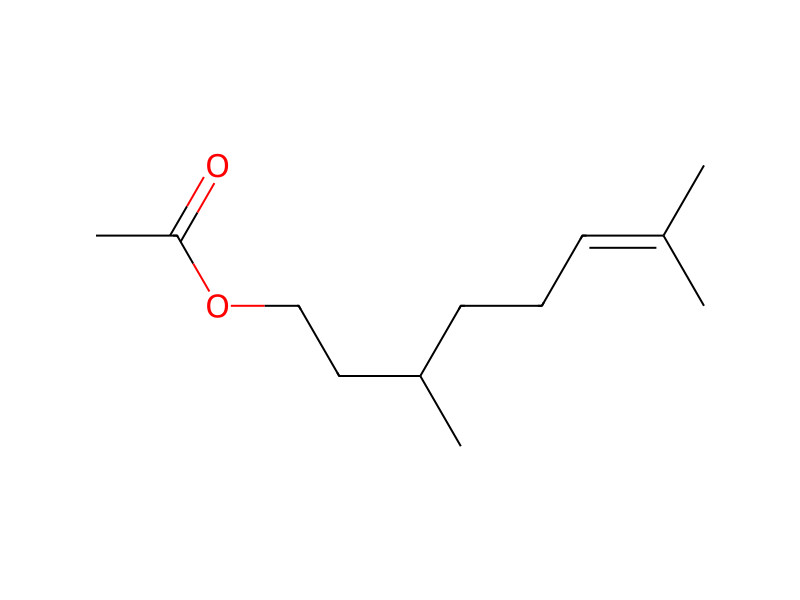
150-84-5CC(=O)OCCC(C)CCC=C(C)CJOZKFWLRHCDGJA-UHFFFAOYSA-NCitronellol acetate is a monoterpenoid that is the acetate ester of citronellol. It has been isolated from Citrus hystrix. It has a role as a plant metabolite. It is a monoterpenoid and an acetate ester. It is functionally related to a citronellol.
150-84-5、67601-05-2、67650-82-2DTXSID5051739Fragrance Ingredient (3,7-Dimethyloct-6-enyl acetate) -> IFRA transparency List
Fragrance Ingredient (Citronellyl acetate) -> IFRA transparency List
soluble in alcohol, most fixed oils; insoluble in glycerol, propylene glycol, water
1 ml in 9 ml 70% alcohol (in ethanol)
229.00 °C. @ 760.00 mm Hg
229 °C
안전 정보는 참고용이며, 공급업체의 물질안전보건자료(SDS), 관련 법규 및 전문가 평가를 대체하지 않습니다.
Warning
H315 (> 99.9%): Causes skin irritation [Warning Skin corrosion/irritation]
P264, P264+P265, P273, P280, P302+P352, P305+P351+P338, P321, P332+P317, P337+P317, P362+P364, P391, and P501 (click each P-code to see the statement)
Aggregated GHS information provided per 2000 reports by companies from 17 notifications to the ECHA C&L Inventory. Each notification may be associated with multiple companies.
Chemical: 6-Octen-1-ol, 3,7-dimethyl-, acetate
Regulation (EC) No 1831/2003 (amended)
6-Octen-1-ol, 3,7-dimethyl-, 1-acetate is listed on the EPA's Chemical Data Reporting (CDR) system. Manufacturers and importers of 6-Octen-1-ol, 3,7-dimethyl-, 1-acetate are required to report information about their production and use of this chemical to the EPA under the Toxic Substances Control Act (TSCA). (40 eCFR Part 711)
REACH registered substance: Citronellyl acetate (EC: 205-775-0)
Citronellyl acetate: Does not have an individual approval but may be used under an appropriate group standard
Citronellyl acetate
Citronellyl acetate; 3,7-Dimethyl-6-octen-1-ol acetate; 3,7-Dimethyl-6-octen-1-yl acetate; 3,7-Dimethyloct-6-en-1-yl acetate; 6-Octen-1-ol, 3,7-dimethyl-, acetate; Acetic acid, citronellyl ester; laevo-Citronellyl acetate; 3,7-Dimethyloct-6-enyl acetate; 6-Octen-1-ol, 3,7-dimethyl-, 1-acetate (3S)-; 6-Octen-1-ol, 3,7-dimethyl-, acetate (S)-; (S)-3,7-Dimethyloct-6-en-1-yl acetate; (-)-3,7-dimethyloct-6-enyl acetate; alpha-Citronellyl acetate; 3,7-Dimethyl-(6-or 7-)octen-1-yl acetate; 3,7-Dimethyl-(6-or 7-)octen-1-yl ethanoate; 3,7-Dimethyloct-7-en-1-yl acetate; 7-Octen-1-ol, 3,7-dimethyl-, acetate; 3,7-Dimethyl-7-octen-1-yl acetate; 3,7-Dimethyl-7-octen-1-yl ethanoate; (S)-3,7-Dimethyloct-7-enyl acetate; Rhodinyl acetate; Rhodinyl ethanoate; l-Citronellyl acetate (commercial name)
IFRA_STD_248.pdf
51
IFRA 51st Amendment - Guidance for the use of IFRA Standards
Restriction: This material should be used only in the limited quantity as stated in the Standard
Fragrance Ingredients
Fragrance Ingredients
Flavouring Agent -> FLAVOURING_AGENT -> JECFA Functional Classes
Flavoring Agents -> JECFA Flavorings Index
Cosmetics -> Masking


CHEMBL1453648CHEBI:70478Liquid
colourless liquid/fruity odour
Citronellyl Acetate occurs in many essential oils either as one of its optical isomers or as the racemate. The odor of racemic citronellyl acetate differs little from that of the optical isomers. Racemic citronellyl acetate is a liquid with a fresh, fruity rose odor. It is often used as a fragrance, for example, for rose, lavender, and geranium notes as well as for eau de cologne with citrus nuances. Since it is relatively stable to alkali, it can be used in soaps and detergents. Citrus flavors acquire specific character through the addition of citronellyl acetate; it is also used to round off other fruit flavors.
Soap, Cleaning Compound, and Toilet Preparation Manufacturing
6-Octen-1-ol, 3,7-dimethyl-, 1-acetate: ACTIVE
0.49 [Products applied to the lips]
0.15 [Products applied to the axillae]
2.0 [Products applied to the face/body using fingertips]
2.7 [Products related to fine fragrances]
0.70 [Products applied to the body using the hands (palms), primarily leave-on (Body lotion)]
0.70 [Products applied to the face using the hands (palms), primarily leave-on (Face moisturizer)]
출처Reported in the oil of citronella, Chamaecyparis lawsoniana Parl, orange juice, lemon juice, lemon and grapefruit peel oil, swangi (Citrus hystrix D.C.), ginger, tarragon, myrtle leaf, nutmeg, Cympogon citralis oil and beer.
용도Citronellyl acetate is used as a reactant, and oxidized by ruthenium tetroxide catalyst in presence of acetonitrile.
By esterification of citronellol with acetic acid or acetic anhydride.
순도시험(1) 비중 : 이 품목의 비중은 0.883~0.893이어야 한다. (2) 굴절률 : 이 품목의 굴절률 은 1.440~1.450이어야 한다. (3) 용상 : 이 품목 1mL를 70% 에탄올 9mL에 녹일 때, 그 액은 징명하여야 한다. (4) 산가 : 이 품목의 산가는 향료시험법 중 산가측정법에 따라 시험할 때, 1 이하이어야 한다.
확인시험이 품목 1mL에 10% 알콜성수산칼륨용액 5mL를 넣어 수욕 중에서 10분간 가열하면 특이한 향기는 없어지고 시트로넬릴향기가 발생한다. 식힌 다음 이에 물 2mL 및 묽은염산 2mL를 넣은 액은 확인시험법 중 초산염 (다)의 반응을 나타낸다.
정량법이 품목 약 1.4g을 정밀히 달아 향료시험법 중 에스테르가 및 에스테르함량측정법에 따라 시험한다.0.5N 알콜성수산화칼륨용액 1mL = 99.15mg C12H22O2
정의ChEBI: A monoterpenoid that is the acetate ester of citronellol. It has been isolated from Citrus hystrix.