홈MCP워크벤치Skills
홈워크벤치알림마이페이지
llms.txt · MCP 가이드개인정보처리방침 · 이용약관 · 지원v1.8.0
  1. 홈
  2. /반응

Water → (1S,5R)-1-Phenyl-3-oxabicyclo[3.1.0]hexan-2-one

HRID 2387725
노트
인쇄 미리보기

반응식

HRID 2387725 반응식
[C:1]1([CH2:7][C:8]#N)[CH:6]=[CH:5][CH:4]=[CH:3][CH:2]=1.C[Si]([N-][Si](C)(C)C)(C)C.[Na+].[CH2:20]1[O:22][C@H:21]1[CH2:23]Cl.[OH2:25]>C1COCC1>[C:1]1([C@:7]23[CH2:8][C@H:23]2[CH2:21][O:22][C:20]3=[O:25])[CH:6]=[CH:5][CH:4]=[CH:3][CH:2]=1
참가 물질반응 조건실험 절차후처리출처 및 근거반응 노트

참가 물질

6

반응물 4

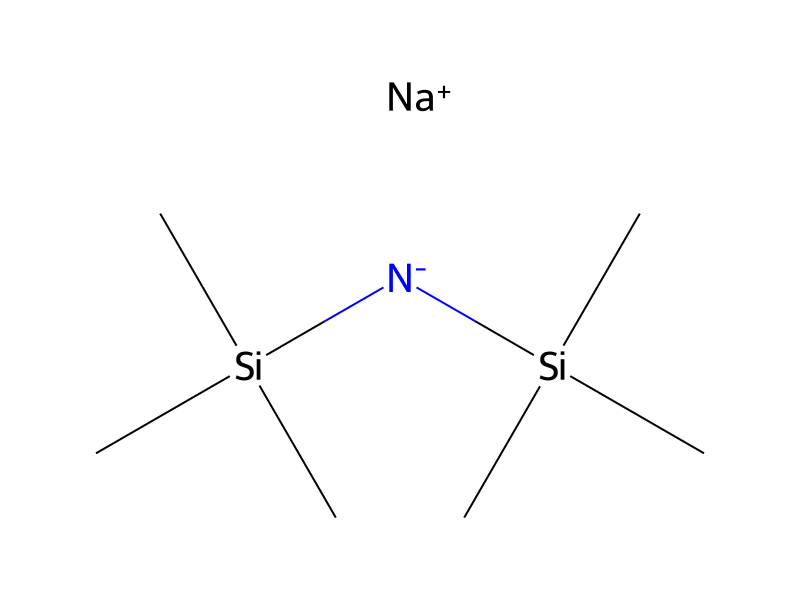
HCID 962WaterHCID 8794PhenylacetonitrileHCID 2724254Sodium bis(trimethylsilyl)amideHCID 2734062(-)-Epichlorohydrin

생성물 1

HCID 10910062(1S,5R)-1-Phenyl-3-oxabicyclo[3.1.0]hexan-2-one

시약·촉매·용매 1

HCID 8028Tetrahydrofuran용매

반응 조건

온도
0 °C

실험 절차

Phenylacetonitrile (20 g) was dissolved in THF (500 ml), and NaHMDS (323 ml, 1.06 M) was then added dropwise to the solution under cooling in an ice-salt bath. The obtained mixture was stirred for 2 hours, and R-(−)-epichlorohydrin (15.8 g) was then added dropwise to the reaction solution (3 hours, 0° C.). The obtained mixture was stirred for 2 hours (wherein the internal temperature was maintained around 0° C.), and it was then stirred at room temperature overnight. Thereafter, the reaction solution was cooled on ice, and a small amount of water was added dropwise thereto. The reaction solution was concentrated under reduced pressure, and thereafter, ethanol (200 ml) and a 1 N potassium hydroxide aqueous solution (200 ml) were added to the residue. The obtained mixture was heated to reflux for 8 hours. Thereafter, the temperature of the reaction solution was returned to room temperature, and concentrated hydrochloric acid was then added to the solution, so that the pH value was adjusted to pH<2. Thereafter, the mixture was stirred at 0° C. for 2 hours. Thereafter, the reaction solution was stirred at room temperature for 1 hour. Subsequently, the reaction solution was concentrated under reduced pressure, and ethyl acetate and water were added to the concentrate to carry out liquid separation. The organic layer was successively washed with a saturated sodium bicarbonate aqueous solution and a saturated sodium chloride aqueous solution. The resultant organic layer was dried over magnesium sulfate, and the solvent was then concentrated under reduced pressure. The residue was purified by silica gel column chromatography (n-heptane:ethyl acetate), so as to obtain the title compound (24.7 g).


후처리

  1. temperatureunder cooling in an ice-salt bath
  2. stirringThe obtained mixture was stirred for 2 hours (wherein the internal temperature
  3. stirringwas then stirred at room temperature overnight
  4. temperatureThereafter, the reaction solution was cooled on ice
  5. concentrationThe reaction solution was concentrated under reduced pressure
  6. additionethanol (200 ml) and a 1 N potassium hydroxide aqueous solution (200 ml) were added to the residue
  7. temperatureThe obtained mixture was heated
  8. temperatureto reflux for 8 hours
  9. customwas returned to room temperature
  10. additionconcentrated hydrochloric acid was then added to the solution, so that the pH value
  11. stirringThereafter, the mixture was stirred at 0° C. for 2 hours
  12. stirringThereafter, the reaction solution was stirred at room temperature for 1 hour
  13. concentrationSubsequently, the reaction solution was concentrated under reduced pressure, and ethyl acetate and water
  14. additionwere added to the
  15. concentrationconcentrate
  16. customliquid separation
  17. washThe organic layer was successively washed with a saturated sodium bicarbonate aqueous solution
  18. dry with materialThe resultant organic layer was dried over magnesium sulfate
  19. concentrationthe solvent was then concentrated under reduced pressure
  20. customThe residue was purified by silica gel column chromatography (n-heptane:ethyl acetate)

출처 및 근거

ORD 기록
ord-ad50d72f0b7c4b42b52e42c3b4719fe5
출처 데이터셋
uspto-grants-2012_09
DOI
10.6084/m9.figshare.5104873.v1
특허 번호
US08268848B2

반응 노트

불러오는 중…

이 페이지에서참가 물질반응 조건실험 절차후처리출처 및 근거반응 노트