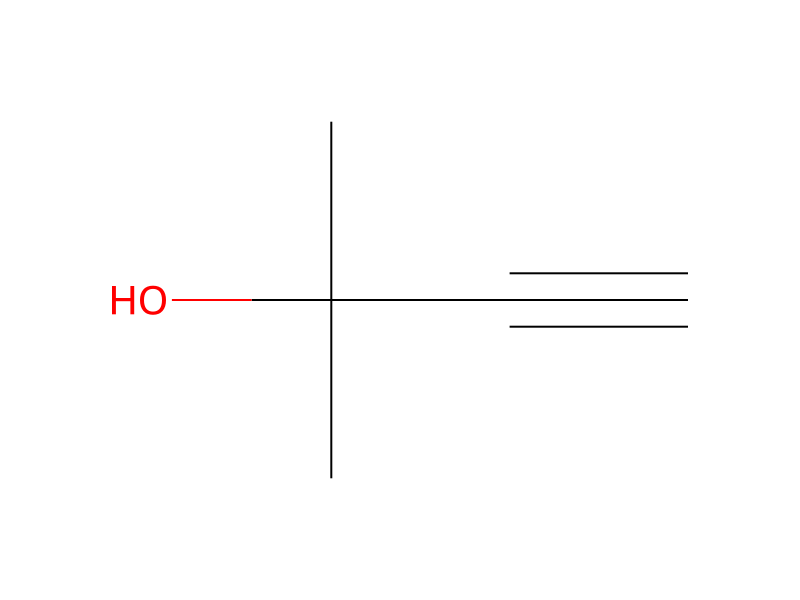
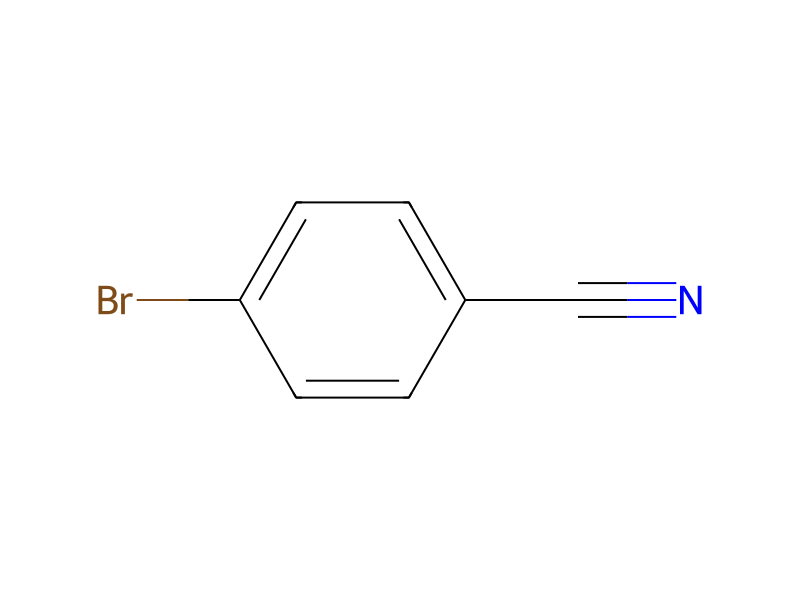
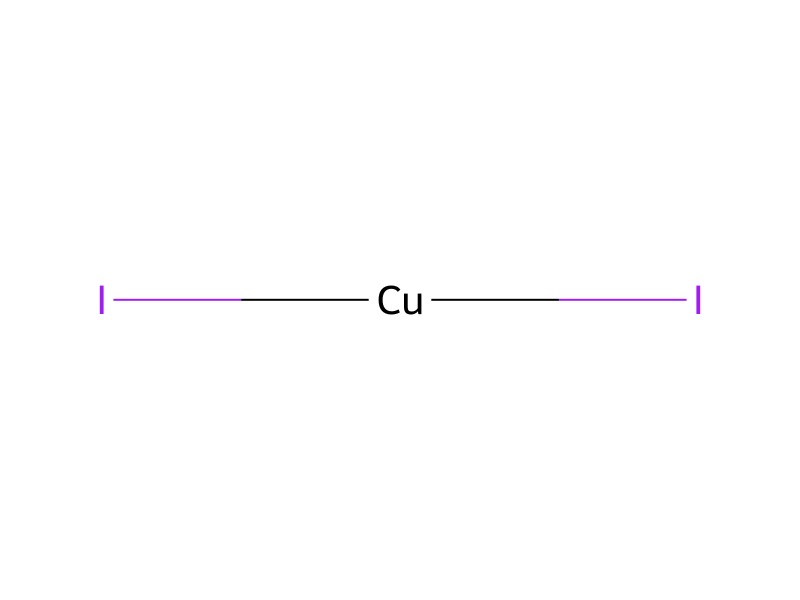
Br[C:2]1[CH:9]=[CH:8][C:5]([C:6]#[N:7])=[CH:4][CH:3]=1.[CH3:10][C:11]([OH:15])([CH3:14])[C:12]#[CH:13].O1CCCC1>Cl[Pd](Cl)([P](C1C=CC=CC=1)(C1C=CC=CC=1)C1C=CC=CC=1)[P](C1C=CC=CC=1)(C1C=CC=CC=1)C1C=CC=CC=1.[Cu](I)I.C1(P(C2C=CC=CC=2)C2C=CC=CC=2)C=CC=CC=1.C(N(CC)CC)C>[C:6]([C:5]1[CH:8]=[CH:9][C:2]([C:13]#[C:12][C:11]([OH:15])([CH3:14])[CH3:10])=[CH:3][CH:4]=1)#[N:7]50 g (274.7 mmol) 4-bromobenzonitrile, 46.2 g (550 mmol) 3-methyl-1-butyne-3-ol, 0.97 g (1.38 mmol) bis(triphenylphosphine) dichloropalladium, 0.26 g (1.38 mmol) copper iodide and 2 g (7.6 mmol) triphenyl phosphine were added in a nitrogen stream, and 100 ml tetrahydrofuran (THF) and 20 ml triethylamine were added thereto, and the mixture was reacted at 80 ° C. for 15 hours. The reaction solution was concentrated and partitioned by adding 300 ml ethyl acetate and 300 ml water, and the organic layer was washed twice with 100 ml water and dried over magnesium sulfate anhydride. The solvent was distilled away, and about 250 ml heptane was added to the residual paste and stirred for a while, and the precipitated crystals were filtered to give 53.6 g crystals.