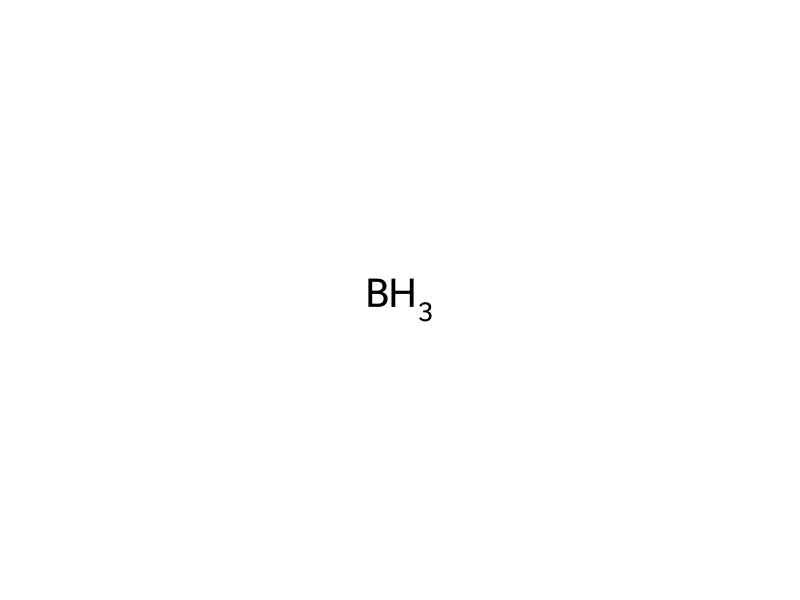
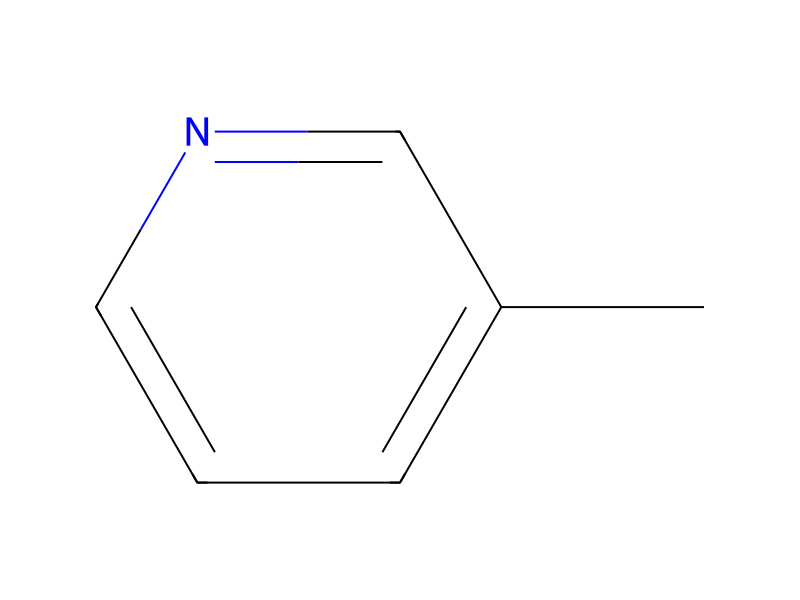
Pyridine forms an amine borane that is not moisture sensitive and very useful for reductive aminations and reductions in protic media. Pyridine borane is commercially available and often used in acetic acid to increase the reactivity of the borane. Unfortunately, it is thermally unstable and must be kept at temperatures less than 54° C. to avoid decomposition via hydroboration/polymerization processes. Its shelf-life at ambient temperature is only 6 months, Borane complexes of pyridine, 2-n-propylpyridine, 3-methylpyridine, 3-ethylpyridine and 4-ethylpyridine are liquids which violently decompose upon distillation (Mooney E. F. et al., J. Inorg. Nucl. Chem 1968, 30, p. 1439). 2-Picoline borane (mp. 50° C.), 2-ethylpyridine borane (mp, 50-51° C.), 2,6-lutidine borane (mp. 106-107° C.) and 2,4,6-collidine borane (mp. 99-100° C.) have been isolated as solids.