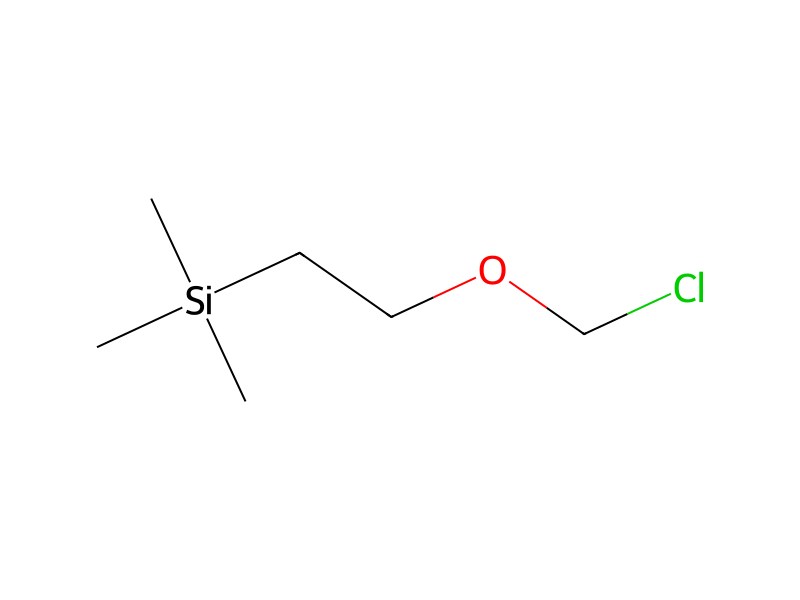
To a mixture of 6-chloro-1H-pyrazolo[4,3-c]pyridine (12.82 mmol; 1968 mg) in Dichloromethane (50 mL) was added N,N-Diisopropylethylamine (38.45 mmol, 6.7 mL). 2-(Trimethylsilyl)ethoxymethyl chloride (19.22 mmol; 3205 mg; 3.40 mL) was then added dropwise at room temperature. The resulting mixture was stirred overnight. The mixture was partitioned between DCM and water. The organic layer was concentrated and the residue was purified on silica eluted with 0 to 6% MeOH in DCM to afford 2-[(6-chloropyrazolo[4,3-c]pyridin-1-yl)methoxy]ethyl-trimethyl-silane (590 mg, 13%).