반응식

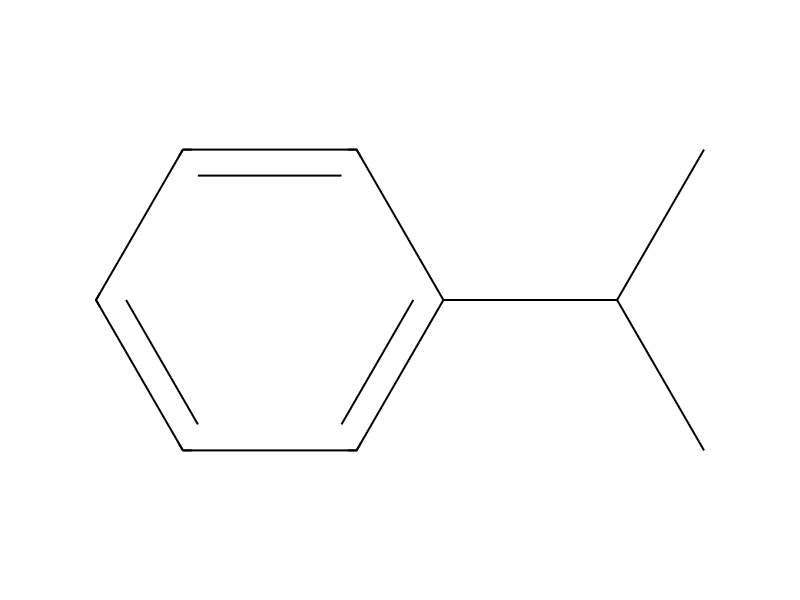
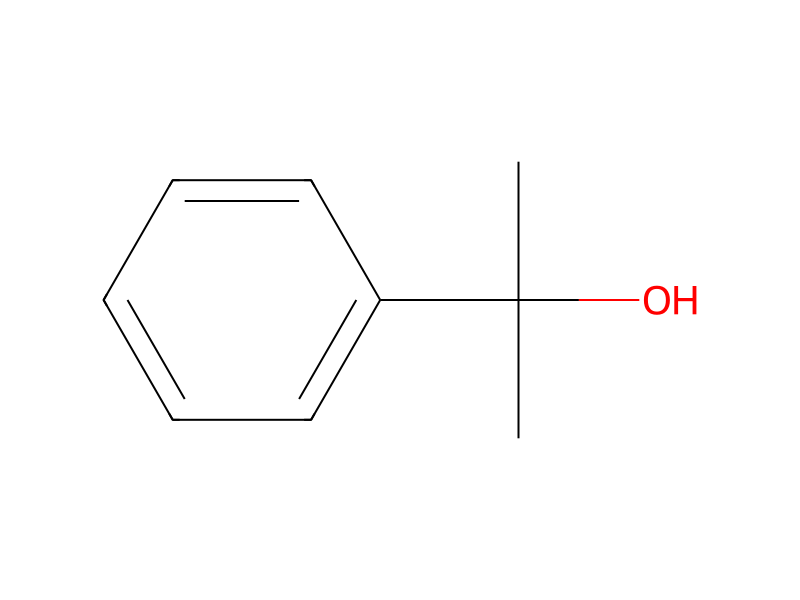
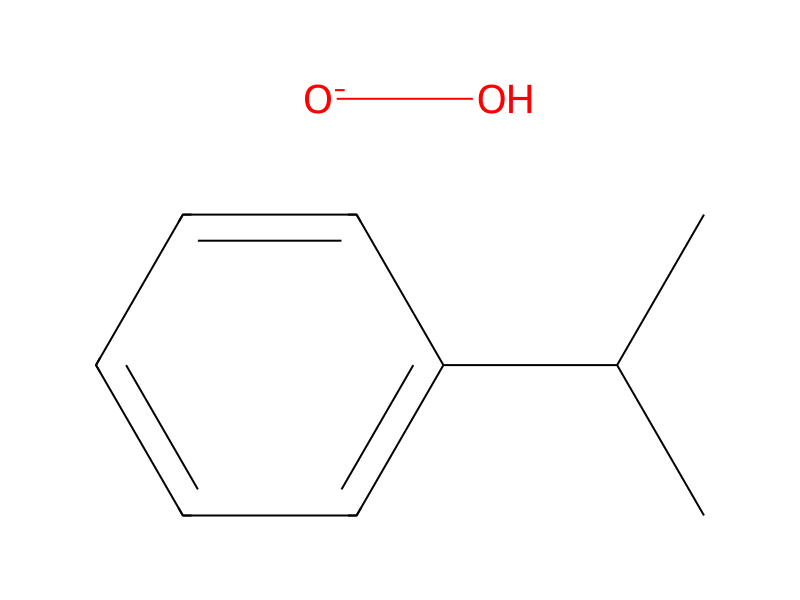
[C:1]1([CH:7]([CH3:9])[CH3:8])[CH:6]=[CH:5][CH:4]=[CH:3][CH:2]=1.C(C1C=CC(C(C)C)=CC=1)(C)C.[CH3:22][C:23](C)([C:25]1[CH:30]=[CH:29][CH:28]=[CH:27][CH:26]=1)[OH:24].[OH2:32]>>[C:23]([C:25]1[CH:30]=[CH:29][CH:28]=[CH:27][CH:26]=1)(=[O:24])[CH3:22].[O-:32][OH:24].[C:1]1([CH:7]([CH3:9])[CH3:8])[CH:6]=[CH:5][CH:4]=[CH:3][CH:2]=1참가 물질
6



실험 절차
Using 79.9 g (0.665 mole) of cumene in lieu of p-diisopropylbenzene, oxidation was carried out in the same apparatus and under the same conditions as those employed in Example 1. The reaction product obtained subsequent to its water washing and drying was an oily matter whose weight was 79.6 g. According to results of a high-performance liquid chromatographic analysis, the oily matter was found to contain 3.1 g (0.026 mole; conversion: 96.1%) of cumene and 75.3 g (0.553 mole; yield: 83.2 mole %) of dimethylphenylcarbinol. Acetophenone or cumene hydroperoxide was not formed practically.
후처리
- customdrying
- customto results of a high-performance liquid chromatographic analysis
출처 및 근거
- ORD 기록
- ord-2fb7bffb1d064be3b513c787f38a15b1
- 출처 데이터셋
- uspto-grants-1989_04
- 특허 번호
- US04825007
연결된 노트
불러오는 중…