3-Hydroxybenzaldehyde → 3-(1-Methyl-cyclohexylmethoxy)-benzaldehyde
Reaction equation

[CH3:1][C:2]1([CH2:8][O:9]S(C(F)(F)F)(=O)=O)[CH2:7][CH2:6][CH2:5][CH2:4][CH2:3]1.O[C:18]1[CH:19]=[C:20]([CH:23]=[CH:24][CH:25]=1)[CH:21]=[O:22].C([O-])([O-])=O.[K+].[K+].O>CN(C=O)C>[CH3:1][C:2]1([CH2:8][O:9][C:18]2[CH:19]=[C:20]([CH:23]=[CH:24][CH:25]=2)[CH:21]=[O:22])[CH2:7][CH2:6][CH2:5][CH2:4][CH2:3]1Participants
6
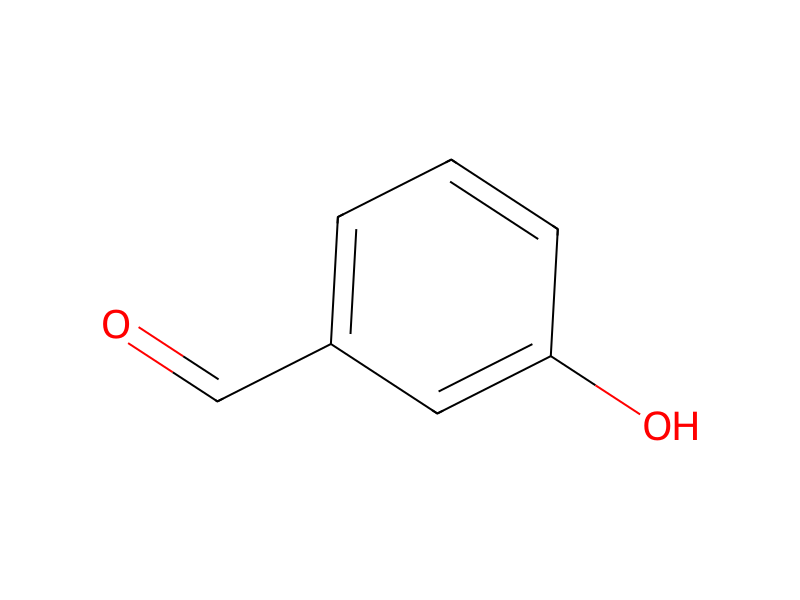





Conditions
- Temperature
- 80 °C
Procedure
A mixture of compound iii (0.5 mmol), 3-hydroxy-benzaldehyde (iv, 0.6 mmol) and K2CO3 (0.7 mmol) were dissolved in DMF (3 mL). The solution was heated to 80° C. for 4 hr. The solution was poured into water, extracted with ethyl acetate (10 mL) three times, and concentrated. The residue was purified by chromatography and resulted in 0.22 mmol of 3-(1-methyl-cyclohexylmethoxy)-benzaldehyde (v) with a 44% yield.
Workup
- extractionextracted with ethyl acetate (10 mL) three times
- concentrationconcentrated
- customThe residue was purified by chromatography
Sources & evidence
- ORD record
- ord-edbca64020464f188b204f229474d3e7
- Source dataset
- uspto-grants-2011_07
- Patent number
- US07973062B2
Reaction notes
Loading…