Glycolic Acid → Poliglecaprone
Reaction equation

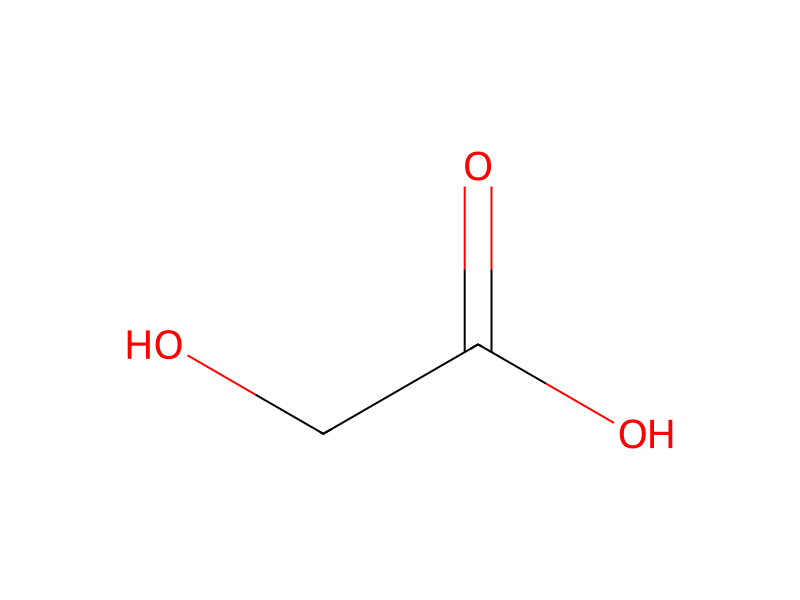
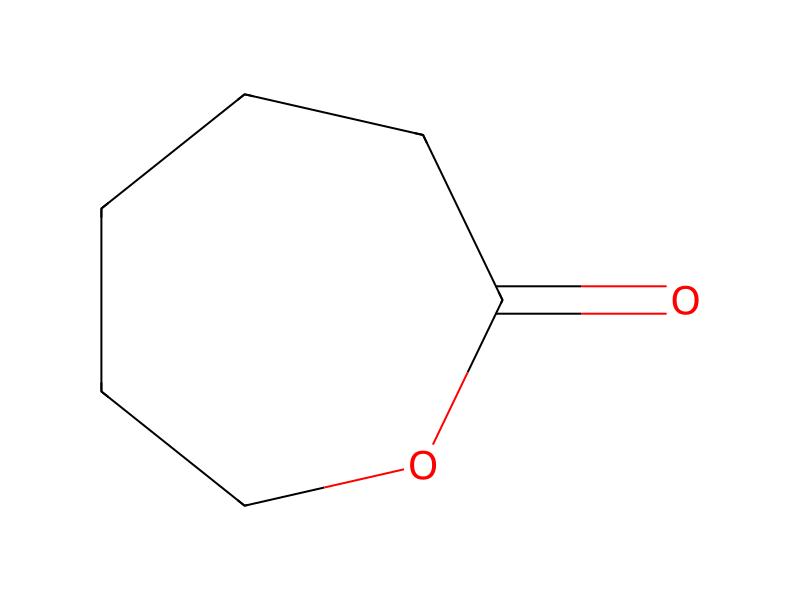
[C:1]1(=[O:8])[O:7][CH2:6][CH2:5][CH2:4][CH2:3][CH2:2]1.[CH2:9]1[O:16][C:14](=[O:15])[CH2:13][O:12][C:10]1=[O:11].C(O)(=O)CO.CCCCC(C([O-])=O)CC.CCCCC(C([O-])=O)CC.[Sn+2]>>[C:1]1(=[O:8])[O:7][CH2:6][CH2:5][CH2:4][CH2:3][CH2:2]1.[CH2:9]1[O:16][C:14](=[O:15])[CH2:13][O:12][C:10]1=[O:11]Participants



Conditions
- Temperature
- 50 °C
Procedure
ε-Caprolactone (456.6 g., 4 mole), glycolide (24.4 g, 0.21 mole), glycolic acid (30.4 g, 0.4 mole), and stannous octoate (4 ml. of 0.2 M solution in toluene, 0.8 mmole) were transferred to a predried, stirred reactor. The polymerization charge was treated as follows: (1) after purging with dry argon, the charge was heated to 50° C. under reduced pressure (about 0.1 mm Hg) for 30 min.; (b) the reaction pressure was returned to atmospheric and the polymerization charge was heated to 150° C. while stirring, and kept at this temperature for 14 hours; © the temperature of the polymer was lowered to 120° C. and vacuum was applied for about 35 min. before cooling to 80° C. and bringing the pressure to one atmosphere with argon; and (d) the polymer was transferred to a predried jar for storage at room temperature and reduced pressure. The final composition was determined by NMR and shown to be essentially the same as expected.
Workup
- additionThe polymerization charge
- additionwas treated
- custom(1) after purging with dry argon
- custom(b) the reaction pressure
- additioncharge
- temperaturewas heated to 150° C.
- stirringwhile stirring
- customwas lowered to 120° C.
- waitvacuum was applied for about 35 min.
- temperaturebefore cooling to 80° C.
- customwas transferred to a predried jar for storage at room temperature
Sources & evidence
- ORD record
- ord-c32c693aa8cf42129beaa23066736049
- Source dataset
- uspto-grants-2002_11
- Patent number
- US06485749B1
Reaction notes
Loading…