tert-Butyl piperazine-1-carboxylate → tert-Butyl 4-(2-(1-(5-propylpyrimidin-2-yl)piperidin-4-yl)-2,3-dihydrobenzofuran-5-yl)piperazine-1-carboxylate
Reaction equation

Br[C:2]1[CH:3]=[CH:4][C:5]2[O:9][CH:8]([CH:10]3[CH2:15][CH2:14][N:13]([C:16]4[N:21]=[CH:20][C:19]([CH2:22][CH2:23][CH3:24])=[CH:18][N:17]=4)[CH2:12][CH2:11]3)[CH2:7][C:6]=2[CH:25]=1.[N:26]1([C:32]([O:34][C:35]([CH3:38])([CH3:37])[CH3:36])=[O:33])[CH2:31][CH2:30][NH:29][CH2:28][CH2:27]1.C(O[Na])(C)(C)C>C1(C)C=CC=CC=1.O.C1C=CC(/C=C/C(/C=C/C2C=CC=CC=2)=O)=CC=1.C1C=CC(/C=C/C(/C=C/C2C=CC=CC=2)=O)=CC=1.C1C=CC(/C=C/C(/C=C/C2C=CC=CC=2)=O)=CC=1.[Pd].[Pd].C1C=CC(P(C2C(C3C(P(C4C=CC=CC=4)C4C=CC=CC=4)=CC=C4C=3C=CC=C4)=C3C(C=CC=C3)=CC=2)C2C=CC=CC=2)=CC=1>[CH2:22]([C:19]1[CH:18]=[N:17][C:16]([N:13]2[CH2:14][CH2:15][CH:10]([CH:8]3[CH2:7][C:6]4[CH:25]=[C:2]([N:29]5[CH2:28][CH2:27][N:26]([C:32]([O:34][C:35]([CH3:38])([CH3:37])[CH3:36])=[O:33])[CH2:31][CH2:30]5)[CH:3]=[CH:4][C:5]=4[O:9]3)[CH2:11][CH2:12]2)=[N:21][CH:20]=1)[CH2:23][CH3:24]Participants
Reactant 3



Product 1

Reagents, catalysts & solvents 4



Conditions
- Temperature
- 80 °C
Procedure
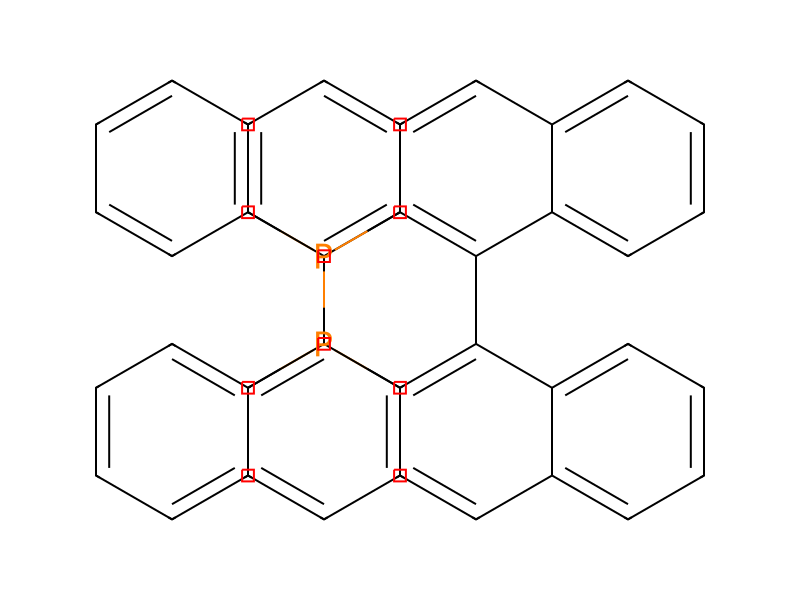
To a degassed solution of 2-(4-(5-bromo-2,3-dihydrobenzofuran-2-yl)piperidin-1-yl)-5-propylpyrimidine (280 mg, 0.522 mmol), tert-butyl piperazine-1-carboxylate (389 mg, 2.088 mmol), t-BuONa (251 mg, 2.61 mmol), and BINAP (6.5 mg, 10.44 μmol) in toluene (5 mL) was added Pd2(dba)3 (28.7 mg, 0.031 mmol). Upon completion of addition, the reaction mixture was stirred in a sealed vial at 80° C. overnight. At the conclusion of this period, the reaction mixture was allowed to cool to room temperature. Once at the prescribed temperature, the reaction mixture was diluted with water (3 mL) and extracted with EtOAc (3×5 mL). The combined organic layers were washed with aqueous NaHCO3 (saturated, 5 mL) and then brine (5 mL). The organic layer was separated, dried (Na2SO4), filtered, and concentrated to yield a residue. The residue was purified by column chromatography (silica gel, CH2Cl2/EtOAc gradient 0 to 50% EtOAc) to afford Compound 9C as a light yellow solid (201 mg, 76% yield). 1H NMR (500 MHz, CDCl3) δ ppm 8.15 (s, 2 H), 6.83 (d, J=1.9 Hz, 1 H), 6.70-6.75 (m, 1 H), 6.66-6.69 (m, 1 H), 4.80 (dd, J=13.2, 2.5 Hz, 2 H), 4.48-4.56 (m, 1 H), 3.53-3.61 (m, 4 H), 3.18 (dd, J=15.5, 8.9 Hz, 1 H), 2.94-3.02 (m, 4 H), 2.80-2.90 (m, J=12.9, 12.9, 7.6, 2.8 Hz, 2 H), 2.40 (t, J=7.4 Hz, 2 H), 2.00-2.07 (m, 1 H), 1.91 (dddd, J=11.5, 8.0, 7.7, 3.6 Hz, 1 H), 1.74 (br. s., 1 H), 1.53-1.62 (m, 2 H), 1.47-1.51 (m, 9 H), 1.32-1.43 (m, 2 H), 0.94 (t, J=7.3 Hz, 3 H). LC/MS (m/z)=508 (M+H)+.
Workup
- additionUpon completion of addition
- temperatureto cool to room temperature
- extractionextracted with EtOAc (3×5 mL)
- washThe combined organic layers were washed with aqueous NaHCO3 (saturated, 5 mL)
- customThe organic layer was separated
- dry with materialdried (Na2SO4)
- filtrationfiltered
- concentrationconcentrated
- customto yield a residue
- customThe residue was purified by column chromatography (silica gel, CH2Cl2/EtOAc gradient 0 to 50% EtOAc)
Sources & evidence
- ORD record
- ord-a2c1a73f7738490a8ff10b8f5659a83a
- Source dataset
- uspto-grants-2014_05
- Patent number
- US08729084B2
Reaction notes
Loading…