Triisopropyl borate → 1-cyclopentyl-5-fluoro-3-(methoxycarbonyl)-6-methyl-1H-indol-2-ylboronic acid
Reaction equation

[CH:1]1([N:6]2[C:14]3[C:9](=[CH:10][C:11]([F:16])=[C:12]([CH3:15])[CH:13]=3)[C:8]([C:17]([O:19][CH3:20])=[O:18])=[CH:7]2)[CH2:5][CH2:4][CH2:3][CH2:2]1.C([O:24][B:25](OC(C)C)[O:26]C(C)C)(C)C.[Li+].CC([N-]C(C)C)C>C1COCC1>[CH:1]1([N:6]2[C:14]3[C:9](=[CH:10][C:11]([F:16])=[C:12]([CH3:15])[CH:13]=3)[C:8]([C:17]([O:19][CH3:20])=[O:18])=[C:7]2[B:25]([OH:26])[OH:24])[CH2:2][CH2:3][CH2:4][CH2:5]1Participants
5
Reactant 3
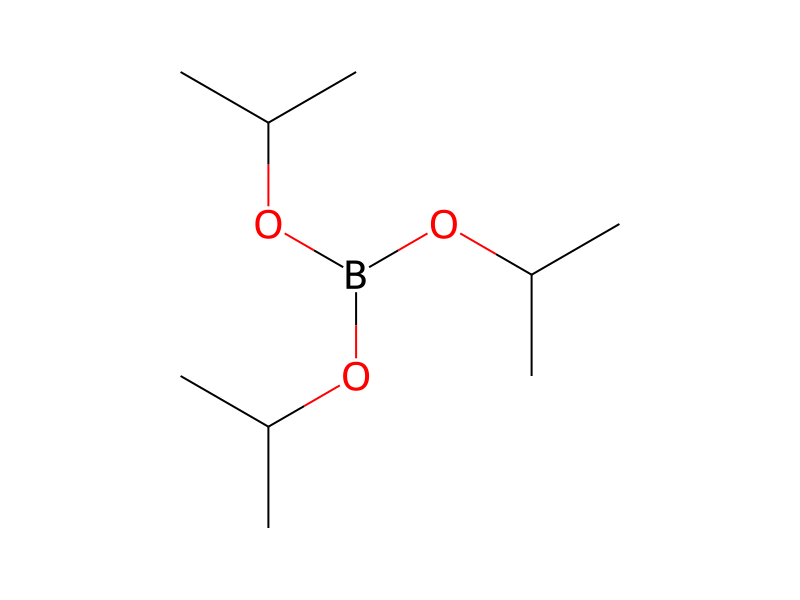


Product 1

Reagents, catalysts & solvents 1

Procedure
Into a solution of methyl 1-cyclopentyl-5-fluoro-6-methyl-1H-indole-3-carboxylate (2.64 g, 9.6 mmol) and triisopropylborate (4.0 mL, 17.28 mmol) in THF (40 mL) at −78° C. was added LDA (1.5 M, 8.3 mL, 12.48 mmol) dropwise. The mixture was stirred for 45 min, and then treated with ice water and extracted with dichloromethane. The organic layer was dried over sodium sulfate and evaporated to give 1-cyclopentyl-5-fluoro-3-(methoxycarbonyl)-6-methyl-1H-indol-2-ylboronic acid as a semi-solid (3.1 g, ˜50% pure), which was used in next step without further purification.
Workup
- extractionextracted with dichloromethane
- dry with materialThe organic layer was dried over sodium sulfate
- customevaporated
Sources & evidence
- ORD record
- ord-1a285fa56851494c99890dcea37afbda
- Source dataset
- uspto-grants-2014_05
- Patent number
- US08735414B2
Reaction notes
Loading…