Hydrochloric Acid → 2-Chloro-5-(3,4-dimethoxybenzoyl)pyridine
Reaction equation

[Mg].Br[C:3]1[CH:4]=[C:5]([O:11][CH3:12])[C:6]([O:9][CH3:10])=[CH:7][CH:8]=1.COC1C=C([Mg]Br)C=CC=1OC.[Cl:25][C:26]1[CH:34]=[CH:33][C:29]([C:30](Cl)=[O:31])=[CH:28][N:27]=1.Cl>O1CCCC1>[Cl:25][C:26]1[CH:34]=[CH:33][C:29]([C:30](=[O:31])[C:3]2[CH:8]=[CH:7][C:6]([O:9][CH3:10])=[C:5]([O:11][CH3:12])[CH:4]=2)=[CH:28][N:27]=1Participants
Reactant 5

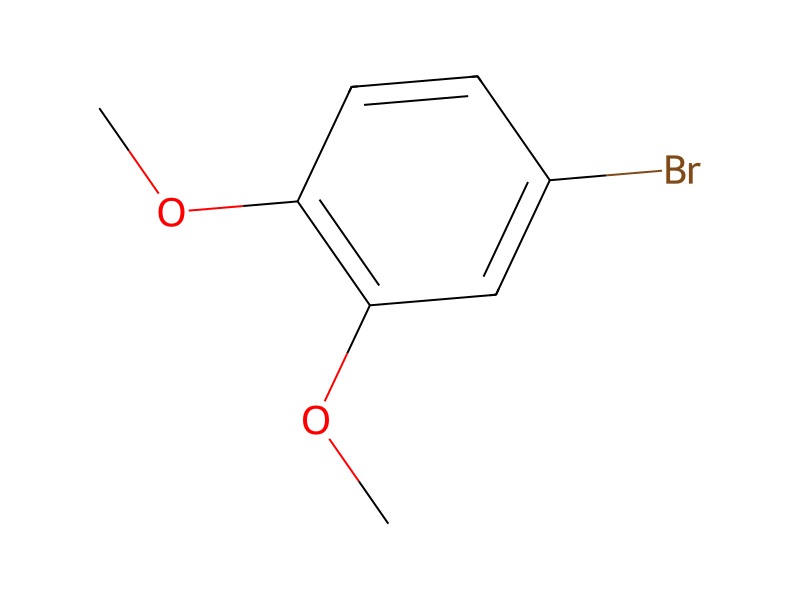



Product 1

Reagents, catalysts & solvents 1

Procedure
To 200 ml of tetrahydrofuran were added metallic magnesium (5.35 g) and 4-bromoveratrole (47.8 g), and the mixture was heated for 3 hours under reflux to prepare a 3,4-dimethoxyphenyl magnesium bromide solution. This solution was added, while stirring, dropwise at temperatures ranging from -50° C. to -60° C. to a solution of 6-chloronicotinic acid chloride (21.2 g) in tetrahydrofuran (200 ml) (the time required for the addition: one hour). The resultant mixture was stirred at the same temperature for 2 hours and 40 minutes, and there was then added 2N hydrochloric acid (100 ml). Precipitating crystals were collected by filtration, washed with water and dried to afford 2-chloro-5-(3,4-dimethoxybenzoyl)pyridine (22.5 g), m.p. 158° to 159° C.
Workup
- temperaturethe mixture was heated for 3 hours
- temperatureunder reflux
- additionThis solution was added
- additionrequired for the addition
- customone hour
- customPrecipitating crystals
- filtrationwere collected by filtration
- washwashed with water
- customdried
Sources & evidence
- ORD record
- ord-08caf5d4817b4389807aea87041433cf
- Source dataset
- uspto-grants-1990_09
- Patent number
- US04954497
Reaction notes
Loading…