2,2'-Bipyridine → 4-Bromo-1-cyclopropyl-1H-pyrazole
Reaction equation

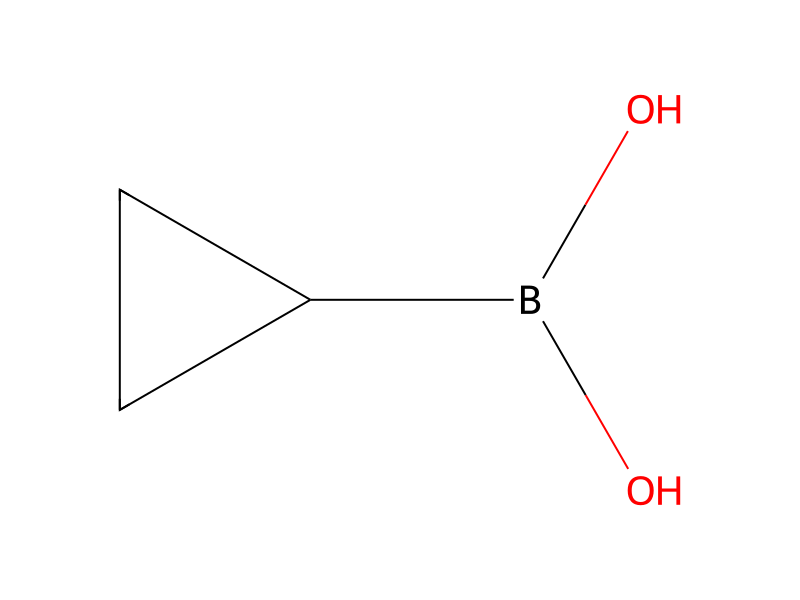
[Br:1][C:2]1[CH:3]=[N:4][NH:5][CH:6]=1.[CH:7]1(B(O)O)[CH2:9][CH2:8]1.N1C=CC=CC=1C1C=CC=CN=1.C(=O)([O-])[O-].[Na+].[Na+].[NH4+].[Cl-]>ClCCCl.C([O-])(=O)C.[Cu+2].C([O-])(=O)C>[Br:1][C:2]1[CH:3]=[N:4][N:5]([CH:7]2[CH2:9][CH2:8]2)[CH:6]=1Participants
Reactant 5




Product 1

Reagents, catalysts & solvents 2


Procedure
A mixture of 4-bromo-1H-pyrazole (0.50 g), cyclopropylboronic acid (0.65 g), copper(II) acetate (0.65 g), 2,2′-bipyridine (0.56 g), and sodium carbonate (0.80 g) in 1,2-dichloroethane (15 mL) was stirred at reflux temperature for 4 h. Then another portion of cyclopropylboronic acid (0.65 g) and sodium carbonate (0.80 g) were added and the mixture was further stirred at reflux temperature overnight. After cooling to room temperature, aqueous NH4Cl solution was added and the resulting mixture was extracted with dichloromethane. The combined extracts were dried (Na2SO4) and the solvent was evaporated. The residue was purified by chromatography on silica gel (cyclohexane/ethyl acetate 95:5->80:20) to afford the title compound as a colorless oil. Yield: 0.32 g (48% of theory); Mass spectrum (ESI+): m/z=187/189 (Br) [M+H]+.
Workup
- temperatureat reflux temperature for 4 h
- stirringthe mixture was further stirred
- temperatureat reflux temperature overnight
- extractionthe resulting mixture was extracted with dichloromethane
- dry with materialThe combined extracts were dried (Na2SO4)
- customthe solvent was evaporated
- customThe residue was purified by chromatography on silica gel (cyclohexane/ethyl acetate 95:5->80:20)
Sources & evidence
- ORD record
- ord-52f26403ea4b45e8a30e0bb15cd8bb22
- Source dataset
- uspto-grants-2013_10
- Patent number
- US08569292B2
Reaction notes
Loading…