Trifluoroacetic anhydride → HCID 118598619, compound
Reaction equation

[Br:1][C:2]1[CH:3]=[C:4]([Cl:13])[C:5]([C:8]([O:10][CH2:11][CH3:12])=[O:9])=[N:6][CH:7]=1.FC(F)(F)C(OC(=O)C(F)(F)F)=[O:17].OO.NC(N)=O.OP([O-])([O-])=O.[K+].[K+].S(=O)(O)[O-].[Na+]>ClCCl>[Br:1][C:2]1[CH:3]=[C:4]([Cl:13])[C:5]([C:8]([O:10][CH2:11][CH3:12])=[O:9])=[N+:6]([O-:17])[CH:7]=1Participants
Reactant 5




Product 1

Reagents, catalysts & solvents 1

Procedure
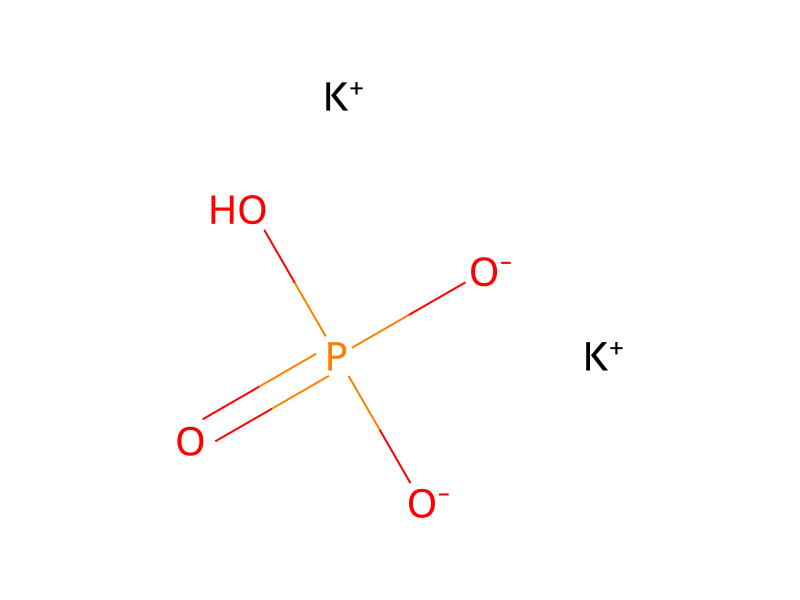
To a stirred solution of ethyl 5-bromo-3-chloro-pyridine-2-carboxylate (2, 151.0 g, 570.89 mmol) in dichloromethane (1.73 L) was added trifluoroacetic anhydride (30.0 mL, 1.14 mol) and urea hydrogen peroxide (112.69 g, 1.20 mol) at 0° C. The reaction was stirred overnight at room temperature. After completion of the reaction, the reaction mixture was neutralized with a potassium phosphate dibasic solution. A sodium bisulfite solution was added followed by extraction with dichloromethane (2×100 mL). The organic layers were separated, combined, dried with magnesium sulfate, filtered and concentrated to dryness under vacuum to afford ethyl 5-bromo-3-chloro-1-oxido-pyridin-1-ium-2-carboxylate 3 as an off white solid. Yield: 150.5 g, 94%; MS (ESI) m/z 281.8 [M+1]+; 1H NMR (400 MHz, DMSO-d6) δ 8.26 (d, J=1.2 Hz, 1H), 7.48 (d, J=1.2 Hz, 1H), 4.50 (q, J=7.12 Hz, 2H), 1.42 (t, J=12.12 Hz, 3H).
Workup
- customAfter completion of the reaction
- extractionfollowed by extraction with dichloromethane (2×100 mL)
- customThe organic layers were separated
- dry with materialdried with magnesium sulfate
- filtrationfiltered
- concentrationconcentrated to dryness under vacuum
Sources & evidence
- ORD record
- ord-4501c795392f4bafa95174d4119518d7
- Source dataset
- uspto-grants-2016_07
- Patent number
- US09382248B2
Reaction notes
Loading…