Hydrochloric Acid → HCID 118272349, compound
Reaction equation

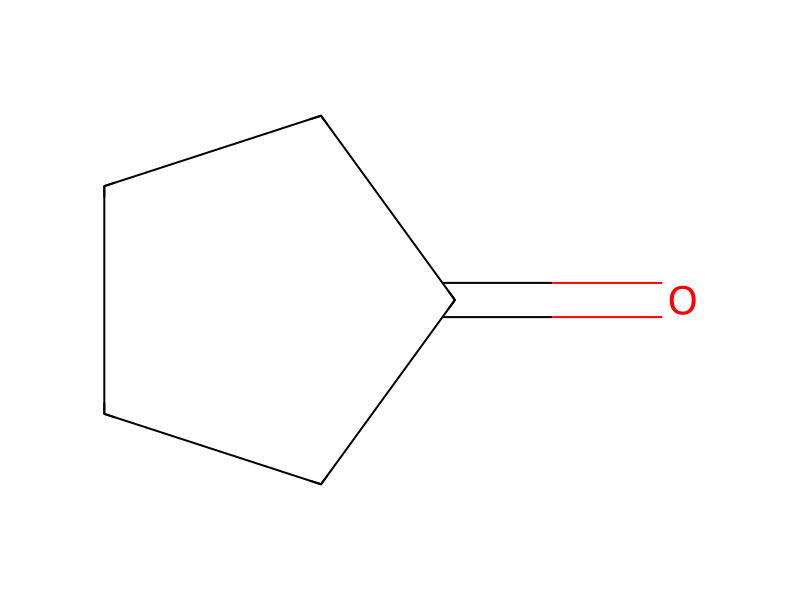
Br[C:2]1[CH:7]=[CH:6][C:5]([CH:8]2[O:12][CH2:11][CH2:10][O:9]2)=[CH:4][CH:3]=1.[Mg].II.[C:16]1(=[O:21])[CH2:20][CH2:19][CH2:18][CH2:17]1.Cl>C1COCC1>[O:9]1[CH2:10][CH2:11][O:12][CH:8]1[C:5]1[CH:6]=[CH:7][C:2]([C:16]2([OH:21])[CH2:20][CH2:19][CH2:18][CH2:17]2)=[CH:3][CH:4]=1Participants
Reactant 5




Product 1

Reagents, catalysts & solvents 1

Conditions
- Temperature
- 55 °C
Procedure
A solution of 2-(4-bromophenyl)-[1,3]dioxolane (1.15 g, 5.00 mmol) in THF (5.0 ml) is added dropwise at 55° C. to magnesium turnings (146 mg, 6.0 mmol) and a crystal of iodine in THF (5 ml). The mixture is stirred for 1 h at 55° C. Then a solution of cyclopentanone (465 μl, 5.25 mmol) in THF (5 ml) is added dropwise and the mixture is stirred for another hour at 55° C. The reaction mixture is diluted with THF, acidified with 1 N HCl (4 ml) and washed three times with brine. The organic phase is dried over sodium sulfate, filtered and evaporated to dryness. The residue is chromatographed on a silica gel column with cyclohexane/ethyl acetate as eluent to afford 1-(4-[1,3]dioxolan-2-yl-phenyl)-cyclopentanol as yellow oil; HPLC/MS 1.71 min (A), [M+H] 235.
Workup
- stirringthe mixture is stirred for another hour at 55° C
- washwashed three times with brine
- dry with materialThe organic phase is dried over sodium sulfate
- filtrationfiltered
- customevaporated to dryness
- customThe residue is chromatographed on a silica gel column with cyclohexane/ethyl acetate as eluent
Sources & evidence
- ORD record
- ord-731d278672984ba59e71cd623d2e280c
- Source dataset
- uspto-grants-2016_07
- Patent number
- US09388142B2
Reaction notes
Loading…