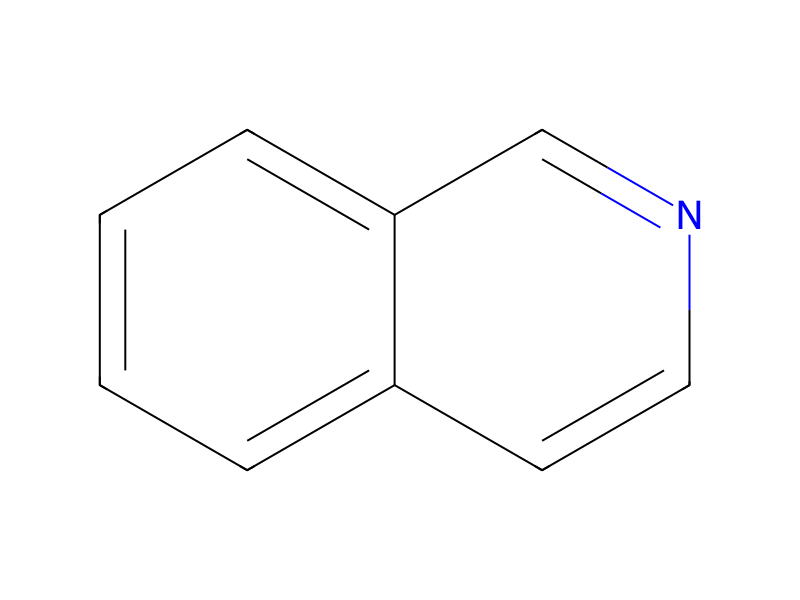
Isoquinoline → 5-Nitroisoquinoline
Reaction equation

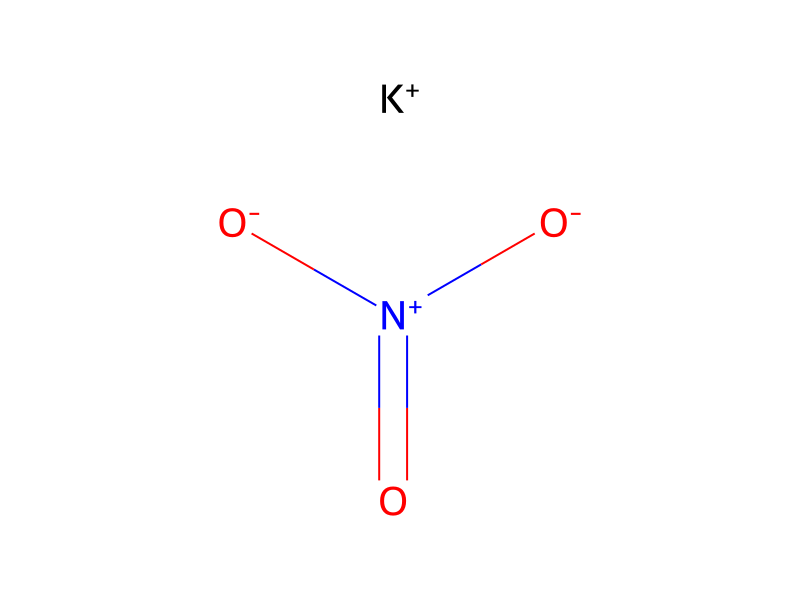
[CH:1]1[C:10]2[C:5](=[CH:6][CH:7]=[CH:8][CH:9]=2)[CH:4]=[CH:3][N:2]=1.[N+:11]([O-])([O-:13])=[O:12].[K+].C(OCC)(=O)C.[NH4+].[OH-]>OS(O)(=O)=O.O>[N+:11]([C:6]1[CH:7]=[CH:8][CH:9]=[C:10]2[C:5]=1[CH:4]=[CH:3][N:2]=[CH:1]2)([O-:13])=[O:12]Participants
7
Reactant 4


Product 1

Reagents, catalysts & solvents 2


Procedure
To a solution of isoquinoline (120 g, 0.929 mol) in H2SO4 (1 L) was added KNO3 (112.6 g, 1.115 mol) at −15° C. (dropwise). The mixture was stirred at room temperature for 2 hours. TLC (petroleum ether:ethyl acetate=2:1) showed complete conversion. The mixture was added to water (3 L) at 0° C. The mixture was adjusted to pH 8 by the addition of NH4OH and filtered. The filter cake was washed with methyl tertbutyl ether (1 L×2) and concentrated under vacuum to give 5-nitro-isoquinoline (160 g, 94%) as a yellow solid.
Workup
- filtrationfiltered
- washThe filter cake was washed with methyl tertbutyl ether (1 L×2)
- concentrationconcentrated under vacuum
Sources & evidence
- ORD record
- ord-3f7a5f204ef741ed9861dcce142ae52d
- Source dataset
- uspto-grants-2016_07
- Patent number
- US09394286B2
Reaction notes
Loading…