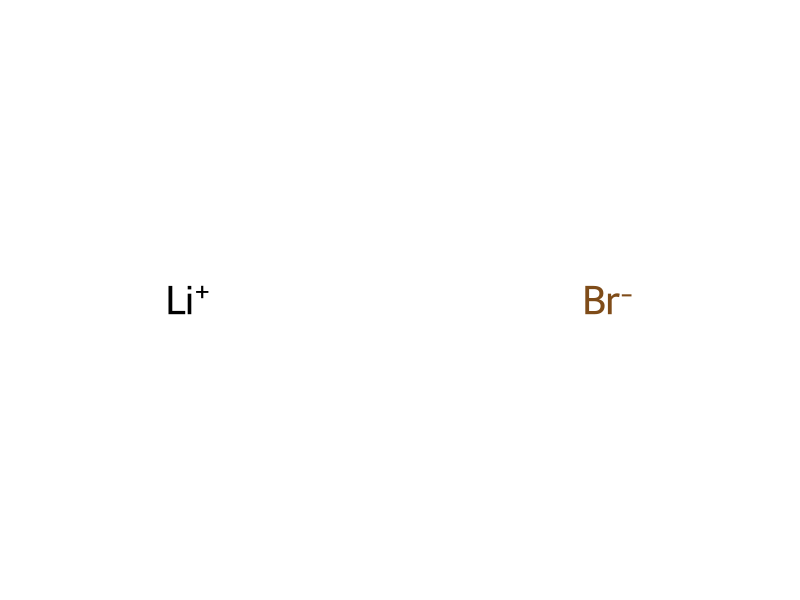
Lithium Bromide → 9-Benzyl-9H-carbazol-4-ol
Reaction equation

[CH2:1]([N:8]1[C:20]2[CH2:19][CH2:18][CH2:17][C:16](=[O:21])[C:15]=2[C:14]2[C:9]1=[CH:10][CH:11]=[CH:12][CH:13]=2)[C:2]1[CH:7]=[CH:6][CH:5]=[CH:4][CH:3]=1.Br.[NH+]1C=CC=CC=1.CCOC(C)=O.CCCCCC.[Li+].[Br-]>C1COCC1.CN(C=O)C>[CH2:1]([N:8]1[C:20]2[CH:19]=[CH:18][CH:17]=[C:16]([OH:21])[C:15]=2[C:14]2[C:9]1=[CH:10][CH:11]=[CH:12][CH:13]=2)[C:2]1[CH:3]=[CH:4][CH:5]=[CH:6][CH:7]=1Participants
Reactant 4



Product 1

Reagents, catalysts & solvents 2


Procedure
To a mixture of 9-Benzyl-1,2,3,9-tetrahydro-4H-carbazol-4-one (3.89 g, 14.13 mmol), THF (20 mL) in THF (20 mL) and DMF (15 mL) is added pyridinium hydrobromide perbromide (5.42 g, 16.96 mmol) as a solution in DMF (5 mL). After stirring for 5 h at room temperature, TLC (EtOAc-hexane, 20/80) showed little or no reaction had occurred, so the mixture is stirred at 70° C. for 4 h and then allowed to cool (and stir the remainder of the night). The solvents then are removed and the residue is partitioned between Et2O and brine, dil. Na2S2O3, and brine. The aqueous layer is removed and CH2Cl2 is added to the organic layer (from which solids had begun to precipitate). The organic layers are dried over MgSO4 and taken to dryness. Without further purification, the crude product is stirred with LiBr (2.67 g, 31 mmol) and Li2CO3 (2.07 g, 28 mmol) in DMF (50 mL) at 100° C. for 45 min, and then at reflux for 3 h. After cooling, the solvent is removed and the residue is partitioned between CH2Cl2 and water. The organic layers are dried over sodium sulfate and concentrated to dryness. The residue is chromatographed on silica gel (250 mL) using EtOAc-heptane (15/85)/CH2Cl2 (6:1) as eluent to give 2.78 g of solid; mp 119-121.5° C.; IR (drift) 3353, 1602, 1485, 1458, 1337, 1328, 1279, 1230, 1138, 1104, 780, 748, 735, 714, 700 cm−1; 1H NMR (CDCl3) δ5.32, 5.50, 6.60, 6.97, 7.14, 7.26, 7.3-7.4, 8.33. Anal. Calcd for C19H15NO: C, 83.49; H, 5.53; N, 5.12. Found: C, 82.35; H, 5.51; N, 5.06.
Workup
- stirringis stirred at 70° C. for 4 h
- temperatureto cool (and
- stirringstir the remainder of the night)
- customThe solvents then are removed
- customthe residue is partitioned between Et2O and brine, dil. Na2S2O3, and brine
- customThe aqueous layer is removed
- additionCH2Cl2 is added to the organic layer (from which solids had begun to precipitate)
- dry with materialThe organic layers are dried over MgSO4
- customWithout further purification
- temperatureat reflux for 3 h
- temperatureAfter cooling
- customthe solvent is removed
- customthe residue is partitioned between CH2Cl2 and water
- dry with materialThe organic layers are dried over sodium sulfate
- concentrationconcentrated to dryness
- customThe residue is chromatographed on silica gel (250 mL)
Sources & evidence
- ORD record
- ord-ef8432ffa0664158811ee1a7eb6edf4c
- Source dataset
- uspto-grants-2003_02
- Patent number
- US06514968B1
Reaction notes
Loading…